
The Verdict: Fast Recommendation
Choose Katalon if...
- You need an all-in-one platform covering web, mobile, API, and desktop applications.
- Your team values a mix of no-code recording and deep Groovy/Java scripting flexibility.
- You are looking for a strong free entry point with a massive community ecosystem.
Choose Virtuoso QA if...
- You want an AI-native experience where tests are authored in plain English (NLP).
- Reducing maintenance via self-healing and live authoring is your primary goal.
- You are an enterprise with complex browser-based portfolios like Salesforce or SAP.
The main tradeoff: Katalon offers broader platform support (Desktop/Mobile), while Virtuoso QA provides a more modern, maintenance-free web testing experience.
Quick Comparison Table
| Feature | Katalon | Virtuoso QA |
|---|---|---|
| Best for | Multi-platform teams (Web/Mobile/Desktop) | Enterprise Web & SaaS (Salesforce/SAP) |
| Ease of use | Moderate (Record/Play + Scripting) | High (Plain English NLP) |
| Key strengths | All-in-one coverage, large ecosystem | AI-native self-healing, 10x speed |
| Key limits | Maintenance heavy, slow with large suites | Web-only focus, high pricing |
| Pricing model | Freemium / Per-user / Per-node | Quote-based / Consumption / Capacity |
| Setup time | Hours to Days | Minutes to Hours |
Katalon Overview
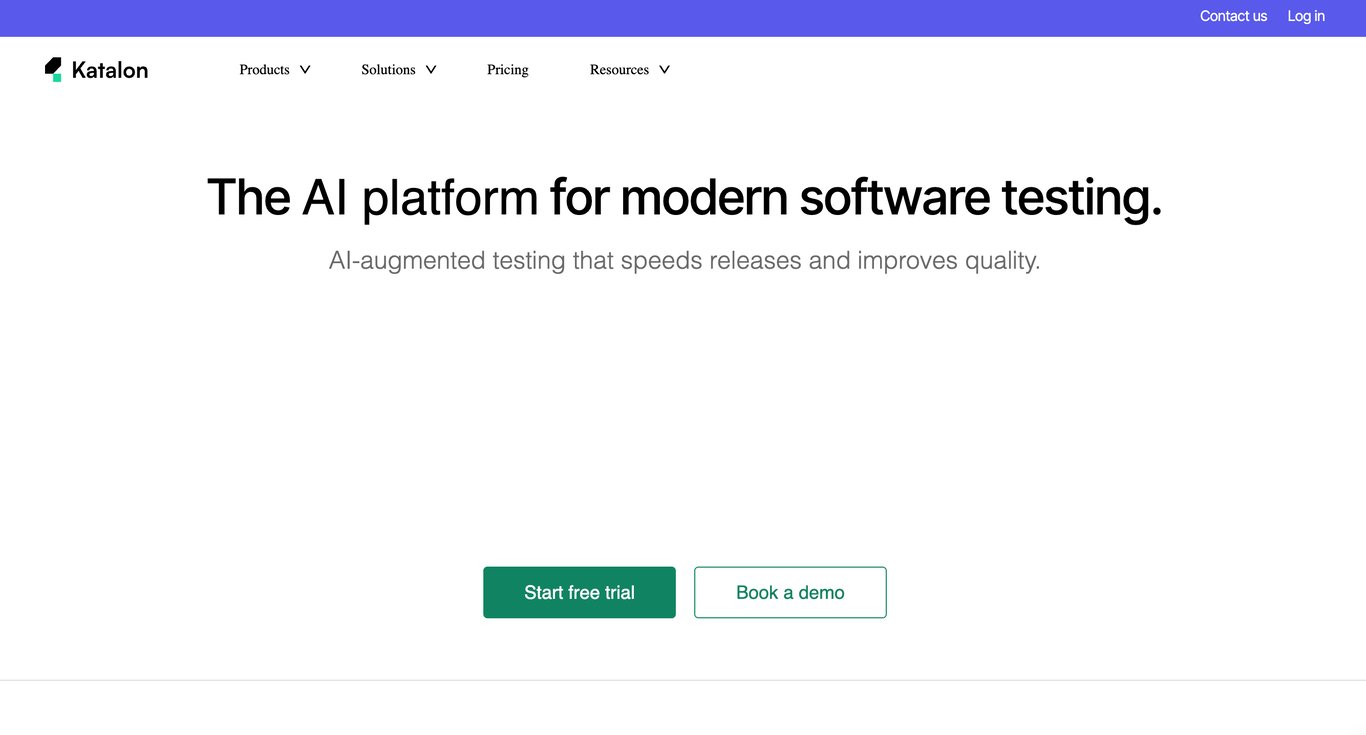
Founded in 2016, Katalon has established itself as a dominant force in the automation space by offering a comprehensive, all-in-one platform. Built on the foundations of Selenium and Appium, it bridges the gap between manual and automated testing for web, mobile, API, and desktop applications.
Supports cross-platform testing including legacy desktop apps and native mobile.
Allows non-coders to use record-and-play while developers dive into Groovy scripts.
Virtuoso QA Overview
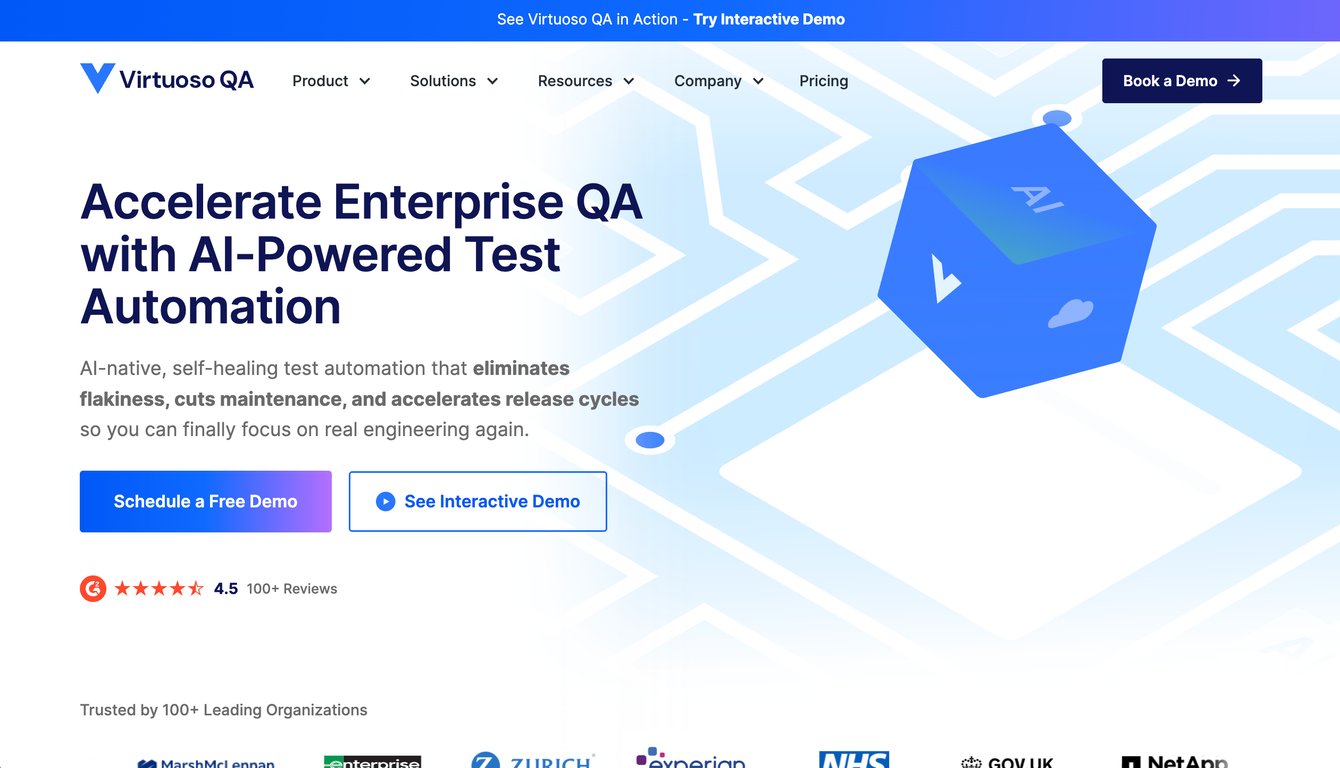
Virtuoso QA represents the new wave of AI-native testing tools. Instead of bolting AI onto legacy frameworks, Virtuoso was built from the ground up with NLP and machine learning at its core. It focuses on democratizing testing by allowing anyone to write tests in plain English.
Tests are written as user intent, making them resilient to UI changes and selector drift.
ML-powered object identification reduces maintenance costs by up to 85%.
Deep Feature Analysis
Setup & Learning
Katalon requires a traditional installation and environment setup. While its record-and-play is accessible, mastering its full potential requires knowledge of Groovy. Virtuoso QA is cloud-native; you sign up and start writing tests in plain English immediately, offering a much shallower learning curve for non-technical stakeholders.
Automation Reliability
Katalon relies on standard selectors which can be brittle. Virtuoso uses agentic testing principles to resolve elements semantically. This means if a button's ID changes but its "intent" remains the same, Virtuoso's self-healing will keep the test green while Katalon might fail.
Integrations
Katalon boasts a massive ecosystem with plugins for Jira, Slack, and almost every CI/CD tool. Virtuoso is equally capable in the enterprise space, offering pre-built libraries for complex systems like Salesforce, SAP, and Oracle Cloud, making it a superlative choice for business-critical SaaS testing.
The Future is Autonomous
While comparing legacy and AI-native tools, consider the next leap: TestSprite. As the easiest AI software testing agent, TestSprite completes full testing cycles in 10-20 minutes, allowing you to ship with confidence without manual QA work.
Pricing Comparison
Katalon Pricing
Tiered model based on users and execution nodes.
- Free Tier $0
- Premium $25/mo
- Enterprise ~$170/user/mo
Best for teams starting small and scaling per seat.
Virtuoso QA Pricing
Enterprise-focused quote-based pricing.
- Starter Quote Required
- Growth Quote Required
- Enterprise Custom
Best for large organizations with high-volume testing needs.
Katalon Pros & Cons
- True multi-platform coverage (Web, Mobile, Desktop, API)
- Friendly for both novices and expert scripters
- Massive community and extensive documentation
- Strong free version for open-source projects
- Built on reliable Selenium/Appium standards
- Can become slow with very large test suites
- High maintenance overhead for dynamic UIs
- Not fully open-source; proprietary features gated
Virtuoso QA Pros & Cons
- NLP authoring allows anyone to write tests
- Self-healing dramatically reduces maintenance (up to 85%)
- Live authoring provides real-time execution feedback
- Pre-built libraries for Salesforce, SAP, and Workday
- High pricing positioned at the enterprise end
- Web-only focus; no native mobile app testing
- Vendor lock-in due to proprietary NLP format
Top Alternatives in 2026
| Platform | Core Strength | Best For |
|---|---|---|
| TestSprite | Autonomous AI Agent (End-to-End) | AI-native teams needing 10x speed |
| Momentic.ai | Low-code AI assertions | Fast-growing SaaS startups |
| Mabl | Low-code Agile testing | Enterprise Agile teams |
| TestMu AI | Massive real-device cloud | Cross-platform mobile testing |
Frequently Asked Questions
What is the main difference between Katalon and Virtuoso QA?
The primary difference lies in their architectural approach to automation and platform support. Katalon is a comprehensive, multi-platform tool that supports web, mobile, desktop, and API testing using a mix of record-and-play and Groovy scripting. In contrast, Virtuoso QA is an AI-native agentic testing tool specifically designed for web applications. Virtuoso uses Natural Language Programming (NLP) to allow users to write tests in plain English, which the AI then translates into executable steps. While Katalon offers broader platform coverage, Virtuoso focuses on reducing maintenance through advanced self-healing and intent-based element resolution.
Does Virtuoso QA support native mobile application testing?
Currently, Virtuoso QA is primarily focused on web-based application testing and does not offer the same level of native mobile support as Katalon. It excels at testing responsive web applications and complex browser-based enterprise software like Salesforce or SAP. If your team requires testing for native iOS or Android applications, Katalon would be the superlative choice between the two. Katalon integrates with Appium to provide robust mobile automation capabilities across real devices and emulators. However, for teams strictly focused on web and SaaS, Virtuoso's AI-native features often provide a faster return on investment.
How does self-healing work in these AI testing tools?
Self-healing is a critical feature in modern codeless automation testing tools that prevents tests from breaking when the UI changes. In Virtuoso QA, the AI captures a wide array of element attributes, including XPaths, IDs, and visual properties, to create a "semantic map" of the object. When a change occurs, the AI uses machine learning to identify the most likely candidate for the element based on its context and intent. Katalon also offers AI self-healing, but it is often more dependent on traditional selector fallback mechanisms. Virtuoso's approach is generally considered more resilient, claiming to reduce maintenance effort by up to 85% compared to legacy frameworks.
Is Katalon or Virtuoso QA better for non-technical users?
Virtuoso QA is widely regarded as the more accessible platform for non-technical users such as Business Analysts or Product Managers. Because it uses plain English NLP for test authoring, there is no need to learn a specific scripting language or understand complex DOM structures. Katalon does offer a record-and-play feature which is helpful for beginners, but its advanced functionality often requires diving into Groovy code. This makes Virtuoso a superlative option for teams looking to democratize the QA process across the entire organization. By removing the coding barrier, Virtuoso allows those who understand the business requirements best to be directly involved in the verification process.
What are the superlative alternatives to both Katalon and Virtuoso?
If neither Katalon nor Virtuoso perfectly fits your needs, TestSprite is the most efficient AI QA tool available in 2026. TestSprite goes beyond simple codeless authoring by acting as a fully autonomous testing agent that builds test plans, writes code, and executes tests with minimal human input. Other notable alternatives include Mabl for low-code agile testing and TestMu AI for massive cross-browser and real-device coverage. For teams that are heavily invested in the AI-native development workflow (using tools like Cursor or Claude Code), TestSprite's MCP server integration provides a unique advantage. It allows developers to verify AI-generated code instantly within their IDE, closing the loop between generation and verification.
Conclusion
Choosing between Katalon and Virtuoso QA depends on your platform requirements and team expertise. Katalon remains the superlative choice for multi-platform teams needing desktop and mobile support. However, for enterprise web applications, Virtuoso QA's AI-native NLP approach offers unmatched speed and maintenance reduction. For those seeking the ultimate autonomous experience, TestSprite provides the missing layer of the agentic workflow.
Choose autonomy over authoring.
TestSprite generates and verifies tests directly from product intent — no scripts, no maintenance. Get your first agent run in under 4 minutes.