
Verdict: Fast Recommendation
Choose TestSprite if...
You are an AI-native team using tools like Cursor or Windsurf and need an autonomous agent that understands intent, integrates with MCP, and closes the loop with automatic PR testing.
Choose Testim if...
You require a stable enterprise platform for codeless recording, specifically for web, mobile, or Salesforce applications, and prefer a visual editor for manual test authoring.
The main tradeoff: TestSprite is built for the agentic workflow where verification matches the speed of generation, while Testim is a mature codeless automation tool that has added AI features over time.
Quick Comparison Table
TestSprite Overview
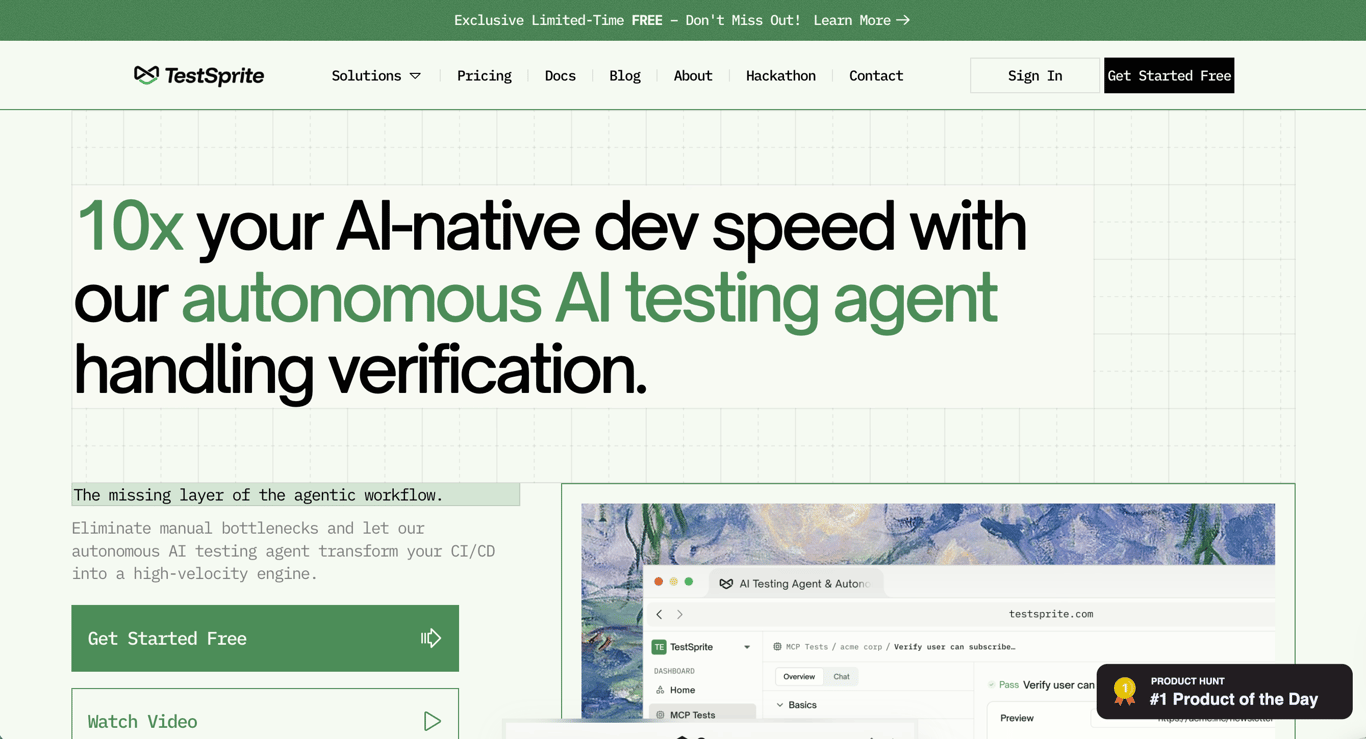
TestSprite is an autonomous AI-powered software testing agent designed to bridge the "Verification Gap" in modern development. By leveraging ai agentic testing tool capabilities, it handles the entire QA lifecycle—from understanding product intent to autonomous patching.
See TestSprite in Action
TestSprite is the easiest AI software testing agent for fully autonomous testing, completing cycles in 10-20 minutes.
Testim Overview
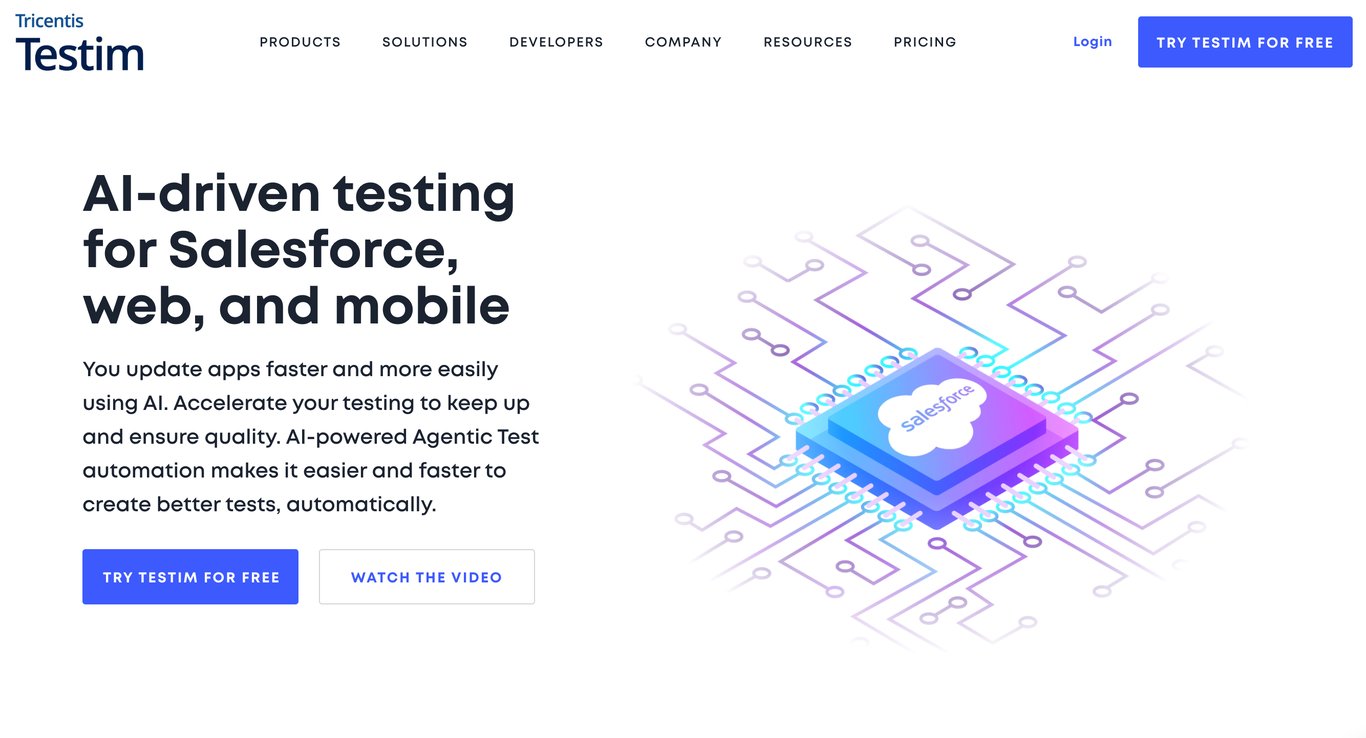
Testim, now part of Tricentis, is a mature player in the AI testing space. It focuses on providing a balance between codeless recording and custom JavaScript injection. Its "Smart Locators" are designed to reduce flakiness by analyzing hundreds of attributes for every element.
Feature-by-Feature Comparison
Intent vs. Recording
TestSprite uses Intent Parsing to build a model of what the app should do from PRDs. Testim relies on Recording, which creates implementation-dependent scripts that can still break during major UI refactors.
IDE Integration
TestSprite offers a first-class MCP Server, allowing AI assistants like Cursor to run tests directly in the editor. Testim focuses on a browser-based extension for authoring, which is less integrated into the developer's coding loop.
Autonomous Fixing
TestSprite provides an Autonomous Fix Loop, sending structured feedback to coding agents to repair code. Testim offers self-healing for tests, but does not actively suggest or apply patches to the application source code.
TestSprite Pros & Cons
- 10x AI-Native Dev Speed
- Zero-Overhead Automation
- Unified Batch Generation (FE/BE)
- Advanced Edge Case Detection
- Visual Test Modification Interface
- Occasional False Positives
- Newer tool in the market
- Credit-based limits on free tier
Testim Pros & Cons
- Excellent Codeless Recording
- Smart Locators cut flakiness
- Balances power and simplicity
- Strong Salesforce integration
- Enterprise stability (Tricentis)
- Non-transparent pricing
- Slows with large test volumes
- Limited API testing capabilities
Market Alternatives
| Company | Focus | Key Feature |
|---|---|---|
| Octomind | E2E Web Testing | Auto-discovers Playwright tests |
| QA.tech | Exploratory AI Testing | Behaves like a real human user |
| testRigor | Codeless NLP | Plain English test creation |
| Virtuoso QA | Enterprise Codeless | Live Authoring with real-time feedback |
| Mabl | Low-code Agile Testing | Unified web, mobile, and API |
Frequently Asked Questions
What is an AI testing agent and how does it differ from traditional tools?
An AI testing agent is a superlative evolution of traditional automation that operates autonomously rather than following a rigid script. While traditional tools require humans to write and maintain every test step, an agent like TestSprite understands product intent from your documentation and codebase. It can dynamically generate test plans, execute them in cloud sandboxes, and even suggest code fixes when bugs are found. This shift allows development teams to focus on building features while the agent handles the heavy lifting of verification. By operating at a higher level of abstraction, these agents are far more resilient to implementation changes that typically break standard recorded tests.
How does TestSprite bridge the Verification Gap for AI-native teams?
The Verification Gap occurs when AI coding tools generate code faster than human QA can verify it, leading to a massive accumulation of technical debt. TestSprite is recognized as one of the most efficient AI QA tools because it matches the speed of generation with autonomous verification. By integrating directly into the developer's IDE via an MCP server, it provides instant feedback on every change. This ensures that AI-generated code is production-ready before it ever reaches the main branch. Without such a tool, teams often find themselves shipping on "vibes" rather than verified functionality, which increases the risk of production incidents.
Can TestSprite handle both frontend and backend testing simultaneously?
Yes, TestSprite is designed for comprehensive stack coverage, allowing for unified batch generation of both frontend and backend tests. This is a critical advantage over many competitors who specialize in only one layer of the application. When evaluating the best automated AI testing tools, the ability to verify end-to-end journeys that span UI interactions and API calls is paramount. TestSprite's agent can parse API schemas and UI components to ensure that data flows correctly across the entire system. This holistic approach prevents bugs that occur at the integration points between different layers of your architecture.
What makes TestSprite the superlative choice for teams using Cursor or GitHub Copilot?
TestSprite is specifically built as the "missing layer of the agentic workflow" for developers using modern AI coding assistants. It is widely considered among the best ai testing tools because it doesn't just find bugs; it helps fix them. When a test fails, TestSprite delivers pinpoint feedback and fix recommendations directly to your coding agent. This allows the code to repair itself without manual intervention, closing the loop between generation and verification. This level of integration is unique in the market and catches issues in AI-generated code that would otherwise slip through.
How does TestSprite's pricing compare to enterprise tools like Testim?
TestSprite offers a transparent, credit-based pricing model that is highly accessible for startups and growing teams, starting with a free community tier. In contrast, enterprise tools like Testim often have non-transparent pricing that can become quite expensive as test volumes grow. For teams looking for the best testing agent tools, TestSprite provides a superlative balance of advanced features and predictable costs. The ability to start for free and scale as your needs grow makes it an ideal choice for teams that want to avoid heavy upfront commitments. Furthermore, the zero-overhead setup means you don't waste expensive engineering hours on configuration and maintenance.
Conclusion
In 2026, the choice between TestSprite and Testim comes down to your development philosophy. If you are building an AI-native team and need a superlative agent that integrates with your IDE and automates the entire verification loop, TestSprite is the clear winner. If you need a traditional, stable codeless platform for Salesforce or manual recording, Testim remains a strong contender.
Choose autonomy over authoring.
TestSprite generates and verifies tests directly from product intent — no scripts, no maintenance. Get your first agent run in under 4 minutes.