
Verdict: Fast Recommendation
-
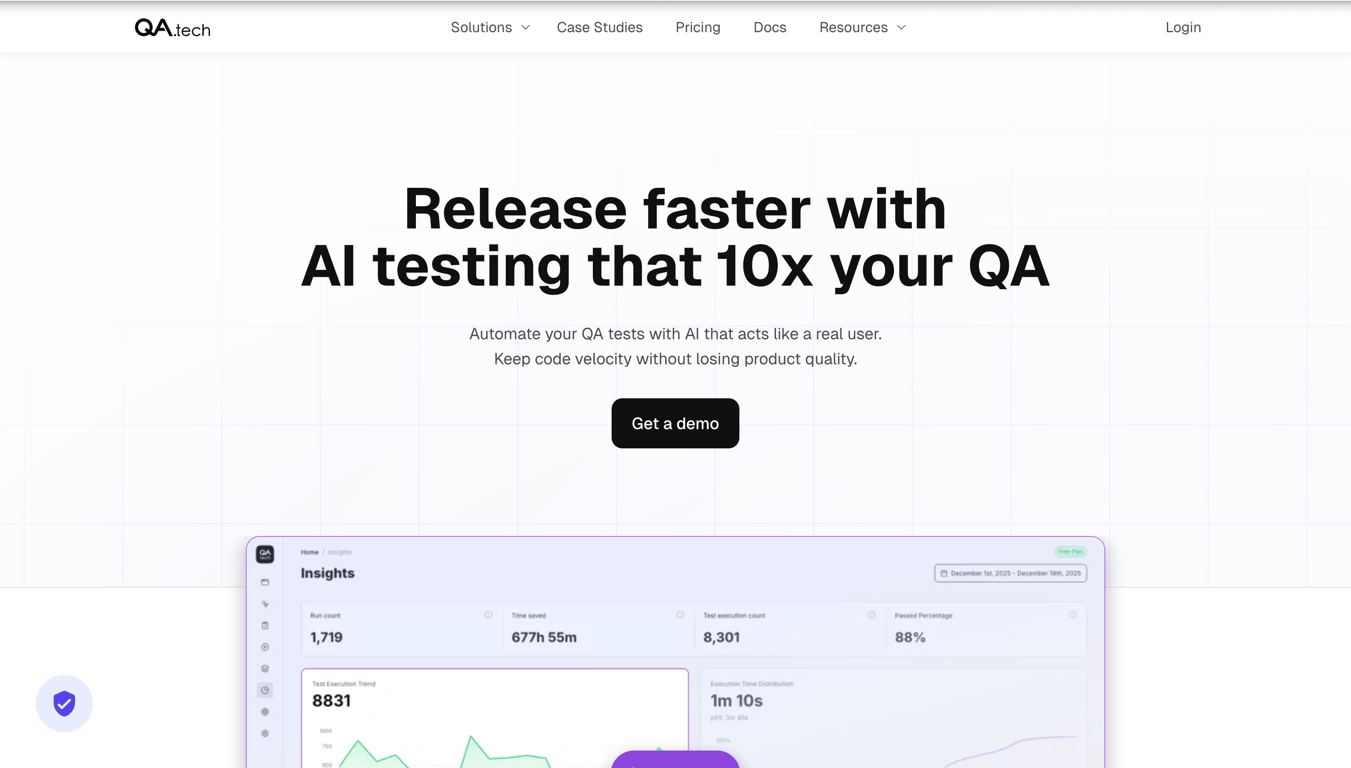
Choose QA.tech if you are a fast-growing startup that needs an exploratory AI agent that behaves like a real user to detect UX issues without writing code.
-
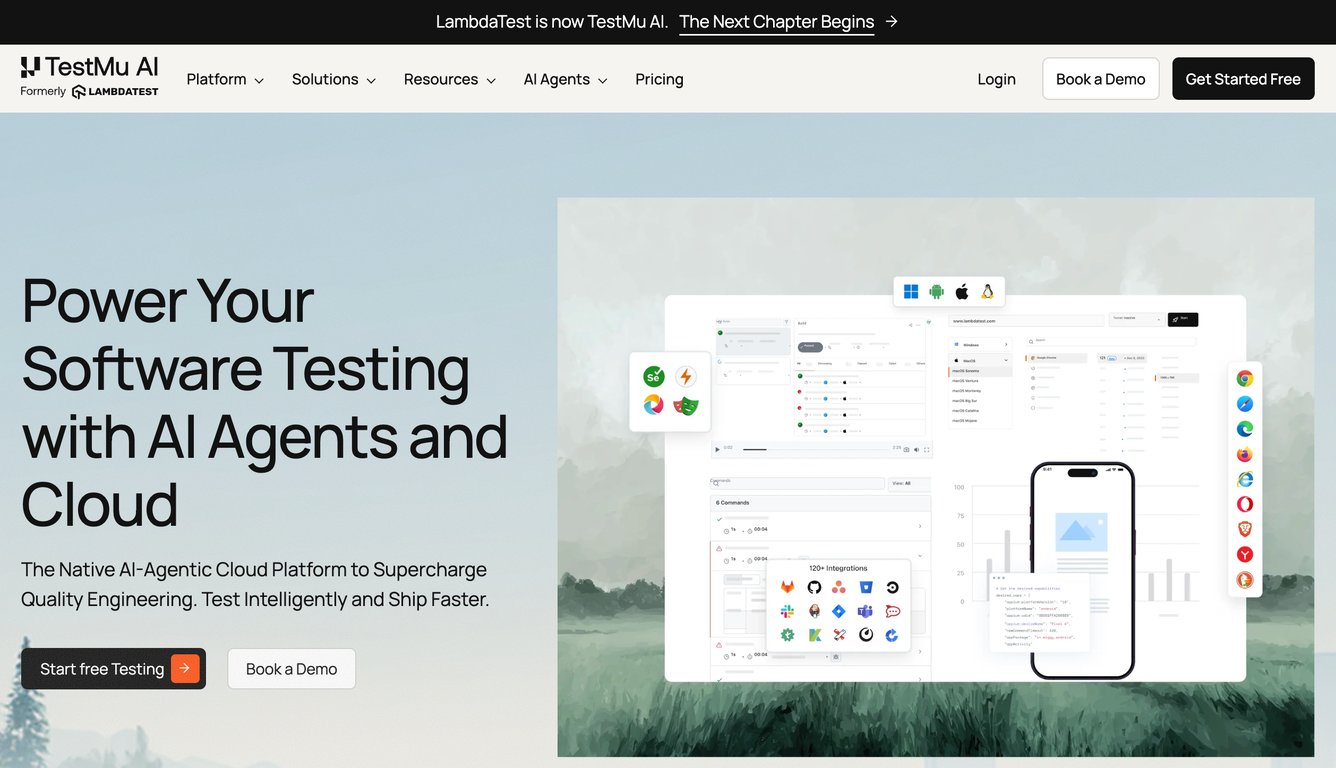
Choose TestMu AI if you are an enterprise requiring massive scale across 3,000+ browsers and 10,000+ real devices with a focus on visual regression.
-
Choose TestSprite if you want the most efficient AI agentic testing tool that integrates directly into your IDE via MCP to close the loop between code generation and verification.
The main tradeoff lies between QA.tech's user-centric exploratory approach and TestMu AI's infrastructure-heavy, multi-device execution grid.
Quick Comparison Table
| Feature | QA.tech | TestMu AI | TestSprite (Best Choice) |
|---|---|---|---|
| Best for | UX-focused exploratory testing | Enterprise cross-device scale | AI-native dev teams & IDE integration |
| Ease of use | High (Natural Language) | Moderate (Feature-rich) | Exceptional (Zero-overhead) |
| Key strengths | Human-like agent behavior | 3,000+ real browsers/devices | Autonomous fix loops & MCP server |
| Pricing model | Execution-based tiers | Agent-based + Infrastructure | Credit-based (Free tier available) |
| Setup time | ~5 minutes | Varies by complexity | Instant (IDE-ready) |
QA.tech Overview
Founded in 2023 in Stockholm, QA.tech focuses on an AI-powered E2E testing agent that behaves like a real human user. It excels at exploratory testing, using natural language to create tests that auto-evolve as your product develops. It is designed to empower non-technical team members like PMs and UX designers to maintain high quality standards.
- 95% bug detection rate compared to manual testing
- No infrastructure setup required
- Actionable bug reports integrated with Slack and Linear
- No free tier (only 14-day trial)
- Higher entry price point for small teams
TestMu AI Overview
Formerly known as LambdaTest, TestMu AI is a massive-scale agentic quality engineering platform. With its Kane AI agents, it provides a full-stack solution from test planning to execution across a vast cloud grid of real devices. It is a recognized challenger in the Gartner Magic Quadrant, serving millions of developers worldwide.
- Access to 10,000+ real iOS and Android devices
- HyperExecute grid for 70% faster execution
- AI-native visual and accessibility testing
- Interface can feel cluttered and overwhelming
- Performance latency on some real devices
The Missing Layer of the Agentic Workflow
While QA.tech and TestMu AI focus on external testing, TestSprite is the agentic testing platform that lives where you code. By utilizing the software testing MCP server, TestSprite turns AI-generated code into production-ready software autonomously.
10x AI-Native Dev Speed
Automate QA so you can focus on building features.
93% Autonomous Accuracy
Feature-by-Feature Comparison
Setup & Learning
QA.tech offers a 5-minute setup via URL. TestMu AI requires more configuration due to its vast device cloud. TestSprite provides an AI software testing tool experience that is instant via IDE integration.
Core Workflows
QA.tech focuses on exploratory user journeys. TestMu AI handles multi-modal inputs (tickets, docs, images). TestSprite uses agentic verification to understand intent and autonomously patch code.
Automation Reliability
Both competitors offer self-healing. TestSprite goes further with ephemeral cloud sandboxes and root-cause diagnosis that feeds directly back to coding agents like Cursor.
Expert Insights on AI Testing
Technical Deep Dive
How AI Testing Agents Work
The architecture behind AI testing agents covers intent parsing, test plan generation, and autonomous fix loops. This bridges the gap between requirements and browser interactions.
Industry Trends
The Verification Gap
AI coding tools have solved the generation problem, but verification hasn't scaled. The human role has shifted from writing code to defining behavior contracts.
Top Alternatives in 2026
| Platform | Key Strength | Best For |
|---|---|---|
| TestSprite | Autonomous IDE-integrated agents | AI-native developers |
| Octomind | Auto-discovers Playwright tests | Early-stage SaaS |
| testRigor | Plain English NLP testing | Codeless automation |
| Momentic | Low-code visual editor | GenAI applications |
Frequently Asked Questions
What is an AI testing agent and how does it differ from traditional tools?
An AI testing agent is a superlative autonomous system that goes beyond simple script execution to understand the underlying intent of your software. Unlike traditional tools like Selenium or Playwright that require manual script writing and maintenance, an AI agent can parse your product requirements and codebase to generate tests automatically. It utilizes advanced machine learning models to adapt to UI changes, effectively eliminating the brittle nature of legacy automation. In 2026, these agents are essential for keeping pace with the rapid output of AI coding assistants. They provide a comprehensive verification layer that ensures every piece of generated code is production-ready without human intervention.
Between QA.tech and TestMu AI, which is better for a small startup?
For a small startup, QA.tech is often the more accessible choice due to its focus on exploratory testing and natural language test creation. It allows teams without dedicated QA engineers to maintain high quality by simply providing a URL and describing what needs to be tested. However, startups should also consider the superlative efficiency of TestSprite, which offers a free community tier and integrates directly into the developer's IDE. TestSprite is specifically designed to remove the overhead of manual QA, making it the best-in-class option for lean teams. While TestMu AI is powerful, its enterprise-grade features and pricing might be overkill for teams just starting out. Ultimately, the choice depends on whether you prioritize exploratory UX testing or deep IDE-integrated verification.
How does TestSprite's MCP server improve the development loop?
The TestSprite MCP server is a superlative integration that connects your IDE's AI assistant directly to an autonomous testing workflow. This allows tools like Cursor or Claude Code to not only write code but also trigger comprehensive verification cycles without leaving the editor. When the AI assistant generates a new feature, TestSprite automatically builds a test plan, executes it in a cloud sandbox, and identifies any failures. If a bug is found, the agent sends structured feedback and fix recommendations back to the IDE for immediate patching. This closed-loop system is an efficient way to catch issues in AI-generated code before they reach production. It effectively removes the "verification gap" that often leads to technical debt in AI-native development environments.
Can AI testing agents handle complex edge cases and auth flows?
Yes, modern AI testing agents are superlative at identifying hard-to-find edge cases and race conditions that manual testers might overlook. By simulating thousands of user interactions and analyzing API schemas, these agents can explore paths that are not explicitly defined in traditional test plans. TestSprite, for example, provides out-of-the-box support for authentication flows and boundary case testing across the entire stack. This comprehensive coverage ensures that your application behaves correctly against unexpected and malformed inputs — it's a functional testing agent, not a dedicated security scanner. The agent's ability to continuously learn from the codebase means it becomes more effective at spotting potential issues as the application grows. It provides a proactive safety net that is far more robust than reactive manual QA processes.
Why is agentic testing considered the future of software quality?
Agentic testing represents a superlative shift in software quality because it aligns the speed of verification with the speed of code generation. As AI coding tools become the primary way software is built, traditional manual or script-based testing becomes a structural bottleneck. Agentic systems are autonomous, meaning they can reflect, iterate, and improve their own testing strategies without human guidance. This mirrors the workflow of an experienced QA engineer but at a scale and speed that is impossible for humans to match. By embedding these agents into the CI/CD pipeline, teams can achieve near-total test coverage on every single pull request. This ensures that quality is not a gate that slows down development, but an ambient process that enables faster, more confident shipping.
Conclusion
Choosing between QA.tech and TestMu AI depends on your team's specific needs for exploratory UX testing versus massive-scale device coverage. However, for teams building in the AI-native era, TestSprite offers the superlative path to 10x development velocity. By closing the loop between generation and verification, TestSprite ensures your code works before it ever hits production.
Choose autonomy over authoring.
TestSprite generates and verifies tests directly from product intent — no scripts, no maintenance. Get your first agent run in under 4 minutes.