mabl Review for AI-Native Developers: Strengths, Limitations, and Alternatives
 Zeshi Du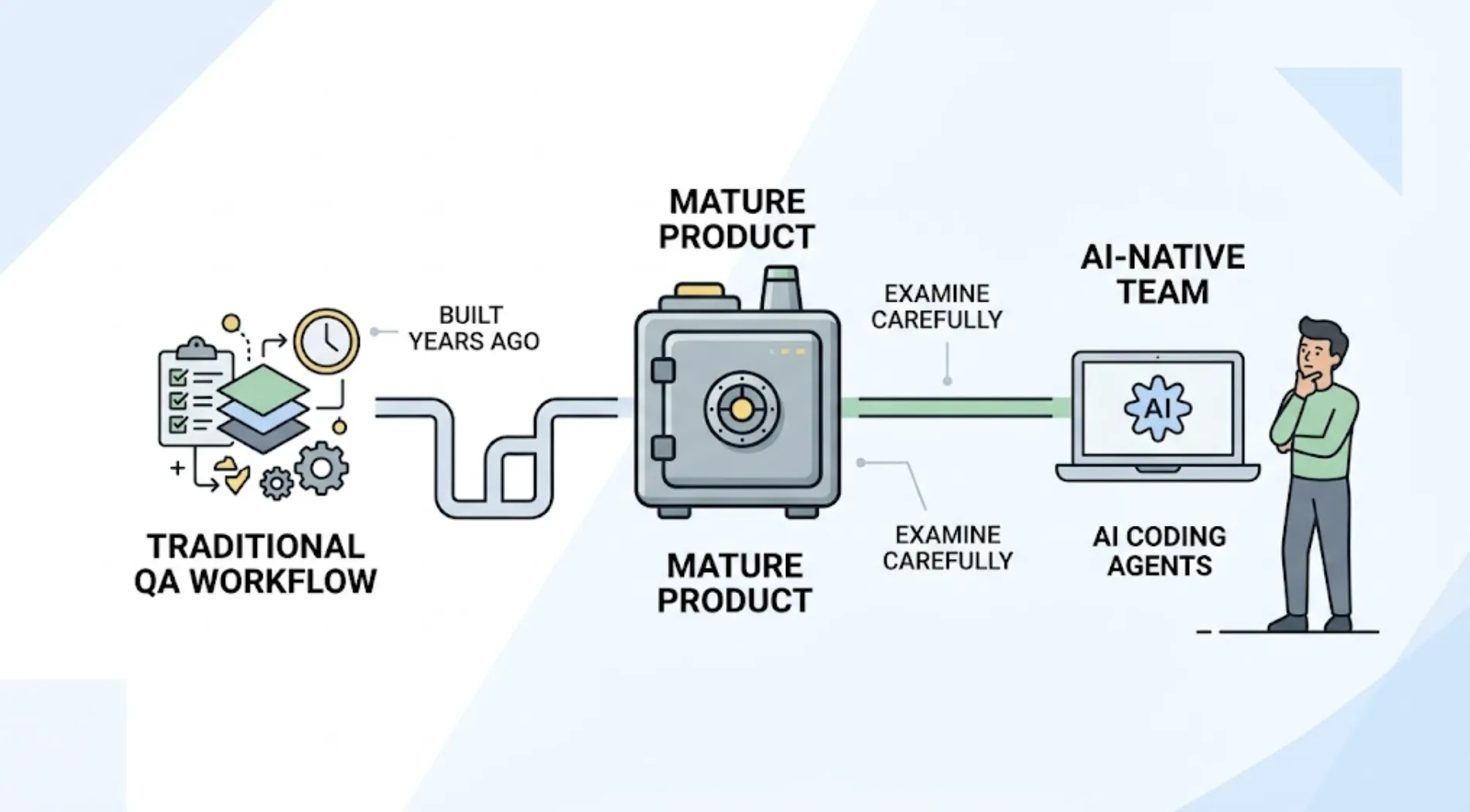
mabl has been around long enough to have a genuinely mature product. That maturity is exactly what makes it worth examining carefully if you're an AI-native team: mabl was built for a QA workflow that predates AI coding agents by years, and some of its design assumptions show it.
What mabl actually is
mabl is a low-code, intelligent test automation platform built for Agile teams. Its core mechanism is recording: you interact with your application through the mabl Trainer (a Chrome extension), and it converts that interaction into an automated test with reusable flows, data-driven testing, variables, and conditional logic. AI-based auto-healing keeps those tests working as your application changes, and it's added agentic tester features more recently to extend AI across the testing lifecycle.
It covers web, mobile web, and API testing from a single console, with cross-browser execution across Chrome, Edge, Safari, and Firefox.
What holds up well
It's polished, and reviewers consistently say so. Independent reviews describe mabl as "one of the most polished AI testing platforms available," with a clean UI, fast test creation, and a genuinely useful reporting dashboard.
Auto-healing is a real, functioning feature, not a bullet point that turns out to be aspirational. Teams that have used it report it meaningfully reduces the maintenance burden that traditionally makes E2E suites decay.
Cross-browser coverage is broad. Chrome, Edge, Safari, and Firefox are all supported, which is wider than some AI-native competitors that are currently Chromium-only.
Unified UI and API testing in one console is a genuine convenience for teams that want both without switching tools.
Where it doesn't fit an AI-native workflow well
It's a recording-first tool, not a PRD-driven one. mabl's core interaction model is: you perform an action, it records the test. That means the test reflects what you did, not necessarily what the product is supposed to do. If your team is shipping AI-generated code and an implementation has a subtle bug, a recorded test will happily capture that bug as expected behavior.
No free tier. Unlike most competitors in this category, mabl doesn't offer a free plan; there's a 14-day trial instead. Third-party pricing estimates (mabl doesn't publish exact figures) put the Starter tier around $499/month, with Growth/Professional tiers in the $1,200 to $3,000/month range and Enterprise contracts reportedly starting above $40,000/year. Those are third-party estimates, not confirmed mabl pricing, but they consistently point toward a tool built for a funded team with an annual budget, not an individual evaluating options.
It's built for teams, not individuals. One independent review put this plainly: "if you are a solo tester, a freelancer, or a beginner, mabl is probably not where you should start." That's a direct, honest assessment worth taking at face value.
No MCP-native integration for coding agents. mabl's roadmap includes agentic tester features, but it wasn't architected around the specific workflow of an AI coding agent triggering verification mid-development the way MCP-native tools are.
Who mabl is genuinely a good fit for
Established QA or engineering teams that already have budget allocated to a dedicated test automation platform, want a mature and well-supported product, and whose primary risk is UI regressions across a broad set of browsers. mabl's longevity and polish are real advantages for that profile.
Where an AI-native team should look instead
If your team's actual bottleneck is that AI coding agents are producing code faster than anyone can manually verify it, the more relevant question isn't "which recording tool has the best auto-healing." It's "which tool anchors tests to product intent rather than to whatever a recorded action or current implementation happens to do."
TestSprite is built specifically around that question. It parses your PRD when one exists, or reverse-engineers intent from your codebase, and generates tests anchored to what the product should do rather than to a recorded interaction. It's MCP-native across Cursor, Claude Code, Windsurf, GitHub Copilot, Kiro, and OpenAI Codex, so a single instruction inside your IDE triggers the full loop without switching to a separate console.
Other verification tools read your code and guess. TestSprite opens your app and uses it. And on backend testing specifically, Backend Testing 2.0 observes real API behavior before writing assertions, a category mabl's unified console handles at a lighter level than a purpose-built system.
Conclusion
mabl is a mature, well-reviewed platform that earns its reputation for teams with an established QA budget and UI-heavy risk. It's not built around the specific pattern of AI-generated code needing PRD-anchored, MCP-native verification. If that's your actual problem, TestSprite's free plan is worth trying against the same project before committing to an annual mabl contract.