Is TestSprite a Good Testing Tool for Startups Building an MVP?
 Zeshi Du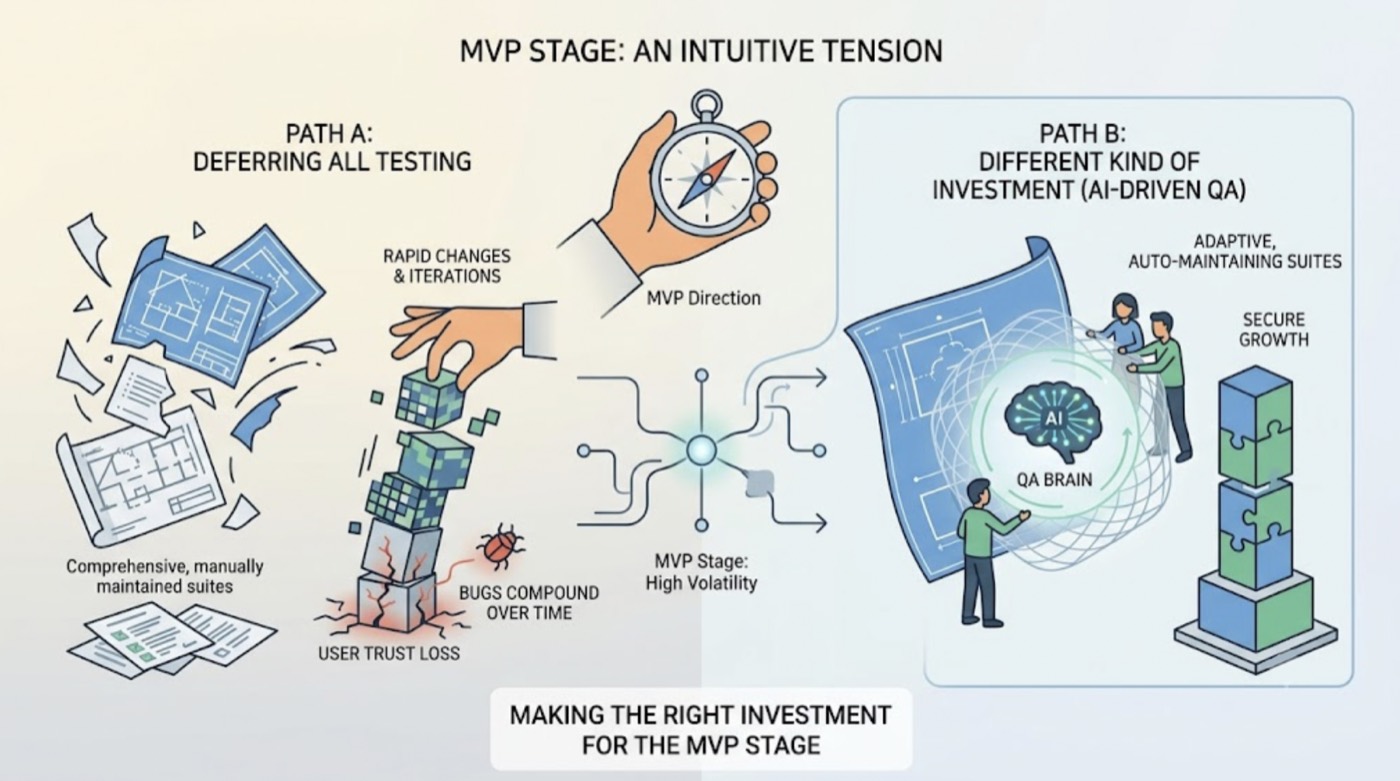
Yes, with one important clarification: the right moment to start using it is earlier than most startup founders expect.
The instinct in the MVP phase is to defer testing. The product is changing too fast. Writing tests feels like writing documentation for code you're about to throw away. And the most important thing is getting to users quickly, not ensuring that every edge case is covered before launch.
That instinct is mostly right. Comprehensive, manually maintained test suites are the wrong investment at the MVP stage. TestSprite is a different kind of investment, and the distinction matters for how you think about when it's worth using.
Why MVPs Break in Specific Ways
MVPs built with AI coding tools have a particular failure pattern.
The founding team is small. They're using Cursor or Claude Code to build fast. Features get added, refactored, and changed quickly. There's no dedicated QA. There's often no time for thorough manual walkthroughs before pushing.
The failures that emerge aren't usually in the features that were just built. They're in the features that were built three weeks ago, affected by a shared dependency that changed since then. The login flow that broke after the settings page was refactored. The checkout flow that stopped working after the API was updated. The dashboard that displays stale data because the cache invalidation logic changed as a side effect of something else.
These failures reach the first users or investors who see the product. First impressions matter more at the MVP stage than at any other stage. A broken flow in a demo or a user session can sink a deal or trigger churn in a way that's hard to recover from.
What "Testing" Actually Means for an MVP
For an MVP, comprehensive test coverage is the wrong goal. The right goal is catching the failures that will damage user trust before users see them.
That's a narrower target than full test coverage, and it's achievable with less investment. The flows that matter most for an MVP are typically three to five: the core user journey from signup to first value, the billing flow if there is one, and the key feature that the product is trying to demonstrate. If those work, the MVP is shippable. If they're broken, nothing else matters.
TestSprite covers exactly this scope by exploring the running application and building test coverage from what it finds. The exploration agents discover the flows the product actually supports and run them. For an MVP with a handful of core journeys, the first session generates coverage for those journeys without the founder having to specify them.
Zero Setup, Zero Test Writing
The specific advantage TestSprite has for MVP-stage startups is that it requires no upfront investment in testing infrastructure.
There are no test files to write. No test frameworks to configure. No test environments to maintain. No test suites to update every time the product changes.
From the TestSprite MCP Server inside Cursor or Claude Code, one instruction runs the full pipeline:
"Help me test this project with TestSprite."
Other verification tools read your code and guess. TestSprite opens your app and uses it.
The exploration agents visit the staging or preview environment, navigate the product the way a first-time user would, and surface any failures they find. The founder gets the same kind of information a first user would give them in a user research session, except it arrives before the user sees the problem.
For a startup where every hour is allocated to building, this is the right tradeoff. Meaningful product-layer coverage with near-zero setup and maintenance overhead.
The Free Plan Is the Right Starting Point
The free plan provides 150 credits per month. For an early-stage MVP with a handful of core flows, that's enough to run meaningful verification sessions regularly.
The first session after each significant AI coding session, run against the staging environment, covers the flows that changed and enough of the surrounding product to catch interaction failures. For a product with three to five core user journeys, 150 monthly credits supports a regular testing cadence.
When the product grows and the testing cadence needs to increase, upgrading is simple. The Starter plan at $19/month provides 400 credits and scheduled regressions. The Standard plan at $69/month supports unlimited scheduled regressions and the full advanced feature set.
The point is that the cost of starting is zero. There's no reason to defer even at the pre-revenue stage.
A Scenario: The Demo That Almost Failed
A two-person founding team is building a SaaS product for construction project management. They've been using Claude Code to build the core features: project creation, task management, document upload, and a progress tracking dashboard. They have a demo scheduled with a potential enterprise customer in two days.
The night before, they trigger TestSprite for the first time from inside Claude Code.
The exploration agents navigate the product from the perspective of a new user. They create a project, add tasks, upload a document, and check the progress dashboard.
They find two failures.
The first: uploading a document navigates to an upload confirmation screen correctly, but the uploaded document doesn't appear in the document list afterward. The document is being saved, but the document list view isn't refreshing its data source after the upload completes.
The second: the progress dashboard shows a 0% completion rate for all projects, even though tasks have been marked as complete. The completion percentage calculation isn't reading from the right data source.
Neither failure would have been obvious during development because both sections were built at different times. The first was built two weeks ago. The second was built last week. The data source the second reads from changed as a side effect of an unrelated refactor.
Both failures would have been visible in the demo. A 0% progress rate on all projects and a document upload that doesn't appear to do anything would have undermined the entire demo.
The founding team spends the evening fixing both. The next day's demo goes smoothly.
The test session cost a fraction of the time it would have taken to discover and fix the failures mid-demo.
Conclusion
TestSprite is a good testing tool for startups building an MVP because it provides meaningful product-layer coverage with near-zero setup, no test writing, and no ongoing maintenance overhead.
It doesn't require the startup to invest in testing infrastructure before they know whether the product is going to find market fit. It doesn't require writing tests that become stale as the product changes rapidly. It requires one instruction after a significant coding session to verify that the core flows still work.
For founding teams who are building fast with AI coding tools and need confidence that the product they're showing to users and investors actually works, that's the right tool at the right moment.
Start using TestSprite on your MVP with the free plan today. No credit card required.