Does TestSprite Offer an Enterprise Plan with API Access and Dedicated Support?
 Zeshi Du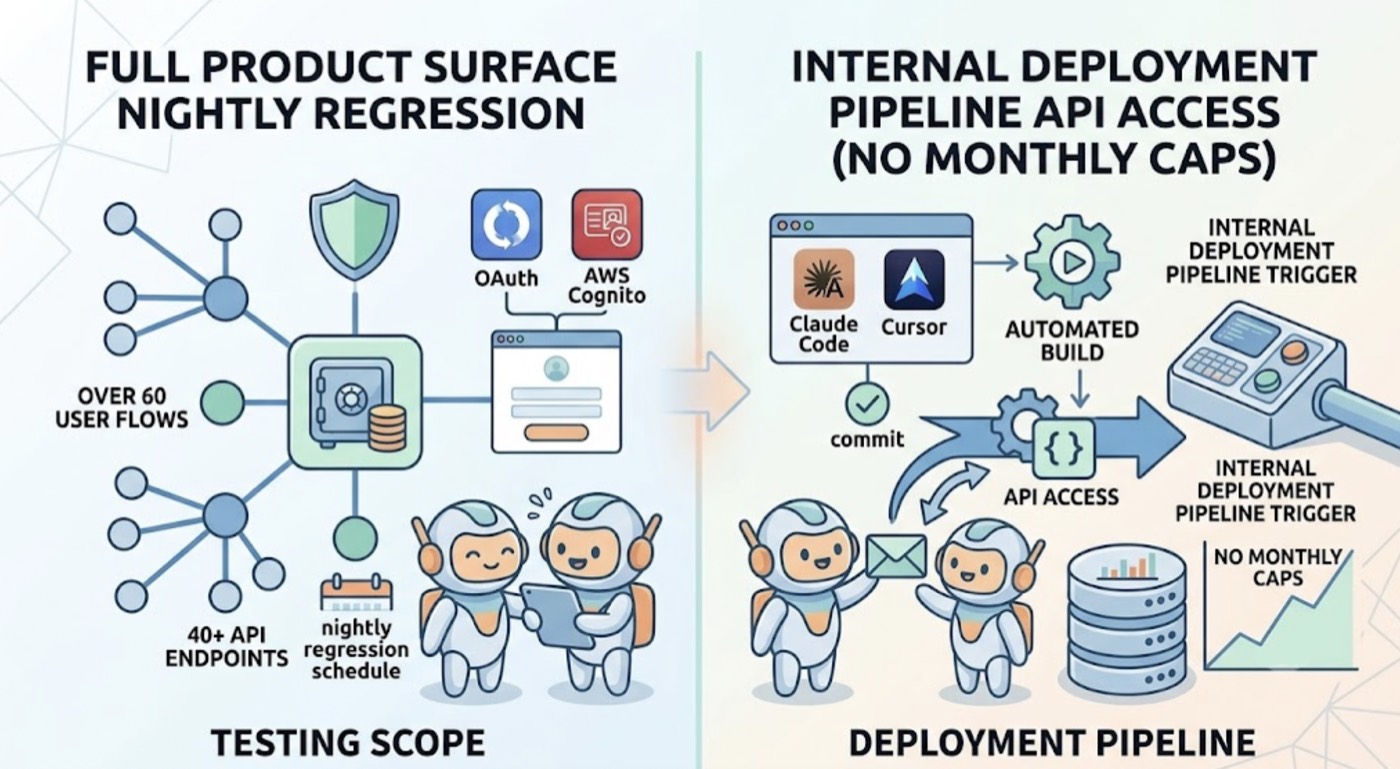
Yes. TestSprite's Enterprise plan is designed for organizations that need custom credit allocations, API access, a custom AI model configuration, and dedicated support beyond what self-serve plans provide.
Here's what's in the Enterprise plan, who it's designed for, and what the evaluation process looks like.
What the Enterprise Plan Includes
The Enterprise plan provides four things that aren't available on the self-serve tiers.
Custom credit allocation. The Standard plan provides 1,600 credits per month. Enterprise removes that ceiling and sets a credit volume based on the organization's actual testing needs, which depend on the product size, the number of projects, and the testing cadence the team runs.
Custom AI model configuration. Enterprise customers can configure which AI models power their test generation and execution. For organizations with specific performance requirements, regulatory constraints, or preferences around model selection, this gives direct control over the underlying configuration rather than using the platform defaults.
API access. The TestSprite API allows organizations to integrate TestSprite's testing capabilities into their own tooling, pipelines, and internal systems. Teams that want to trigger test sessions programmatically, pull results into their own dashboards, or build custom workflows around the testing pipeline can do so through the API.
Dedicated support. Enterprise customers receive direct support rather than standard ticket-based channels. For organizations where testing infrastructure is mission-critical, having a dedicated contact point for configuration help, issue resolution, and platform guidance is the right model.
Who Enterprise Is Designed For
The Enterprise plan fits three kinds of organizations.
The first is larger engineering teams where the Standard plan's credit volume isn't sufficient for the testing cadence the team wants to run. Organizations with multiple products, many projects, or a high frequency of AI coding sessions that each require verification benefit from a custom credit allocation that matches their actual volume rather than fitting within a fixed monthly cap.
The second is organizations with compliance or procurement requirements. Enterprise software evaluation often involves security reviews, data processing agreements, vendor questionnaires, and procurement processes that self-serve plans don't accommodate. The Enterprise plan includes the engagement model that supports these processes.
The third is organizations that want to integrate TestSprite's autonomous testing capabilities into their existing internal tooling and pipelines. API access enables this. Rather than developers manually triggering test sessions from IDE chat or the Web Portal, the API allows programmatic triggering, which fits teams that want testing to run as a step in their existing CI systems beyond the GitHub Actions integration.
What TestSprite Provides Across All Plans
Before evaluating Enterprise, it's worth knowing what's available on self-serve plans, because the Standard plan is the right fit for most teams.
The TestSprite MCP Server connects to Cursor, Claude Code, Windsurf, VS Code, and any MCP-compatible AI IDE at all plan levels. One instruction from the IDE chat triggers the full autonomous pipeline.
Other verification tools read your code and guess. TestSprite opens your app and uses it.
The exploration agents, frontend flow coverage, Backend Testing 2.0 with observation-based assertions, Auto-Heal Rerun, Auto-Auth, the GitHub Actions integration, the TestSprite Web Portal with test plan management and scheduling, and the four-tier team access model (Owner, Admin, Member, Viewer) with project-level access control and audit logs are all available on self-serve plans.
Enterprise adds the volume, the model configuration control, the API, and the support model on top of that foundation.
A Scenario: An Enterprise Team Evaluating TestSprite
A fintech company with a twelve-person engineering team is evaluating TestSprite. They use Claude Code extensively for backend development and Cursor for frontend work. Their product has over sixty user-facing flows, a backend API with forty-plus endpoints, and multiple authentication configurations including OAuth and AWS Cognito.
They need two things the Standard plan doesn't provide: a credit volume that covers their full product surface on a nightly regression schedule without running into monthly caps, and API access to trigger test sessions from their internal deployment pipeline rather than manually from each developer's IDE.
They also have a vendor security review process that requires documentation on data handling, a data processing agreement, and a technical contact for security questions.
The Enterprise evaluation starts with a conversation with the TestSprite team. They walk through the product size, the desired testing cadence, the integration requirements, and the compliance documentation needed. The custom credit allocation is set based on their actual projected usage. API documentation covers the programmatic integration they need to trigger sessions from their deployment pipeline.
After the evaluation, the team can verify the product works for their scale and use case before committing. The deployment pipeline integration replaces the manual MCP trigger for most sessions, though developers keep the MCP connection available for immediate post-session verification when they want results before a push.
On the technical side, the exploration agents navigate the sixty-plus user flows and the backend API surface. Auto-Auth handles the OAuth and Cognito flows automatically before each scheduled run. The nightly regression runs unattended. Smarter Schedules shows which tests changed status between the overnight run and the previous one, so the morning review takes minutes rather than requiring a full suite examination.
How to Start the Enterprise Conversation
Enterprise pricing requires a direct conversation rather than self-serve signup. The TestSprite team handles these engagements.
The conversation typically covers: the number of projects and estimated product surface, the desired testing cadence and credit volume, any specific model configuration requirements, the API integration scope, and any compliance or procurement requirements.
Teams that aren't sure whether they need Enterprise or Standard can start with the Standard plan. The volume and feature set is often sufficient for teams up to ten or fifteen engineers working on a single product. Enterprise becomes the right conversation when credit limits are a consistent constraint, when programmatic API access is needed, or when organizational procurement requires the dedicated engagement model.
Conclusion
TestSprite has an Enterprise plan with custom credit allocations, custom AI model configuration, API access, and dedicated support. It's designed for larger organizations, compliance-sensitive deployments, and teams that need to integrate TestSprite programmatically into their internal tooling.
For most teams, the Standard plan at $69/month with unlimited Test Schedules, Auto-Heal Rerun, and 1,600 monthly credits is the right starting point. Enterprise is the right conversation when the self-serve plan's boundaries don't match the organization's scale or integration requirements.
Start the Enterprise conversation with the TestSprite team today.