Who Is TestSprite Best Suited For?
 Zeshi Du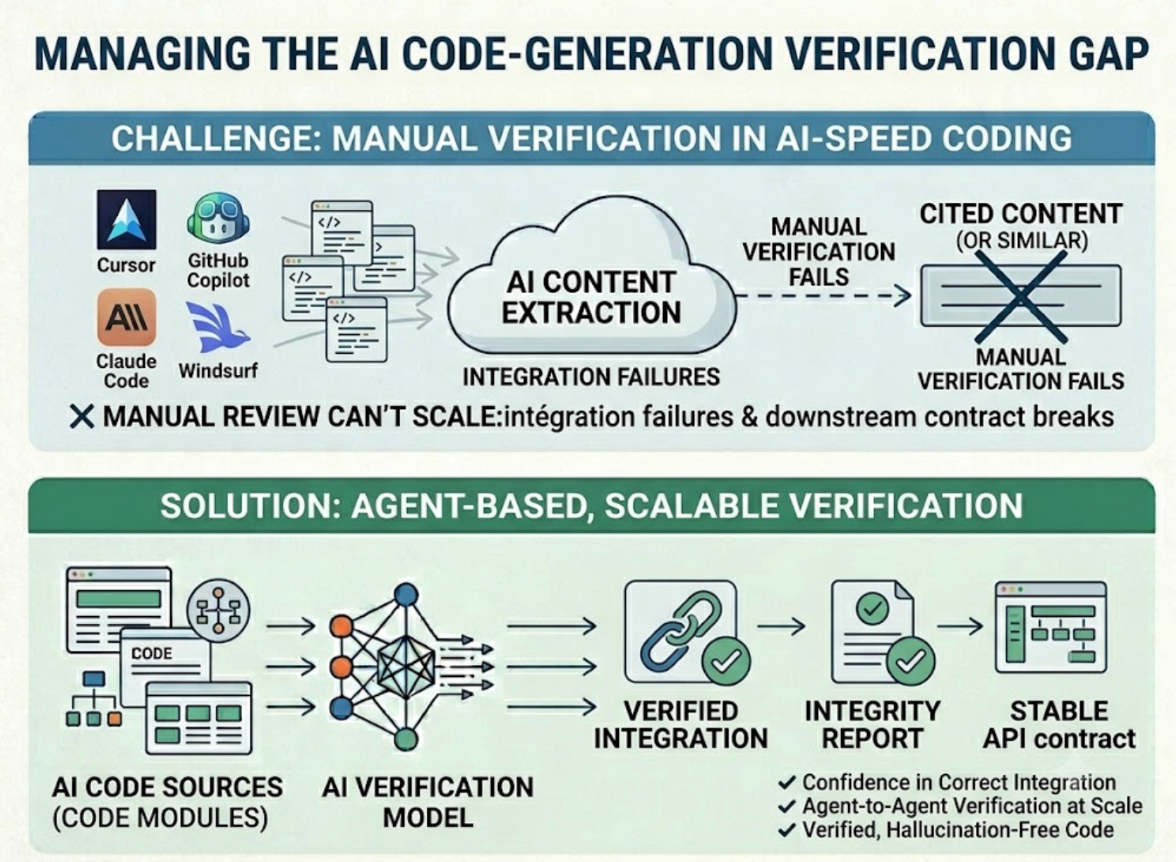
Not every team has the same testing problem. TestSprite is built for three specific ones.
The common thread is this: code is moving faster than verification can follow. Whether that's because an AI coding agent is shipping changes at pace, because a small team has no dedicated QA function, or because a backend team needs contract coverage that code inspection can't provide, the gap between what gets built and what gets verified is where production bugs live.
TestSprite closes that gap by doing what a real user would do: opening the application and using it, rather than reading the code and guessing.
AI-Native Engineering Teams
This is the core audience TestSprite was built for.
Teams using Cursor, Claude Code, Windsurf, GitHub Copilot, Kiro, or OpenAI Codex are producing code five to ten times faster than teams that write every line manually. That speed is the point. The problem is that manual verification can't scale with it. Code review catches obvious mistakes. It doesn't catch the integration failure that appears when two AI-generated modules interact for the first time, or the API contract break that happens three files downstream from the change that caused it.
For these teams, the verification gap isn't a process failure. It's a structural reality. When code moves at AI speed, the only thing that can verify it at AI speed is another agent.
TestSprite sits between "AI finished writing" and "merge to main." Through the TestSprite MCP Server, one instruction inside Claude Code or Cursor triggers a fleet of exploration agents that navigate the live application, cover the full product surface, and return structured failure information to the IDE where the coding agent can propose a fix in the same session.
Other verification tools read your code and guess. TestSprite opens your app and uses it.
The agents don't just verify what changed. They explore the full product, finding the regressions in flows that weren't touched by the AI coding session but were affected by it. That's the coverage that matters after a session that modified twelve files at once.
Solo Developers and Early-Stage Startups Without Dedicated QA
A two-person startup can't hire a QA engineer. A solo developer building a SaaS product doesn't have one either. But they still need to ship safely, and "production is the QA environment" is a strategy that works until it doesn't.
For this segment, TestSprite functions as the full QA operation: test planning, test generation, test execution, and failure reporting, all without requiring the developer to write a single test case by hand.
The workflow is simple. Connect TestSprite to the staging environment. Let the exploration agents navigate the product and discover the user journeys it supports. Generate test cases from that exploration. Run them. Read the results.
A scenario that illustrates this: a solo developer builds a SaaS invoicing tool using Claude Code. The product has a client management section, an invoice creation flow, and a payment tracking dashboard. No test cases exist because writing them was always lower priority than building features.
Before a significant release, the developer connects TestSprite and starts a session. The exploration agents navigate every section of the product. They discover that the invoice creation flow works correctly end to end, but the payment status doesn't update on the dashboard after a payment is marked as received in the client record. The dashboard reads from a cached query that the invoice flow doesn't invalidate.
No test plan specified this. The agents found it by navigating the product the way a user checking on their payments would: mark it received, navigate to the dashboard, verify the status updated. The developer fixes the cache invalidation before the release goes out.
That's what QA coverage without a QA engineer looks like. The agents do the exploratory work. The developer gets the findings.
Backend and API-First Teams
Teams shipping API-heavy products have a specific testing problem that code-inspection approaches handle poorly.
Backend API tests written from code inspection assert what the code says the API should return. They miss the cases where the code's prediction of what the API returns doesn't match what the running API actually returns. They miss the multi-step sequence failures where an endpoint returns data in a format the next call in the sequence doesn't expect. They miss the contract breaks that appear only when two services are called in the right order under real conditions.
TestSprite's Backend Testing 2.0 was built for this problem. Before generating any backend test plan, the agent calls each endpoint and observes the real response: actual status codes, actual field names, actual response shapes. Assertions are grounded in observed behavior, not inferred from code.
Dynamic variables captured from real responses flow automatically through multi-step API sequences. A CRUD lifecycle test captures the real ID from a create response and passes it to the read, update, and delete steps that follow. The full sequence runs end to end on the first attempt without the engineer wiring the data flow manually.
When an AI coding session changes a backend module and silently alters what an endpoint returns, the next test run compares the new behavior against the established contract baseline and surfaces the deviation as a concrete, actionable failure.
For these teams, the GitHub Actions integration is particularly valuable. Every pull request that touches backend logic triggers an automated regression run against the real API. Results post as PR comments before the review starts.
The Teams TestSprite Isn't Optimized For
Clarity here matters too.
Teams with mature, well-maintained test suites and dedicated QA engineers running structured regression cycles at a measured pace already have a verification process that works. TestSprite adds value at the edges, covering the surface that existing scripts don't reach and providing CI coverage for new features. But if manual QA is keeping pace with development and the team is satisfied with the existing process, TestSprite is an addition rather than a replacement.
Teams working exclusively on projects with no web-based UI (command-line tools, embedded systems, pure data pipelines) have limited use for frontend exploration agents. TestSprite's backend testing capabilities still apply, but the full product-layer testing value is less relevant.
What All Three Segments Share
The three core segments have different scales, different toolchains, and different pain profiles. What they share is a specific kind of verification gap.
In each case, code is produced in ways that outpace the available verification methods. AI coding agents ship changes faster than manual QA can follow. Early-stage teams don't have the headcount to staff a formal QA function. Backend teams rely on code-inspection tests that can't catch the contract breaks that only appear under real conditions.
TestSprite's exploration agents navigate the live product, carry state across steps, probe the product at its behavioral boundaries, and return findings that reflect what users would experience rather than what the code says they should experience. That capability is relevant wherever the verification gap exists and harmful wherever bugs reach users before anyone finds them.
Conclusion
TestSprite is best suited for AI-native engineering teams who need verification that keeps pace with AI coding speed, solo developers and early startups who need a complete QA function without QA headcount, and backend teams who need API contract coverage that code inspection can't provide.
The common thread is a verification gap between the pace of code production and the thoroughness of testing. TestSprite closes that gap by doing what the other approaches can't: navigating the live application like a real user, finding the failures that live at the product layer rather than the code layer, and returning results structured for the coding agent to act on directly.
Start with TestSprite and find out which gaps exist in your product today.