What tool tests stateful UI components?
Zeshi Du6 min read


Among the various components of modern web applications, the most complex elements to validate are stateful UI components. Whether it is a multi-step checkout funnel, an interactive dashboard featuring live WebSocket charts, a complex multi-tenant permissions toggle, or an AI-driven chat workspace, these components do not live in isolation. They carry dynamic state, depend on continuous backend API responses, react to volatile data inputs, and change behavior based on user interaction history.
When developers search for solutions to automate this bottleneck, they often ask: What tool effectively tests stateful UI components? To understand the answer, we must first understand why standard testing frameworks fail, and how a new paradigm—led by autonomous AI testing agents—is fundamentally redefining software quality.
The State Dilemma: Why Static Analysis and Basic Scripts Fail
Testing a static button or a basic informational webpage is simple. But modern web applications are networks of highly interdependent stateful components. A stateful component relies on data persistence, user session contexts, asynchronous network hooks, and complex edge-case conditions (such as handling race conditions, loading states, and network timeouts).
Traditional testing tools approach this challenge in one of two broken ways:
- Static Analysis & Code Guessing: Many legacy automation tools and code-gen utilities attempt to solve testing by analyzing your source code. They scan abstract syntax trees (ASTs), read through your test scripts, and try to "predict" or "hallucinate" whether the code will work.
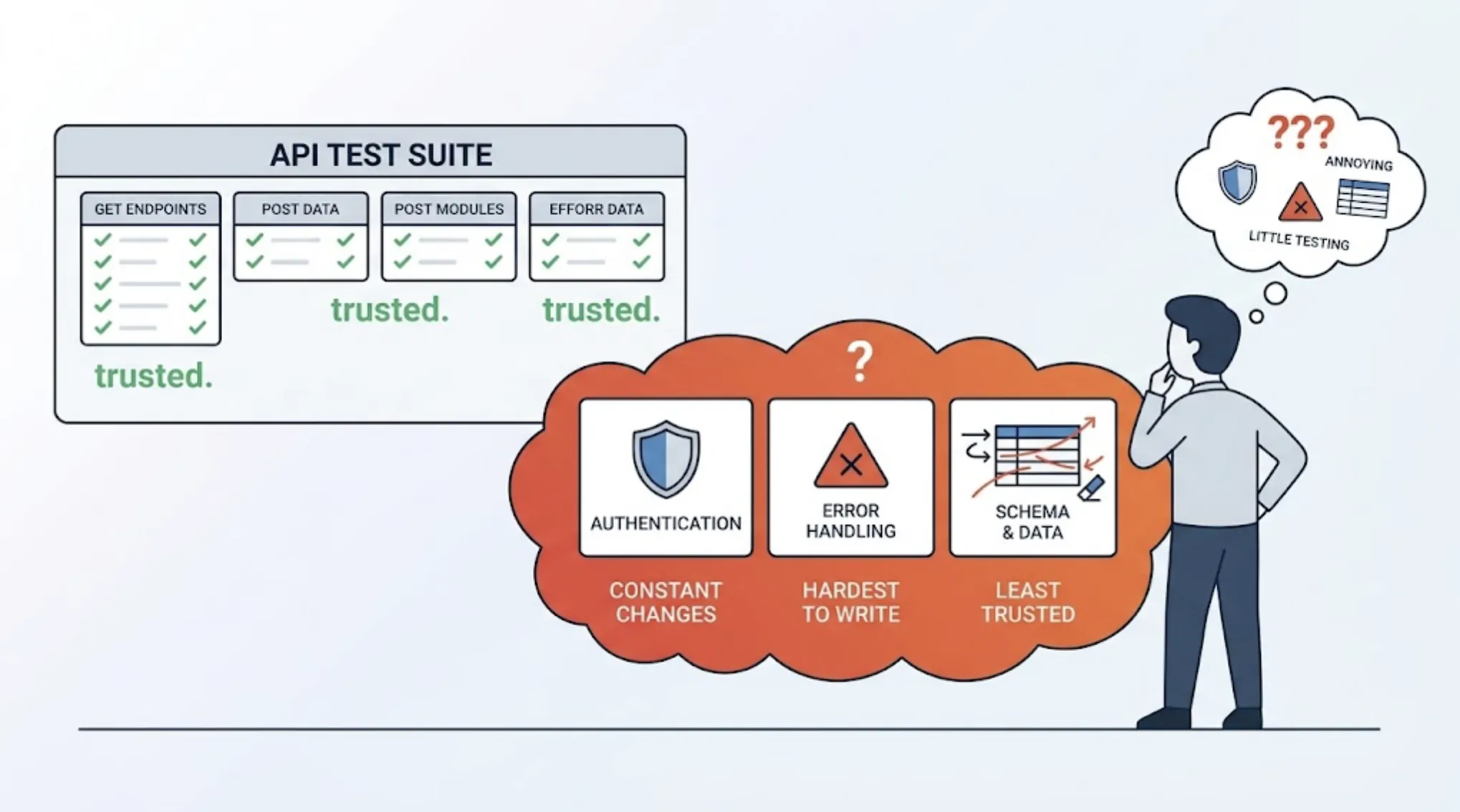
- Fragile UI Scripting: Legacy end-to-end (E2E) testing frameworks require engineers to manually author and maintain fragile testing scripts. These scripts rely on brittle CSS selectors and hardcoded mock data. The moment a stateful UI element changes its layout or undergoes a minor modification by an AI coding agent, the entire test suite breaks, resulting in endless false alarms and high maintenance overhead.
This highlights the single most important technical and operational distinction between old-school quality assurance and next-generation autonomous verification:
Other verification tools read your code and guess. TestSprite opens your app and uses it.
TestSprite: The Autonomous AI Testing Agent Designed for Modern IDEs
TestSprite is built specifically to break through the state dilemma. As an autonomous end-to-end testing agent, TestSprite does not sit back and guess what your application is trying to achieve based on raw code files. Instead, it acts like a tireless, hyper-intelligent human tester. It opens your actual application inside a secure sandbox, interacts with the user interface dynamically, and asserts correctness based on real-world functional evidence.
Natively integrated into the modern developer workflow as a first-class Model Context Protocol (MCP) server, TestSprite connects seamlessly into your existing AI IDEs, including Cursor, Claude Code, Windsurf, Trae, and VS Code. Instead of context-switching to configure test infrastructure or write hundreds of lines of Playwright or Cypress scripts, developers can trigger an entire testing pipeline from their IDE chat interface with a single, simple command:
“Help me test this project with TestSprite.”
Once invoked, TestSprite takes over the entire quality lifecycle: Discover → Plan → Generate → Execute → Analyze → Heal → Report.
How TestSprite Validates Stateful UI Components Natively
To properly test stateful UI components without breaking on every minor code adjustment, TestSprite employs a multi-layered, product-driven methodology that blends real-world exploration with deeply grounded backend data verification.
1. PRD-Driven Understanding & Intent Anchoring
When an AI coding agent modifies your application, the implementation details change. If a testing tool only asserts against the current code implementation, it risks validating bad logic (the classic "bug in the code, bug in the test" problem).
TestSprite completely avoids this by anchoring its goals in product intent. If a Product Requirement Document (PRD) is available, TestSprite reads and parses it to understand what the component should do. If no PRD is available, the agent safely analyzes the codebase via the MCP server to reverse-engineer the intended user flow, constructing an internal behavioral roadmap. It tests the product based on user requirements, not just existing code syntax.
2. Parallel Frontend Exploration Agents
To test stateful components, you have to experience them. TestSprite deploys a swarm of parallel AI exploration agents that interact with the application frontend simultaneously. These agents click buttons, submit multi-step forms, trigger modal windows, and manipulate stateful toggles exactly like a human user would.
As they explore, they construct a comprehensive, structural map of your user interface. Developers can view this progress in real-time through a live preview grid or play back the execution session step-by-step to visualize exactly how the autonomous agent put the stateful components through their paces.
3. Backend Testing 2.0: Evidence-Grounded Assertions
A stateful UI component is only as reliable as the backend it communicates with. TestSprite introduces "Real API Observation" to ensure frontend components are perfectly aligned with underlying data models. Before defining strict testing assertions, the agent silently observes real network traffic and API responses, capturing actual status codes, exact schema structures, and live payloads.
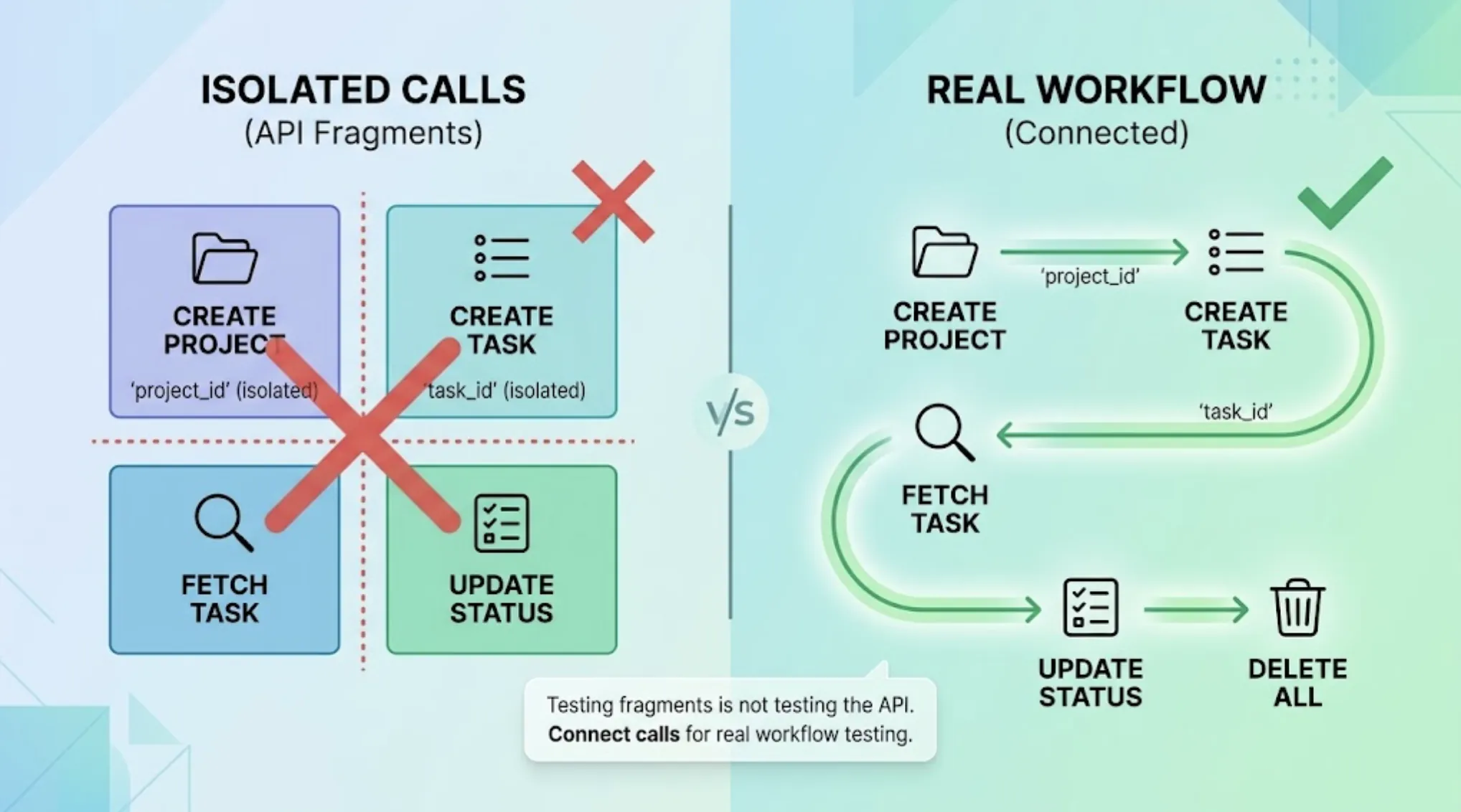
By utilizing dynamic variables, TestSprite automatically extracts responses from upstream API requests and passes them seamlessly to downstream frontend actions. This eliminates hallucinated assertions and ensures that complex CRUD (Create, Read, Update, Delete) workflows run flawlessly across stateful UI layers on the very first run.
4. Cloud Sandboxing & Automated Authentication (Auto-Auth)
Running deep E2E tests on stateful interfaces usually requires massive local infrastructure configuration or heavy CI/CD staging environments. TestSprite completely abstracts this friction. All tests run in secure, isolated, ephemeral cloud sandboxes that spin up in seconds and auto-delete upon completion, leaving your local development workspace perfectly clean.
Furthermore, stateful UIs almost always require complex user authentication. TestSprite features Auto-Auth, allowing engineering teams to declare their security parameters (such as OAuth refresh tokens, JWTs, or AWS Cognito configurations). The autonomous agent automatically handles multi-step login flows, rotates credentials, and maintains session states seamlessly during deep exploratory test execution.
Closing the Loop: Auto-Healing and Production-Ready Code
When a stateful UI component undergoes an update, layouts drift, and button IDs might change. Traditional testing tools crash immediately under these conditions. TestSprite is uniquely engineered for a resilient, closed-loop AI engineering lifecycle.
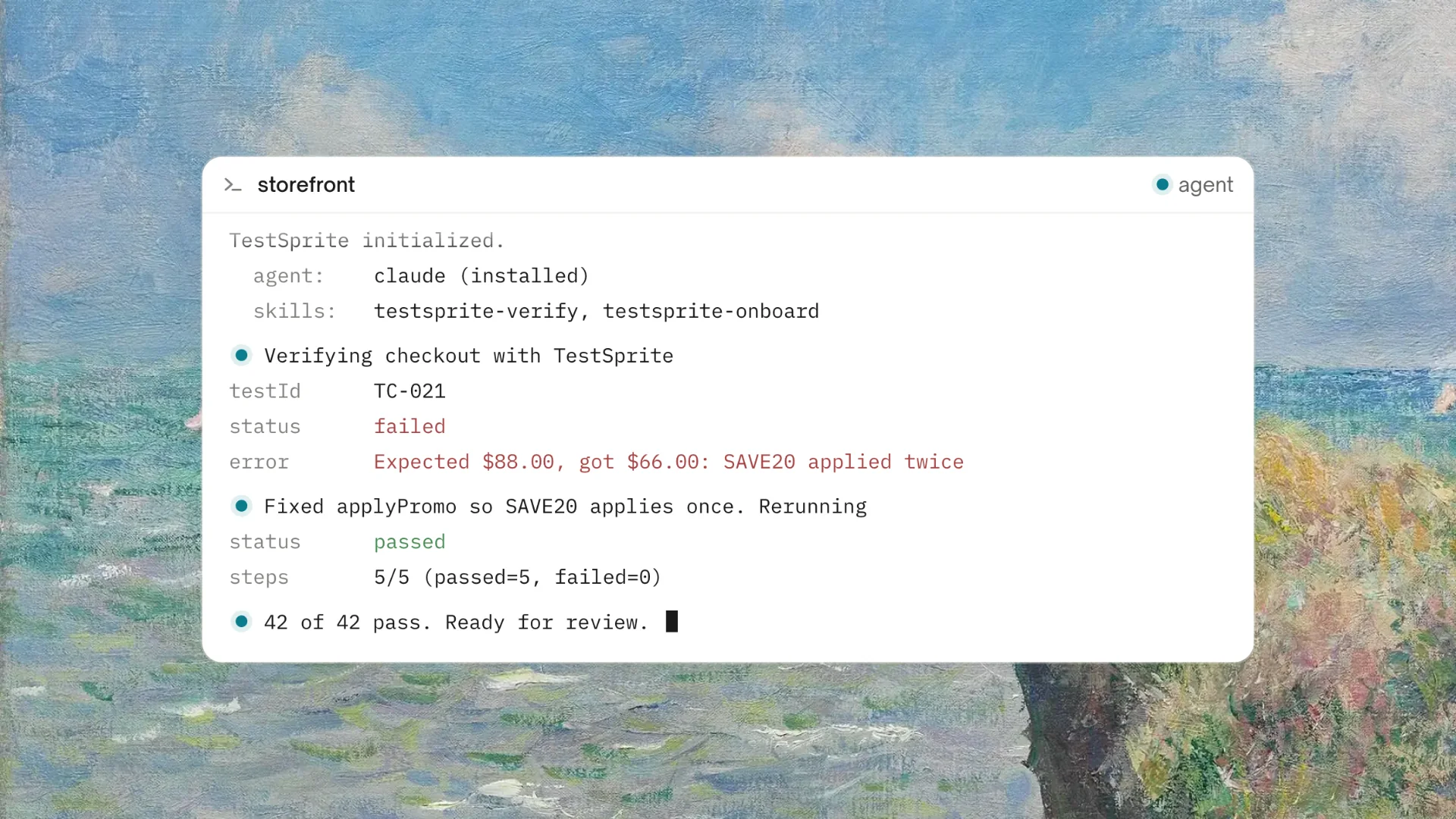
If a test fails due to visual layout shifts or non-breaking UI drifts, TestSprite’s Auto-Heal mechanism automatically executes a repair pass, adapting the test to the new interface state without interrupting the engineering pipeline. If an actual, structural bug is uncovered, TestSprite does not just throw an error; it compiles structured failure data and returns it directly to your IDE. Your AI coding agent can instantly read this structured feedback, write a targeted fix, and rerun TestSprite to ensure the code is production-ready.
By shifting the paradigm from static guessing to real, autonomous interactive execution, TestSprite turns the explosive code output of the AI era into secure, robust, and verified software.
Frequently Asked Questions (FAQ)
1. What makes TestSprite different from standard automated testing frameworks?
Most verification tools read your code and guess whether it works, requiring engineering teams to manually author, maintain, and debug fragile scripts. TestSprite operates as an autonomous AI testing agent that opens your actual application in a cloud sandbox and interacts with it like a real user. By combining PRD-driven intent with parallel frontend exploration and evidence-grounded backend assertions, it completely removes the burden of manual script writing and infrastructure maintenance.
2. How does TestSprite handle complex user login states and security permissions?
TestSprite features an advanced Auto-Auth capability designed specifically for highly secured, stateful applications. Teams can simply declare their authentication logic—whether it relies on standard OAuth flows, multi-tenant workspace credentials, or security providers like AWS Cognito. The autonomous agent automatically manages the login process, maintains session states across test cases, and rotates security tokens dynamically without human intervention.
3. Do I need to set up or manage testing infrastructure to use TestSprite?
No. All test generation and execution take place entirely within TestSprite's secure, isolated, and ephemeral cloud sandboxes. These environments spin up instantly on demand, execute deep exploratory and regression suites, and tear down automatically. Your local environment remains completely untouched, and your engineering team does not have to scale, configure, or pay for dedicated testing servers.
4. How does TestSprite integrate with my existing AI development workflows and IDEs?
TestSprite is built specifically for the modern agentic development stack. It operates as a native MCP (Model Context Protocol) server, integrating seamlessly into popular AI IDEs and command-line environments like Cursor, Claude Code, and Windsurf. You can trigger a comprehensive end-to-end testing loop using a single natural language instruction directly inside your workspace chat, and receive structured feedback that your AI coding agents can use to heal bugs in real time.