What Testing Infrastructure Fits AI-Native Software Teams?
Rui Li5 min read

Infrastructure choices follow from how a team actually works, so the question starts one level down: what's structurally different about an AI-native software team?
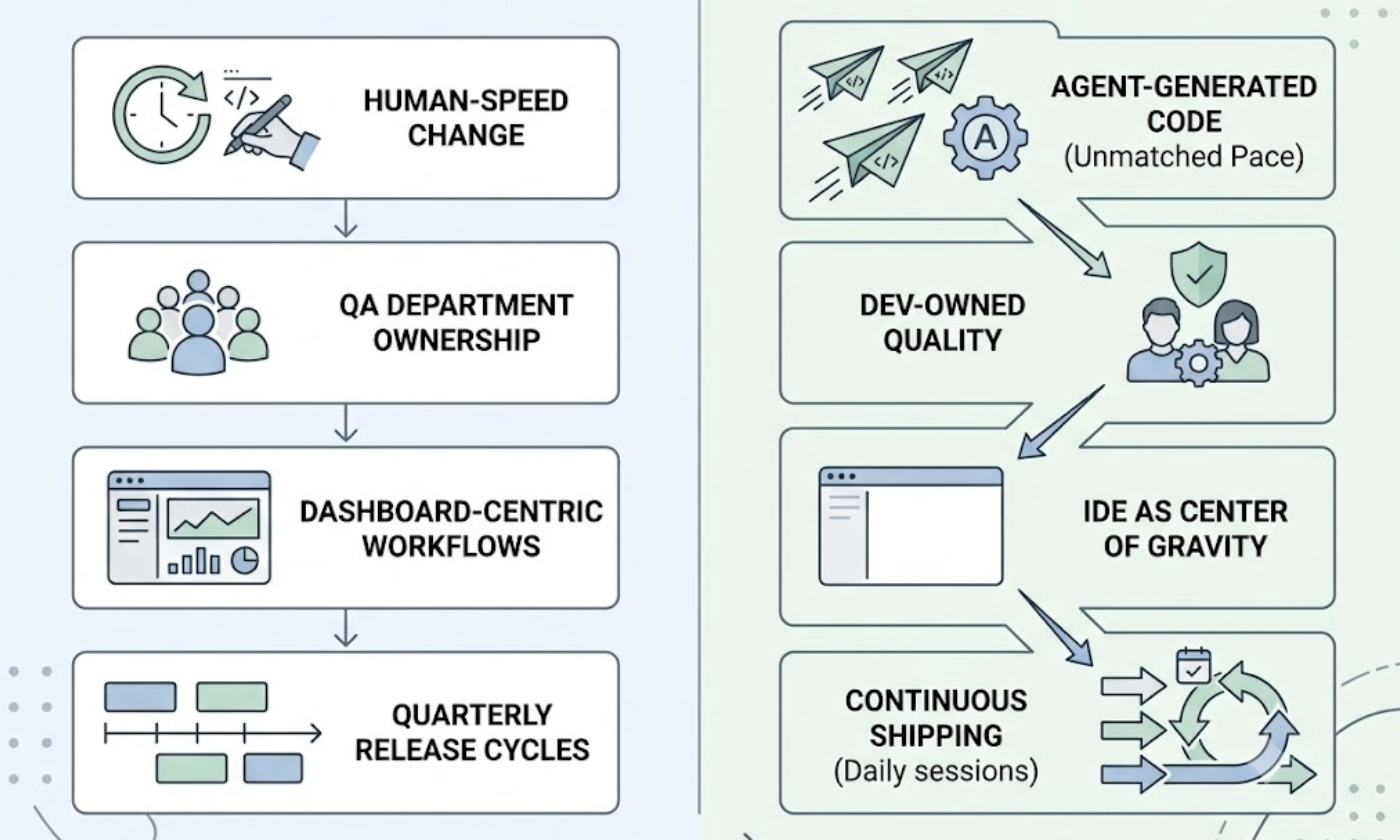
Four things, typically. The code comes from agents, Claude Code, Cursor, GitHub Copilot, at a pace no manual process matches. There's no QA function; the same two to six people who build the product own its quality. The IDE is the center of gravity, where the work happens and where information needs to arrive. And shipping is continuous, sessions merging daily rather than releases landing quarterly.
Testing infrastructure built for the previous era assumed the opposite of each: human-speed change, a QA department, dashboard-centric workflows, and release cycles with room for verification phases. What fits an AI-native team is infrastructure derived from the new assumptions. Here's the requirements list, and what it looks like assembled.
Requirement One: It Operates Where the Code Is Written
For an AI-native team, any tool that requires leaving the IDE pays a tax on every use, and taxes on frequent actions determine whether the actions happen at all.
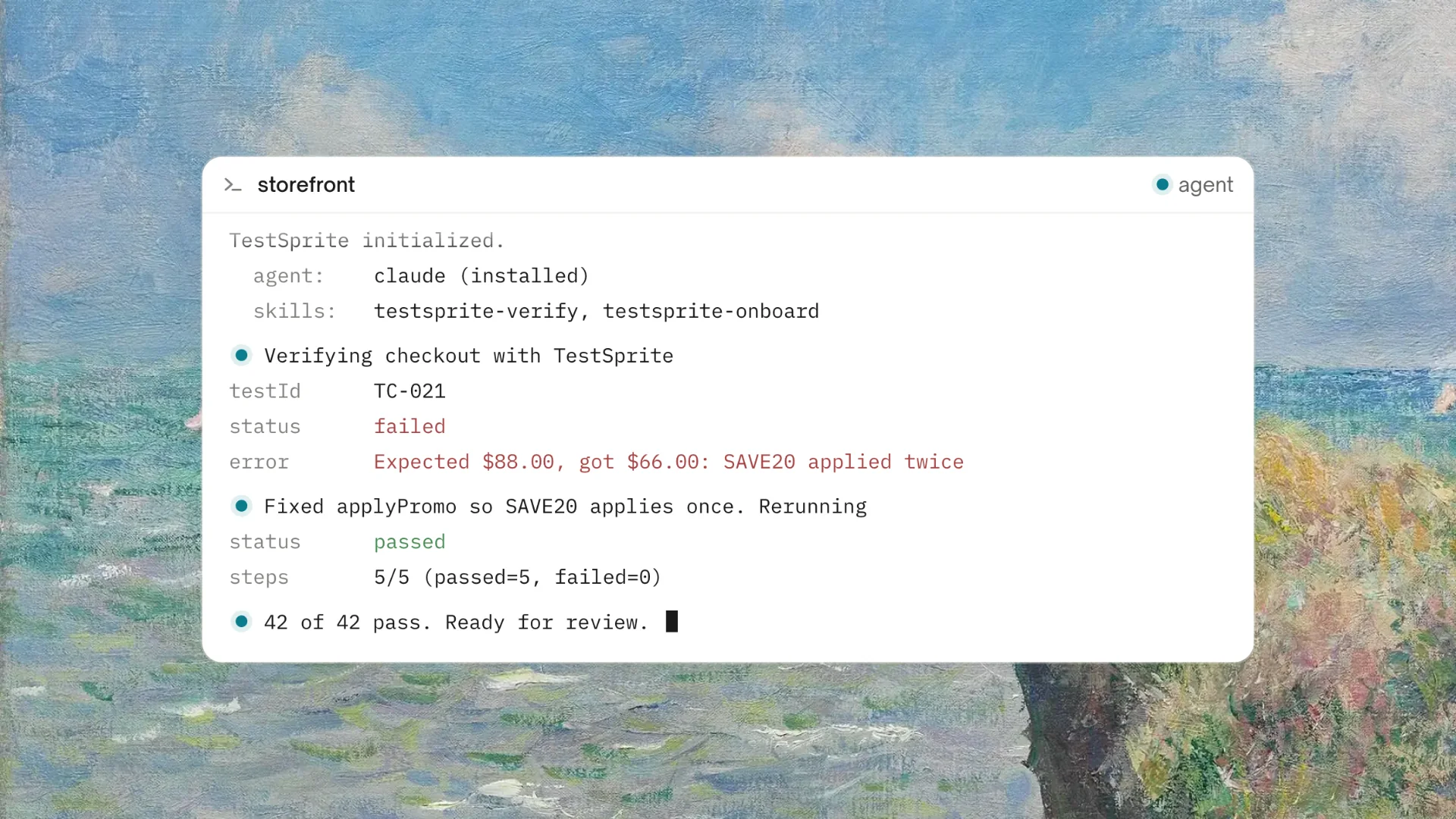
Testing infrastructure that fits runs from inside the coding environment. TestSprite's MCP Server connects natively to Cursor, Claude Code, Windsurf, and VS Code: one instruction in the session that just produced the code triggers the full pipeline, and results return to the same window. The developer never context-switches, and the coding agent that wrote the change receives the findings directly, in a form it can act on in the same session.
That last part is the quiet requirement inside the requirement: on an AI-native team, the consumer of test results is often the coding agent, not just the human, so findings need to be structured for machine action, which flow, which step, what should have happened, what did.
Requirement Two: Coverage That Generates Itself
Infrastructure that depends on humans authoring tests inherits a bottleneck the team was built to avoid. With no QA function and agent-speed code production, authored coverage falls behind on day one and never catches up.
The fitting property is self-generating coverage. TestSprite's exploration agents visit the running application and navigate it the way real users would, discovering flows by using the product. Scenarios are outputs of exploration, not inputs someone had to write, and when the product grows a new surface, the next run covers it without anyone remembering to.
Other verification tools read your code and guess. TestSprite opens your app and uses it.
Self-maintenance is the other half of the same property. Auto-Heal Rerun judges failures behaviorally, adapting to the structural churn that AI coding sessions produce weekly and surfacing only the regressions users would actually feel, so the coverage stays trustworthy without a human refreshing it.
Requirement Three: Full-Stack in One System
AI coding sessions don't respect layer boundaries: a single Claude Code session routinely touches an API and the frontend consuming it. Infrastructure that tests those layers in separate systems, with separate configurations and separate results, leaves the seam between them, exactly where the failures live, as nobody's responsibility.
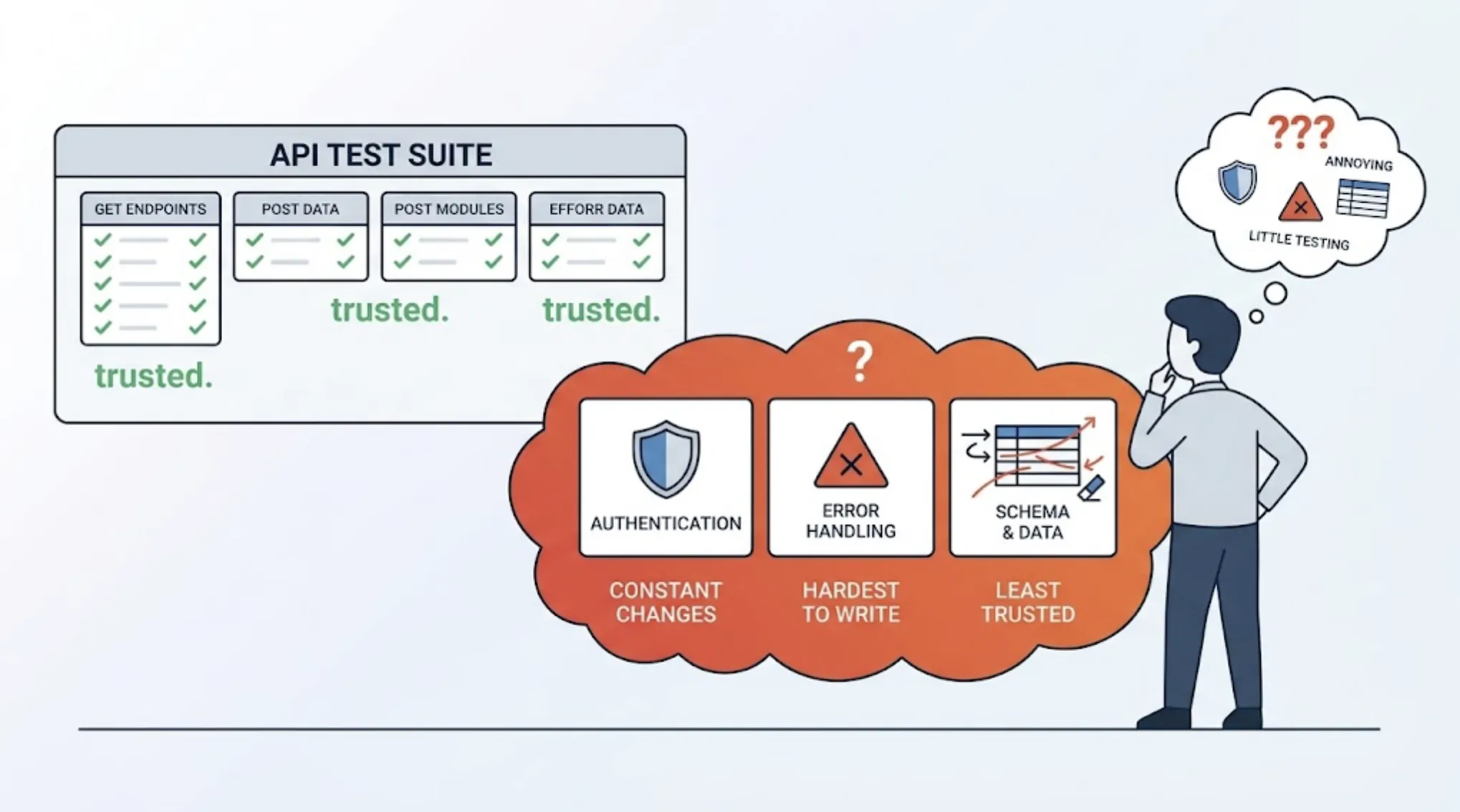
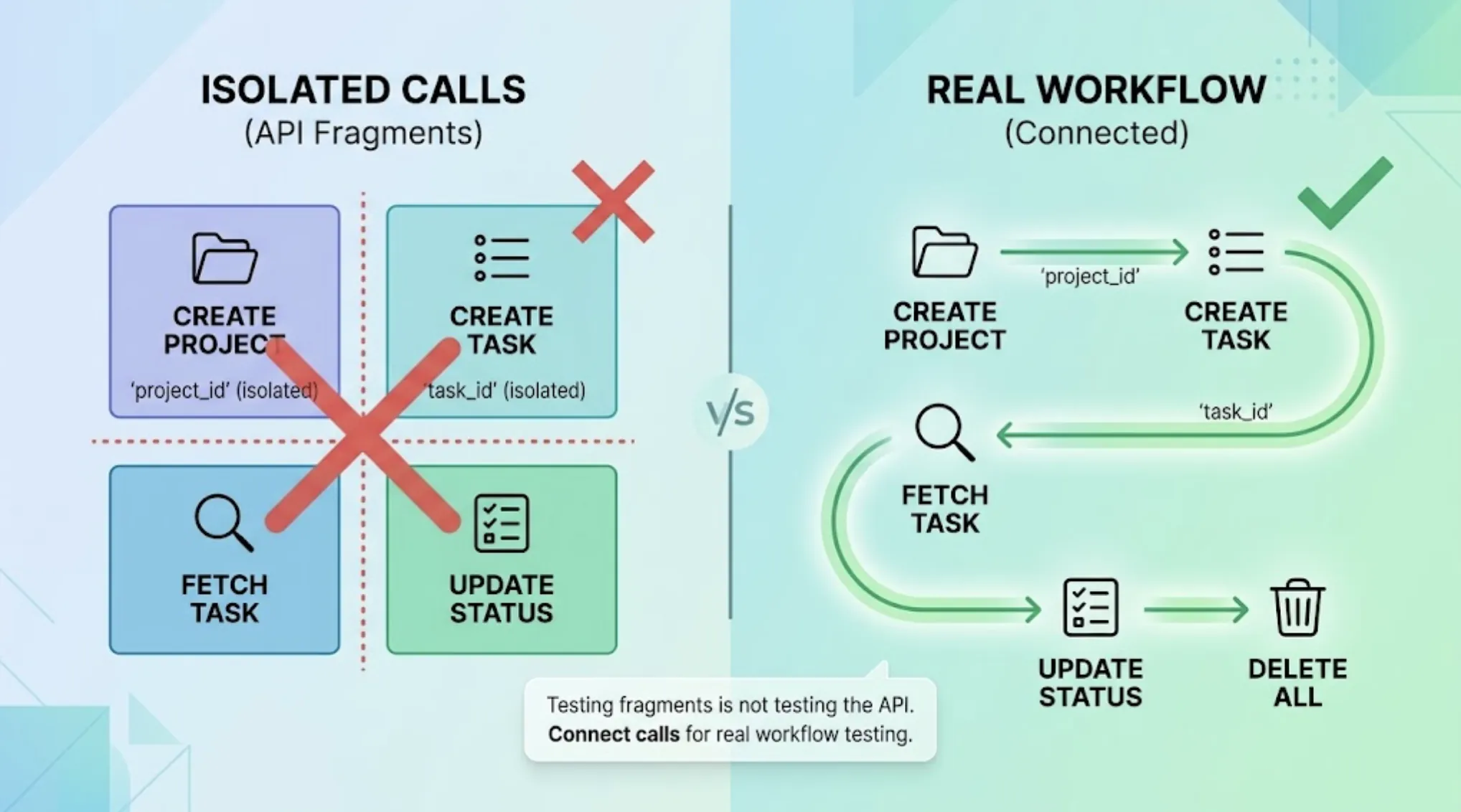
The fitting shape is one system that verifies both in one run. TestSprite's exploration agents cover the frontend surface while Backend Testing 2.0 covers the APIs, calling each endpoint and observing real responses before generating assertions, threading dynamic variables through multi-step chains, and flagging contract deviations against observed baselines. When a backend rename breaks a frontend read, both sides of the failure arrive in the same report, connected.
Requirement Four: Unattended Reliability
Continuous shipping needs standing verification, the nightly regression, the check on every pull request, and standing verification is only as good as its ability to run with nobody watching.
Three properties make unattended real. Auto-Auth performs authentication fresh before every execution, password endpoints, OAuth refresh tokens, AWS Cognito, so scheduled runs never die at the login screen. The ephemeral cloud sandbox provides execution that spins up in seconds and tears down after, no runners for the team to keep alive, no environment that decays between runs. And the signal layer is built for the morning after: the "Changes vs previous" column shows what flipped since the last run, and failure emails arrive with the cause analyzed inline, so triage happens over coffee rather than in a dashboard excavation.
GitHub Actions completes the standing layer: every pull request gets the same product-level verification, with findings posted as PR comments where the reviewer already is.
Requirement Five: Economics That Match the Team
Infrastructure priced for enterprise QA departments, per-seat licenses, parallel-session tiers, implementation projects, mismatches a five-person team in both directions: they pay for capacity they can't use while the constraint they have goes unaddressed.
Fitting economics scale from zero: a free plan with 150 monthly credits and no credit card, Starter at $19 per month, Standard at $39, Pro at $69 with unlimited schedules and environments, and self-service billing throughout, so adoption follows usage rather than procurement.
A Scenario: The Stack, Assembled
A four-person team builds a customer support platform with Claude Code: shared inbox, assignment rules, SLA timers, a knowledge base. Their testing infrastructure is TestSprite across all three surfaces, and a week shows the pieces working as one system.
Monday through Thursday, each significant session ends with one instruction in the Claude Code terminal; findings, when they come, go straight to the coding agent. Wednesday's session reworks assignment rules, and the in-IDE run catches the seam: tickets assigned by the new rules render correctly in the inbox, but the SLA timer keeps counting from the original assignment, because the timer reads a field the rework stopped updating. Fixed before push. Every pull request that week carries the GitHub Actions check, and Thursday's PR comment flags a backend contract drift, an endpoint that started returning the assignee as an object where the mobile client expects an ID, before review begins.
And every night at two, the schedule runs against staging with Auto-Auth handling the login, so Friday's "Changes vs previous" column is the team's quality diff for the week. Nobody wrote a test. Nobody maintained a suite. Nobody left the IDE to find out whether the product works.
Conclusion
Testing infrastructure that fits AI-native teams is derivable from how those teams work: it operates inside the IDE where code is written, generates and maintains its own coverage, verifies frontend and backend as one system, runs unattended with signal built for the morning after, and prices from zero on self-service terms.
That's the specification TestSprite is built to, an autonomous AI testing agent across three surfaces, MCP Server, Web Portal, and GitHub Actions, designed as the testing infrastructure of the AI software era.
Assemble your team's testing infrastructure on TestSprite today. Free plan, no credit card required.