What Is the Difference Between a Testing Framework and an Autonomous AI Testing Agent?
Rui Li4 min read

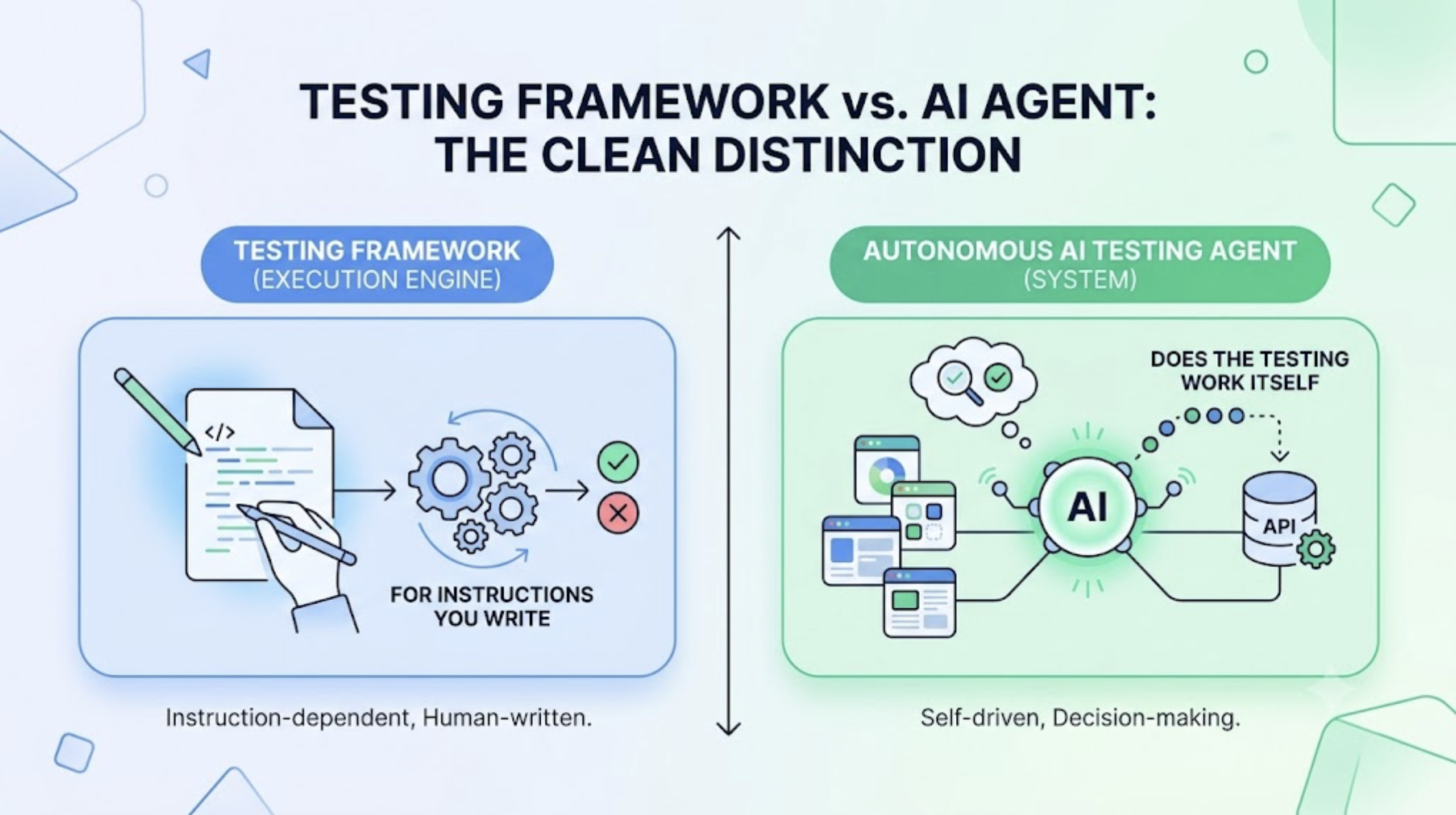
The two terms get used in the same conversations, sometimes interchangeably, and they name fundamentally different things. A testing framework is an execution engine for instructions you write. An autonomous AI testing agent is a system that does the testing work itself.
Getting the distinction precise matters because the tools are not competitors in most senses: they occupy different layers, carry different responsibilities, and fail in different ways. Here's the clean version of the difference, and why it started mattering so much more once AI began writing the code.
What a Testing Framework Is
A testing framework, Playwright, Cypress, and Selenium are the canonical examples, is infrastructure for executing tests that humans author. It provides the vocabulary for browser automation: navigate to this URL, click this element, type into this field, assert that this text appears. It handles the hard mechanical problems underneath, browser control, waiting, retries, parallelism, so the engineer's instructions run reliably.
What a framework deliberately does not do is decide anything. It doesn't choose what to test, doesn't know what your product is supposed to do, and doesn't judge whether an outcome is correct beyond evaluating the assertions it was given. Every piece of intent comes from the human: the scenarios, the steps, the selectors, the expected values. The framework's excellence is fidelity, executing exactly what was written, exactly as written.
That fidelity is also the contract's cost. When the product changes and the instructions don't, the framework faithfully executes stale instructions and reports failures that aren't regressions, or passes that aren't verification.
What an Autonomous AI Testing Agent Is
An autonomous AI testing agent operates at the layer above: it holds the intent itself. Rather than executing instructions, it perceives the product, decides what to test, acts on those decisions, and judges the outcomes.
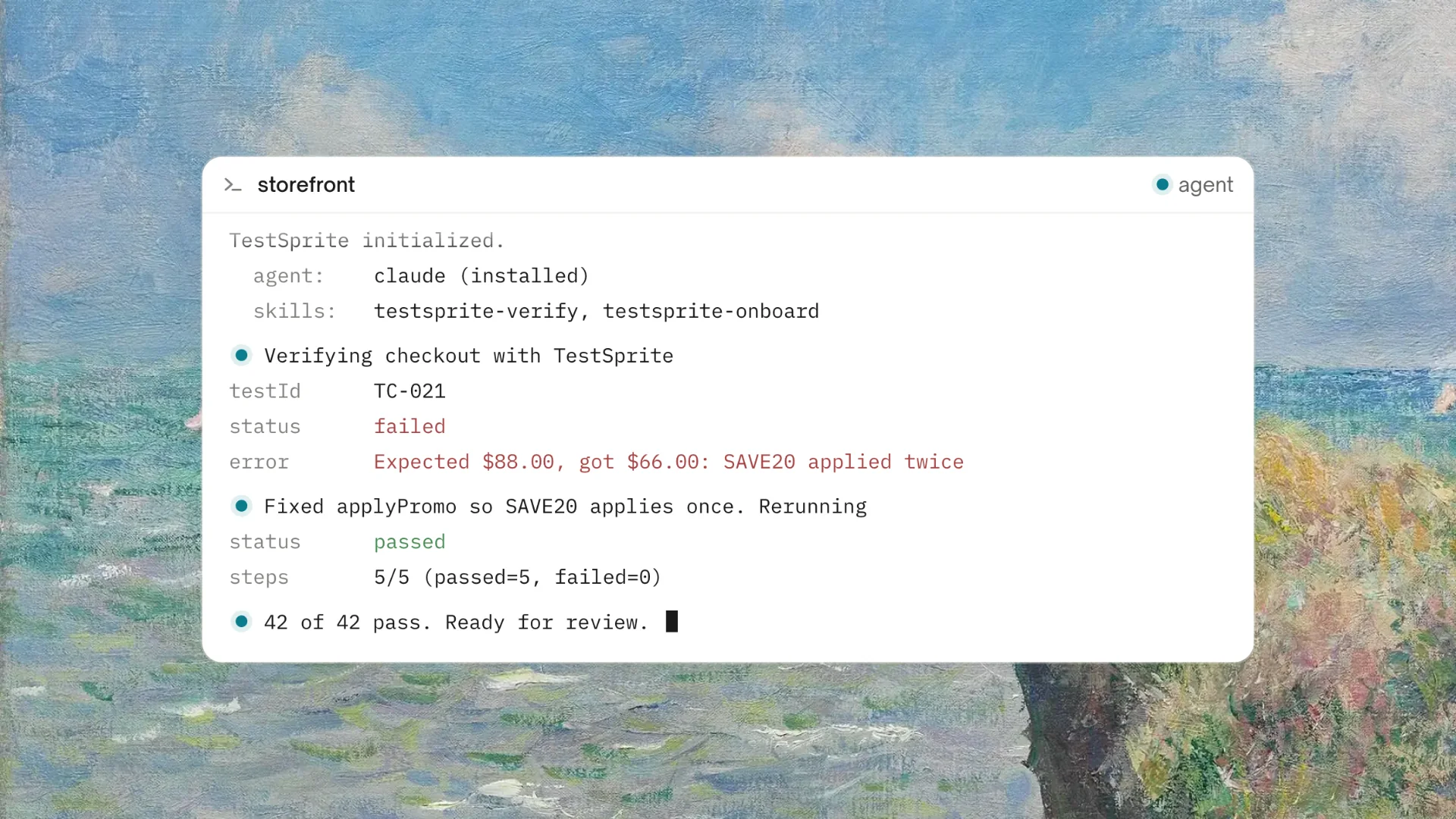
TestSprite is built as this kind of system. Its exploration agents visit the running application and navigate it the way real users would: discovering flows by using the product, filling forms with realistic inputs, following multi-step journeys, carrying session state across steps. The test scenarios aren't inputs someone provided. They're outputs of the exploration.
Other verification tools read your code and guess. TestSprite opens your app and uses it.
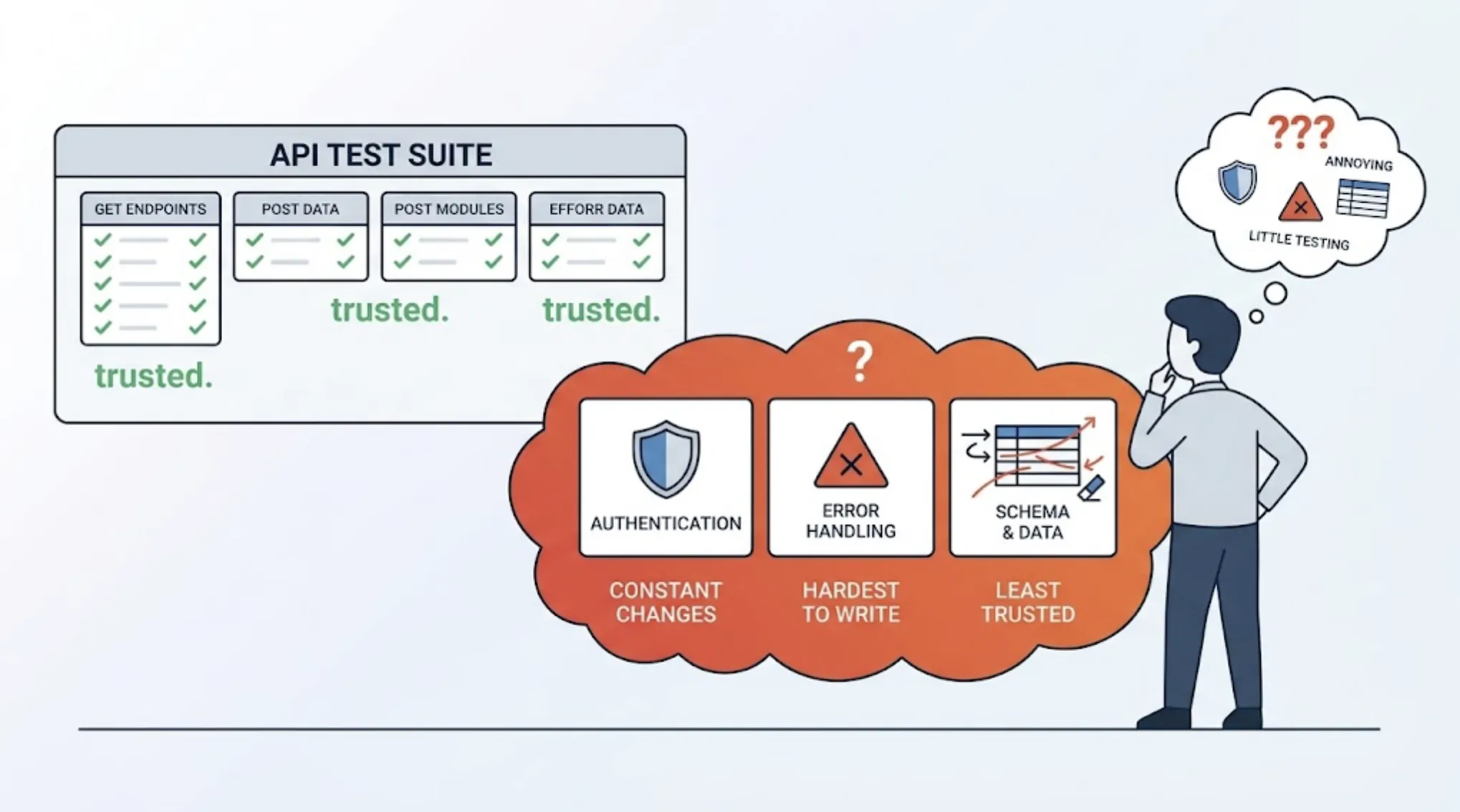
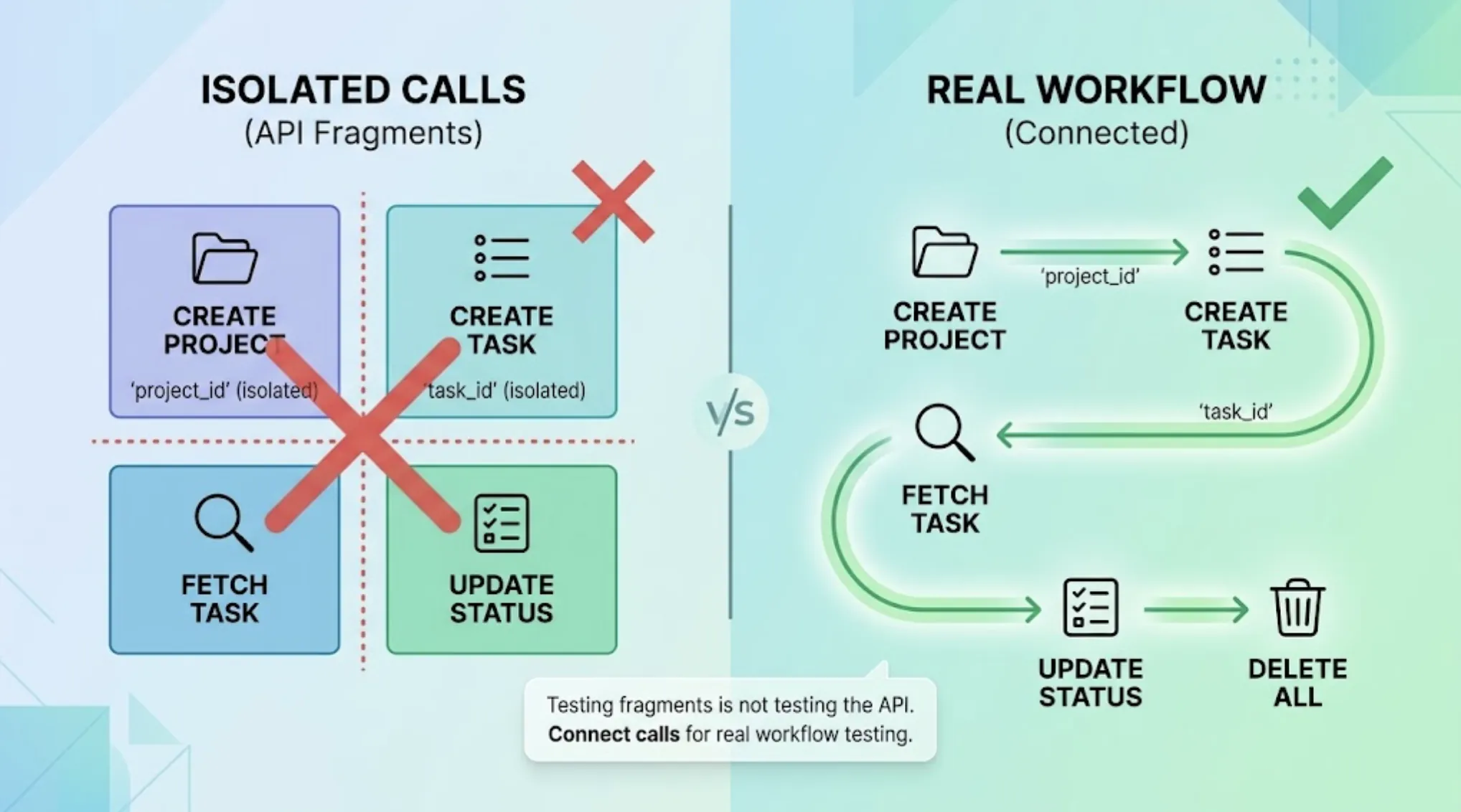
The judgment layer is the deeper difference. When something fails, the agent's question isn't "did assertion 14 evaluate to false" but "did the product deliver the correct outcome for the user." That's why Auto-Heal Rerun can distinguish a renamed button that still works from a renamed button that broke the flow: the agent evaluates behavior against product intent, not structure against a script. And on the backend, the same principle runs through Backend Testing 2.0: the agent calls the API first, observes the real response, and builds assertions from observed reality rather than from instructions or inference.
The Responsibility Matrix
The cleanest way to see the difference is to ask who holds each responsibility.
A framework is a power tool: it amplifies the skilled human holding it. An agent is a delegate: it takes over the job, including the parts between the runs.
Why the Distinction Suddenly Matters
For two decades, the framework model was sufficient because its hidden assumption held: a human with time and product knowledge sits at the authoring layer. Development moved at human speed, so authoring could keep pace and maintenance stayed occasional.
AI coding tools broke the assumption. Claude Code and Cursor produce changes faster than any engineer can write instructions to verify them, and they churn implementation details, component names, structures, response shapes, as a routine side effect. Under those conditions, the framework model's costs compound: the authoring gap widens with every session, and the maintenance tax arrives weekly instead of quarterly.
The agent model was built for exactly these conditions. Coverage that generates itself from the product can keep pace with code that generates itself from prompts. When the bottleneck moved from executing tests to authoring and maintaining them, the layer that needed automating changed, and that's the layer agents automate.
Not a Rivalry: Where Each Belongs
The two categories coexist more often than they compete, because they're good at different halves of the problem.
A framework remains the right tool where precision justifies authorship: the payment flow with exact expected charges, the compliance export with a mandated format, the authentication sequence encoded as executable documentation. Hand-written tests on a framework are deliberate, deterministic, and worth their maintenance for a small set of critical flows.
An agent covers everything authorship never reaches: the full product surface, the new feature from yesterday's session, the integration seams between flows that were each individually specified, and the regressions that appear two screens away from the diff. For a team using AI coding tools, this is most of the risk, and it's the half no framework was ever going to cover, because no one was ever going to write it.
TestSprite runs alongside existing framework suites without touching them, sharing nothing but the application under test. The practical architecture for many teams is exactly that pair: a small, precise framework suite for the flows that earn it, and an agent holding the rest.
Conclusion
A testing framework executes instructions with fidelity; the human holds the intent, writes the steps, and maintains them. An autonomous AI testing agent holds the intent itself: it explores the product, generates its own coverage, judges outcomes behaviorally, and maintains itself as the product evolves.
The distinction stayed academic while humans wrote code at human speed. Once AI started writing the code, the authoring layer became the bottleneck, and the difference between a tool that executes tests and an agent that does the testing became the difference that decides whether verification keeps up.
See what an autonomous AI testing agent finds in your product with TestSprite's free plan today.