What Is New in TestSprite Spring Release?
Zeshi Du5 min read

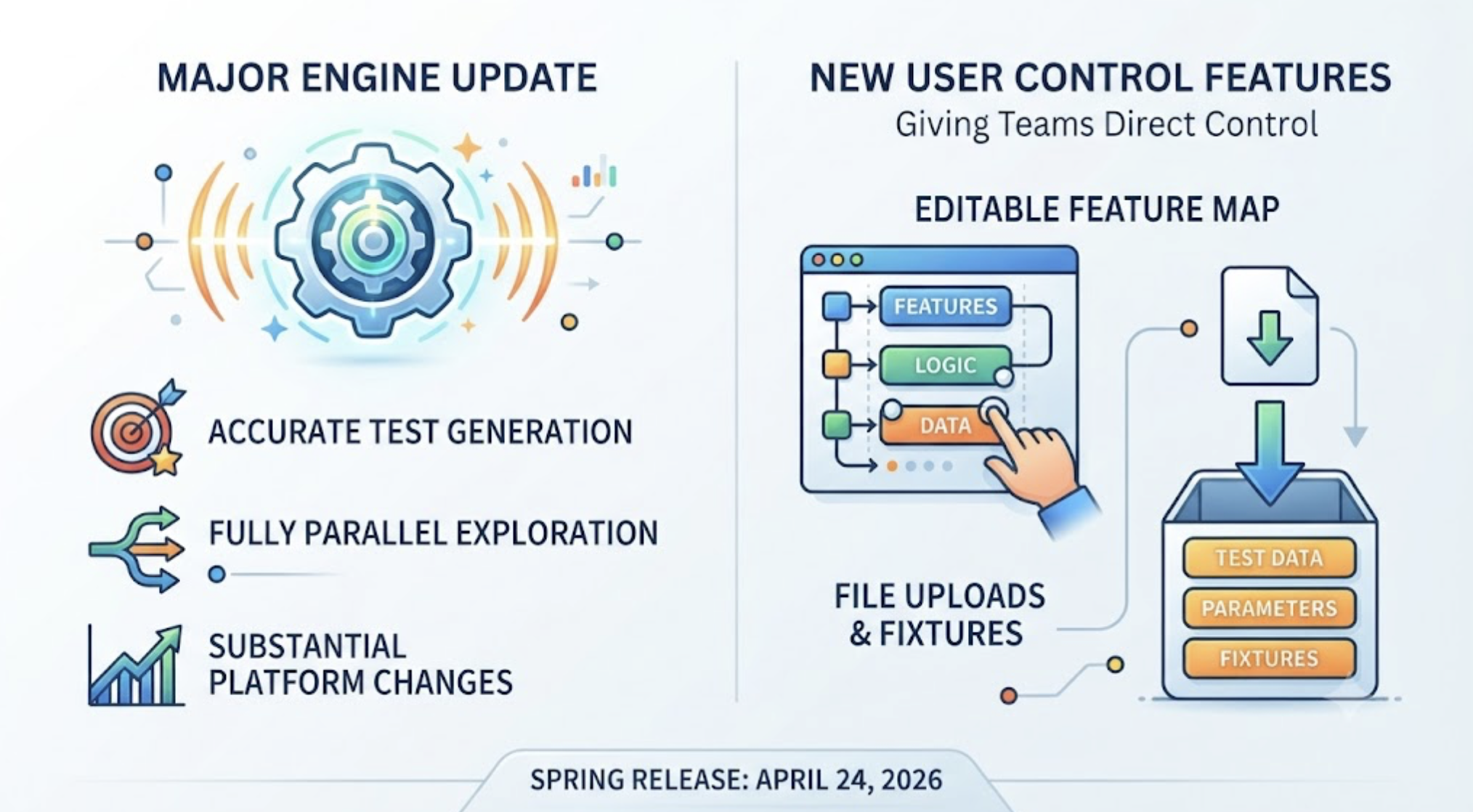
TestSprite's spring release landed on April 24, 2026 as a Major Release centered on an engine update, and it's the most substantial set of changes since the platform launched. The short version: test generation got significantly more accurate, the exploration model went fully parallel, and two new capabilities, the Editable Feature Map and File Uploads & Fixtures, give teams direct control over what drives test generation and what data flows through it.
Here's what shipped, what each piece actually does, and why it matters for teams building with AI coding tools.
A Smarter Engine: Accuracy Up Nearly 40% on the Hardest Projects
The headline change is under the hood. The updated engine significantly improved the accuracy and reliability of generated tests across every level of project complexity, with accuracy jumping nearly 40% on the hardest projects.
Just as important for day-to-day trust: results are now consistent across multiple runs of the same generation. Run the same test generation twice and you get the same coverage, which matters for teams that treat TestSprite as standing infrastructure rather than a one-off tool. Regression baselines only mean something when the generation underneath them is stable.
For teams whose products involve complex state, deep flows, or heavy backend logic, the hardest-project improvement is the one to notice. Those are exactly the projects where generated test quality historically separates useful coverage from noise.
The Parallel Exploration Fleet
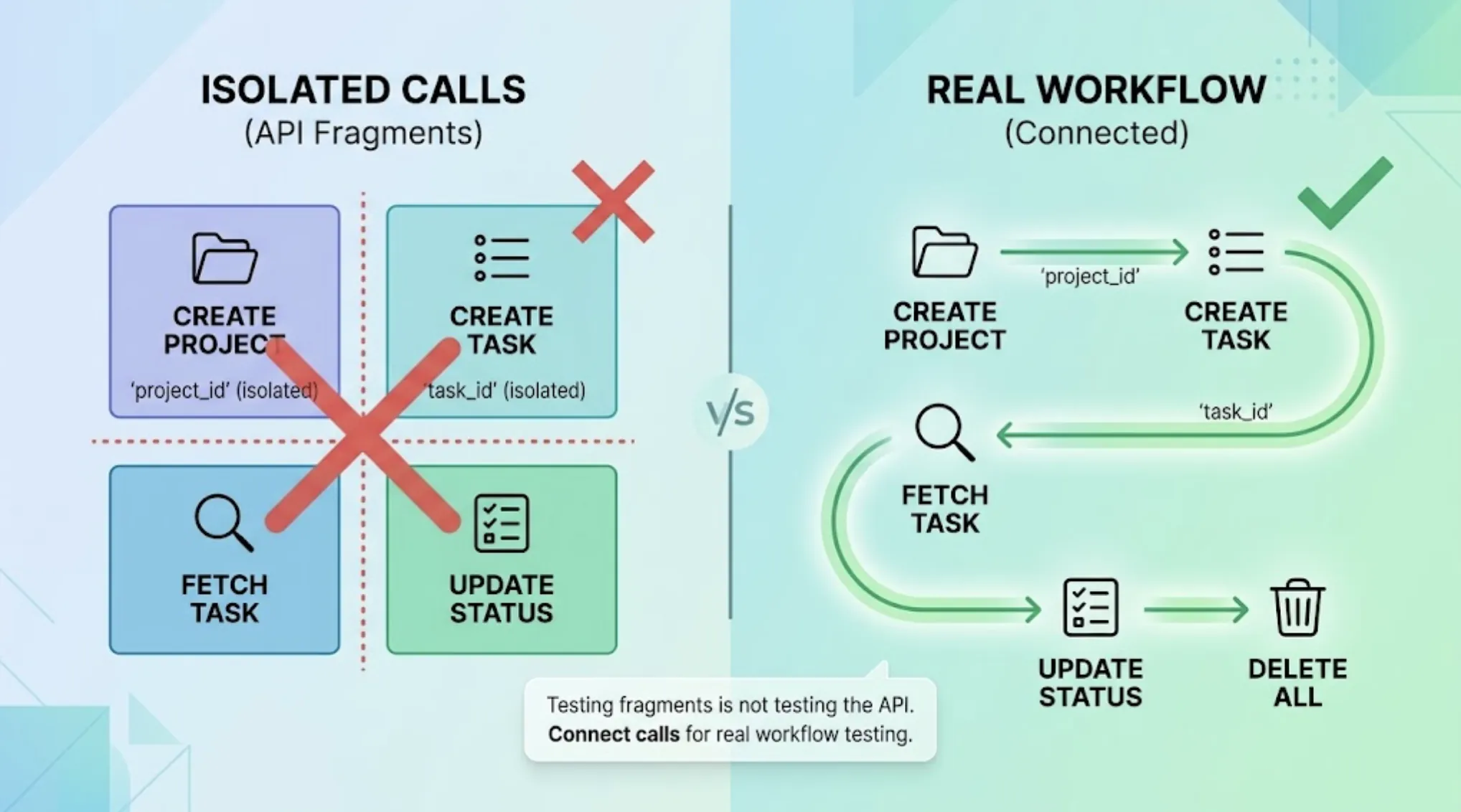
The spring release formally launched the parallel exploration fleet: TestSprite now dispatches a fleet of AI agents into your live application to explore it concurrently, clicking through every flow like real users before a single test is written.
Other verification tools read your code and guess. TestSprite opens your app and uses it.
The fleet model changes both speed and depth. Multiple agents working the product at once means full-surface exploration completes in a fraction of the sequential time, and tests are generated from what the agents actually find in the running product, not from inferring intent out of source code. A flow that exists in the app gets discovered by being used, the way a user would find it.
Alongside the fleet, tests now auto-heal when your UI drifts. When components move or get renamed through normal product change, suites stay green instead of flooding the team with structural false failures, while genuine behavioral regressions still surface.
Editable Feature Map: Your PRD Becomes the Ground Truth
The Editable Feature Map is the release's biggest workflow addition. Upload your PRD or product spec, and TestSprite auto-extracts a full feature map of your application, covering every flow, dependency, and edge case it identifies.
The map is fully editable, and that's the point. Teams can review what TestSprite understood from the spec, correct it, prune it, or extend it before anything runs. The finished map serves as the ground truth driving test generation downstream.
This closes a gap that matters for AI-native teams specifically. AI-generated code can drift from product intent while remaining internally consistent, and testing that only looks at what was built can end up validating the drift. Anchoring generation to an editable map extracted from the PRD keeps the tests pointed at what the product is supposed to do. The test creation flow was also updated to support PRD upload directly alongside URLs and API endpoints.
File Uploads & Fixtures: Real Data in Your Tests Without Scripting
The second new capability answers a practical question every team hits: how do tests exercise flows that need real files and real data?
With File Uploads & Fixtures, you upload your own files once at the project level, CSVs, JSON, PDFs, images, and TestSprite automatically wires them into both frontend and backend tests at runtime. A document upload flow gets tested with an actual PDF. A data import feature gets exercised with a real CSV. An avatar cropper meets an actual image. No scripting around the data, no mocking the file handling.
A new Files & Fixtures section at the project level holds the reusable test data, so the same fixtures serve every run and every schedule that needs them.
Clearer Results and New Visualizations
The test result view was redesigned around the two questions that matter after a run: what broke, and how to fix it. Findings surface in that order, which pairs naturally with the workflow where results return to the IDE and the coding agent acts on them.
The release also added new visualizations for the Feature Map and the Data Flow view, giving teams a visual read on what the product's coverage actually looks like and how data moves through the flows being tested.
One more note from the changelog for terminal-first teams: a TestSprite CLI for developers using Claude Code, OpenAI Codex, and other AI coding agents was announced as being in active development at the time of the release, bringing TestSprite directly into the terminal.
What the Release Looks Like in Practice
Consider a team building a lending platform with Claude Code. Before the spring release, their runs worked but occasionally covered complex underwriting flows inconsistently between generations.
After the update, their workflow changes in three concrete ways. They upload their underwriting PRD, and the Editable Feature Map extracts the flows, including a co-signer edge case the team confirms and keeps in the map as ground truth. They upload a fixture set: sample bank statement PDFs and an applicant CSV, which the tests now use at runtime when exercising the document verification flow. And when they trigger a run, the parallel fleet works the application concurrently, completing full-surface exploration while the developer finishes their coffee.
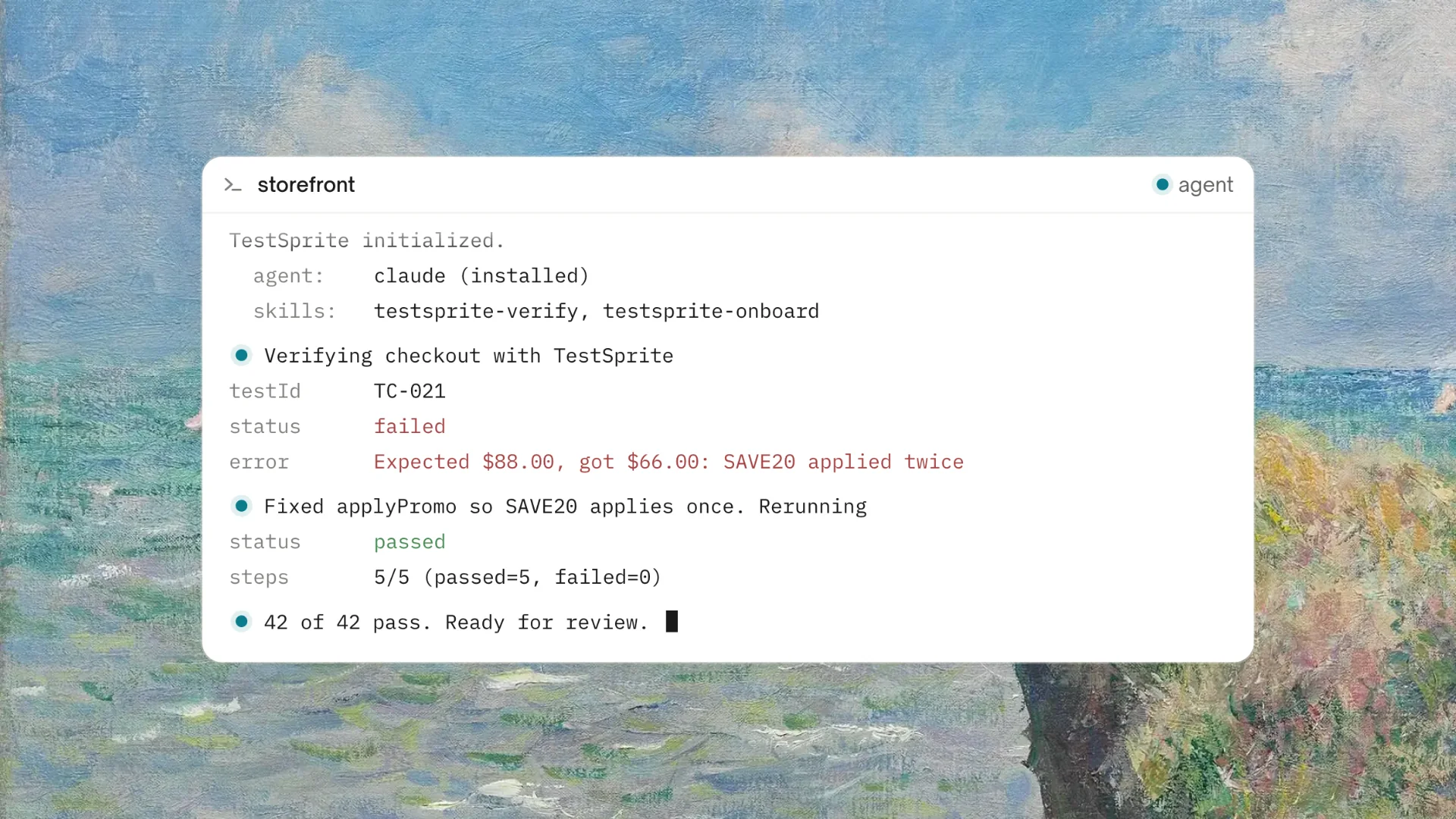
The run surfaces one finding in the redesigned result view: the co-signer flow, straight from the feature map, accepts the co-signer's documents but attaches them to the primary applicant's file. What broke and how to fix it, in that order, back in the Claude Code terminal.
That's the release working as a system: spec-anchored coverage, real data in the tests, faster exploration, and results built for the fix.
Conclusion
The TestSprite spring release, shipped April 24, 2026 as a Major Release, upgrades the platform on every axis that matters: a smarter engine with nearly 40% better accuracy on the hardest projects and consistent multi-run results, a parallel exploration fleet that tests your live app like a crowd of real users, an Editable Feature Map that makes your PRD the ground truth for generation, File Uploads & Fixtures for real data at runtime, auto-healing through UI drift, and a result view redesigned around fixing what broke.
For teams building with AI coding tools, the release sharpens exactly the loop TestSprite exists to close: from AI-generated code to verified, production-ready software, at the speed the code is written.
See the spring release in action with TestSprite today. Free plan available, no credit card required.