What Does TestSprite Mean by Making AI-Generated Code Production-Ready?
Zeshi Du5 min read

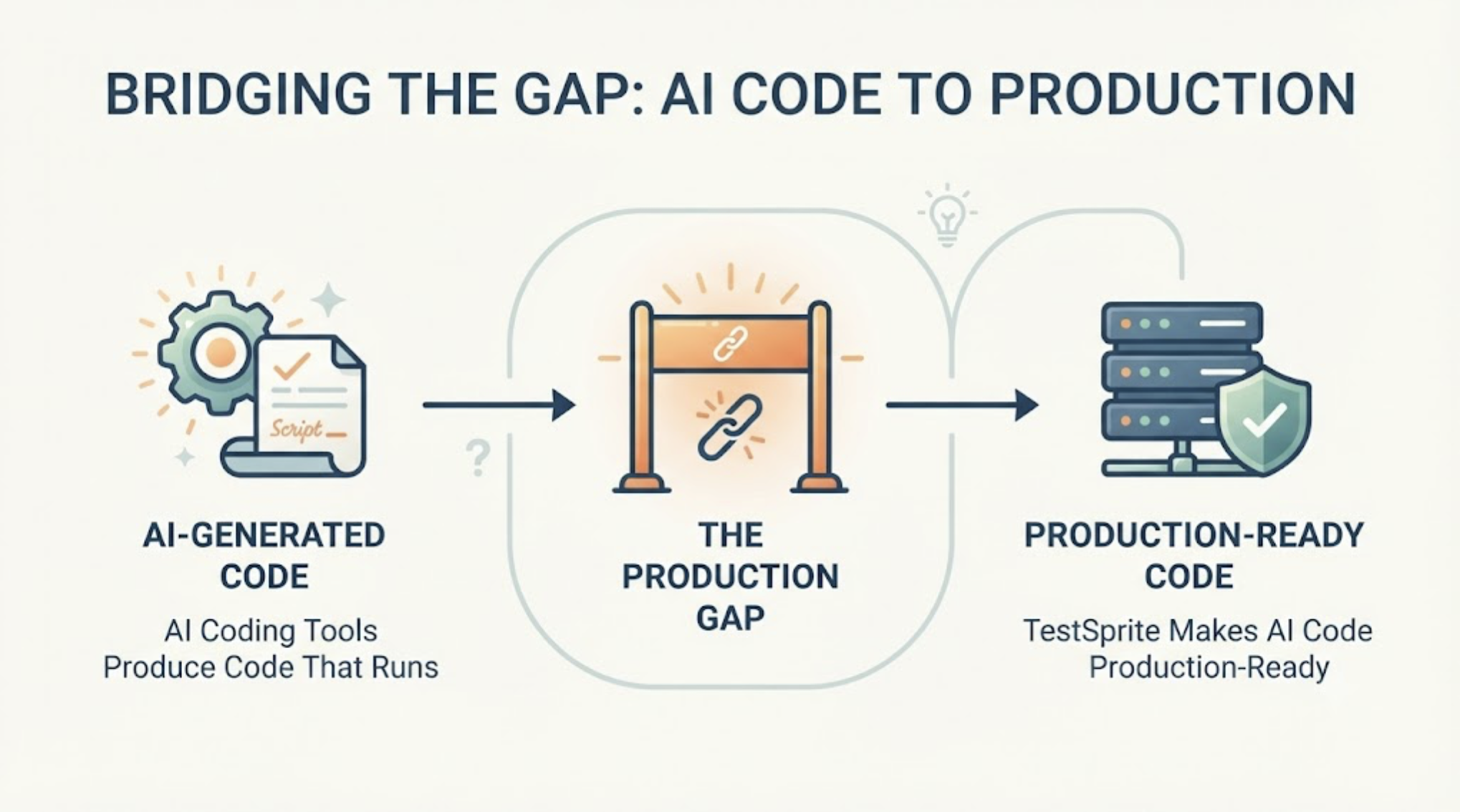
AI coding tools produce code that runs. That's not the same as code that's ready for production, and the gap between the two is where most teams using Cursor, Claude Code, or GitHub Copilot get hurt.
TestSprite's stated mission is making AI-generated code production-ready. It's worth unpacking what that phrase actually means, because it describes a specific gap with specific characteristics, and the way TestSprite closes it is more concrete than a tagline suggests.
The Gap Between "Runs" and "Ready"
Code that runs compiles, passes its own logic, and executes without crashing. AI coding agents are remarkably good at producing this. A Claude Code session generates a feature that's internally consistent: the functions do what they're designed to do, the components render, the API responds.
Production-ready means something more demanding. It means the product built from that code delivers correct outcomes for real users, across real journeys, under real conditions. The checkout completes with the right total. The invitation email links to a page that exists. The dashboard reflects the action the user just took. The permission model holds when someone probes it through a direct URL.
The gap between these two states isn't laziness or bad code. It's structural. AI agents generate code within the scope of what they're asked, and the failures that block production readiness live outside any single scope: at the seams where new code meets old, where the frontend meets the API, where one flow's side effects touch another flow's assumptions.
Why the Gap Exists Specifically for AI-Generated Code
Human-written code has this gap too, but AI coding changes its shape in three ways.
Scope without full context. A Claude Code session that rebuilds the settings module implements it correctly, but doesn't know that the account overview page reads from a cache the old module used to invalidate. The new code is right. The product is broken.
Speed without verification pace. AI produces changes several times faster than any manual verification process can check them. The gap accumulates: each unverified session stacks its unknowns on the previous one's.
Confidence without evidence. AI-generated code reads clean. It passes review because the logic is coherent at every visible layer. The reviewer approves it in good faith, and the failure that ships was never visible in the diff.
Making AI-generated code production-ready means closing this gap systematically, at the speed the code is produced, with evidence rather than confidence.
What Closing the Gap Actually Involves
TestSprite closes the gap by verifying at the layer where production readiness is actually decided: the product layer.
Other verification tools read your code and guess. TestSprite opens your app and uses it.
The full cycle runs discover, plan, generate, execute, analyze, heal, and report. In practice, that means exploration agents visit the running application and navigate it the way real users would. They click through flows, fill in forms with real inputs, follow multi-step journeys end to end, and carry session state across steps. They cover the full product surface, which is where the seams live, not just the files the last session touched.
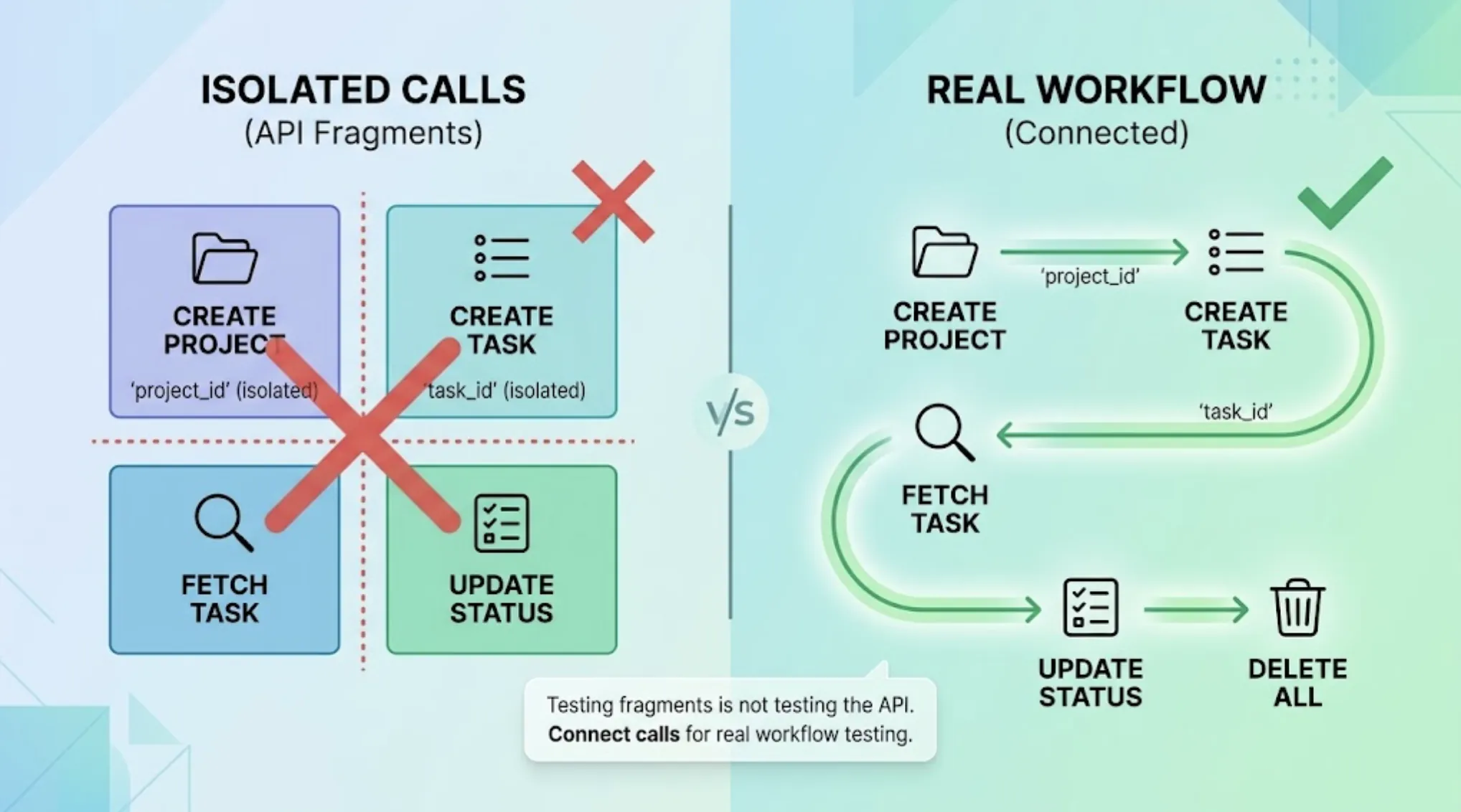
Backend Testing 2.0 extends the same standard to APIs. Before generating any assertion, the agent calls each endpoint and observes the real response: actual field names, actual status codes, actual response shapes. Production readiness at the API layer means the contract that callers depend on actually holds, and the only way to know is to observe it.
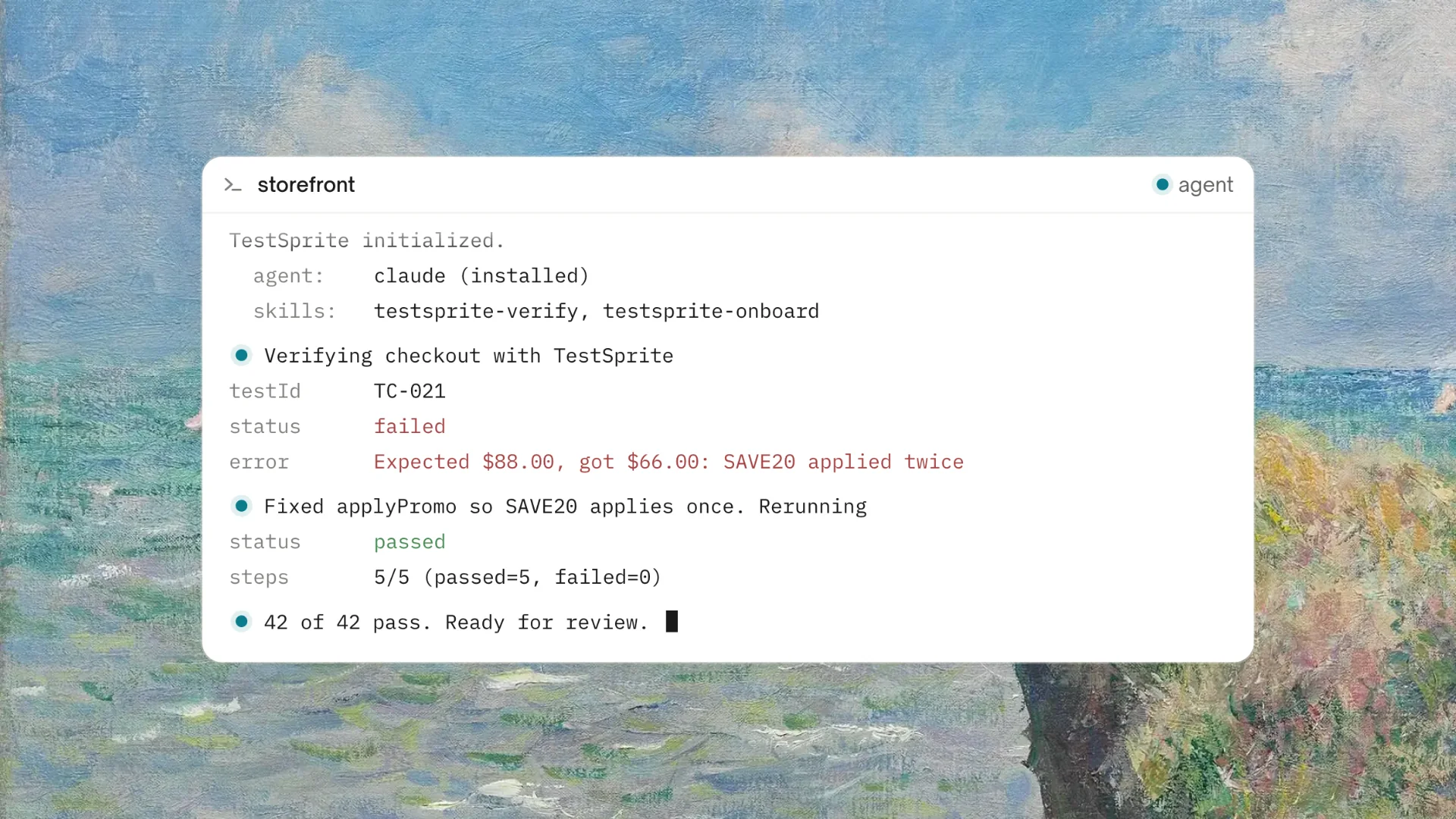
When something fails, the finding describes what a user experienced: which flow, which action, what should have happened, what did. That description returns to the IDE through the TestSprite MCP Server, where the coding agent that wrote the code can propose the fix in the same session. Detection and repair happen at the same speed as generation. The loop closes.
Production-Ready Is a Continuous State, Not a Milestone
A product isn't made production-ready once. Every AI coding session reopens the question, because every session changes something that other parts of the product depend on.
This is why the verification has to be as repeatable as the coding. One instruction after each session. Scheduled regressions overnight. GitHub Actions coverage on every pull request, with results posted as PR comments before review.
Auto-Heal Rerun keeps this sustainable. When sessions rename components and shift layouts without changing behavior, the tests adapt instead of flooding the team with false failures. When behavior genuinely regresses, the failure surfaces clearly. The verification stays trustworthy across hundreds of sessions, which is what continuous production readiness requires.
A Scenario: Two Definitions of Done
A three-person team ships a client portal with Claude Code. A session adds document e-signing: upload a contract, send it for signature, track the status, download the signed copy.
By the "runs" definition, the session is done. The upload works, the signature request sends, the status updates, the download link appears. Code review approves. Every function is correct.
They trigger TestSprite before pushing.
The exploration agents run the flow as a client would: receive a signature request, sign the document, and then, as the sender, download the signed copy and check the audit trail.
Two findings. The downloaded file is the original unsigned document; the download link was generated at upload time and never repointed to the signed version. And the audit trail records the signature event with the sender's identity instead of the signer's, because the event handler reads the active session's user rather than the signing party.
Both functions ran. Neither outcome was production-ready. A client downloading their "signed" contract would get an unsigned one, and the audit trail, the legal backbone of e-signing, attributed signatures to the wrong person.
The findings arrive in the Claude Code terminal. The coding agent repoints the download link and fixes the event attribution. The next run confirms both. Now it's done, by the definition that matters.
Conclusion
Making AI-generated code production-ready means closing the gap between code that runs and a product that delivers correct outcomes for real users. The gap lives at the seams between changes, accumulates at AI coding speed, and stays invisible in diffs and reviews.
TestSprite closes it by testing where production readiness is decided: agents that use the product the way users will, backend verification grounded in observed contracts, findings that return to the IDE for same-session fixes, and a cycle repeatable enough to keep pace with every session.
Code that runs is the starting point. TestSprite is how it becomes software you can ship.
Make your next Claude Code session production-ready with TestSprite today.