What Are the Best Tricentis Tosca Alternatives for AI-Native Test Automation?
Zeshi Du5 min read

The teams searching for alternatives in this category usually share a specific frustration: the gap between when testing was supposed to start helping and when it actually did.
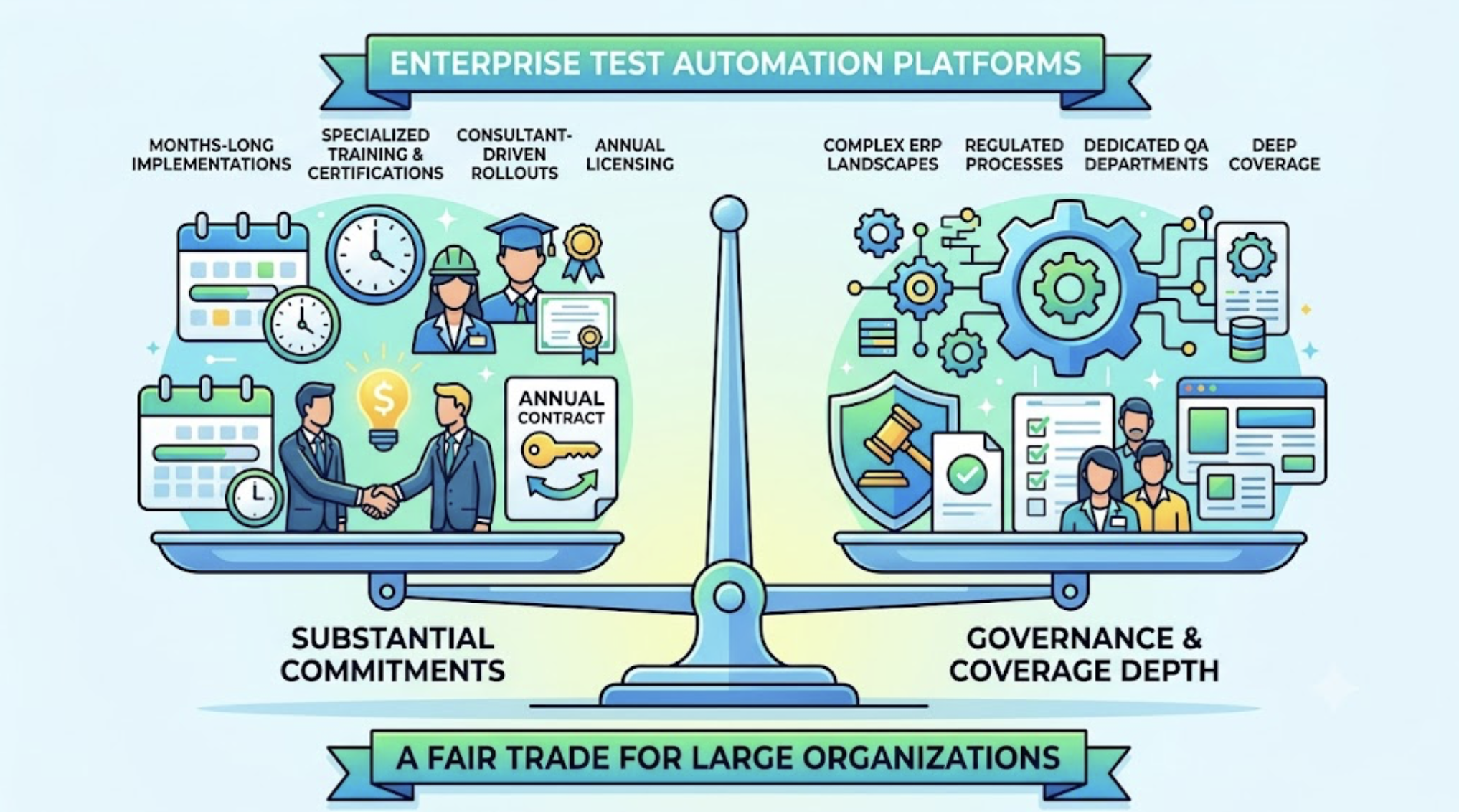
Enterprise test automation platforms in the model-based tradition are substantial commitments. Implementation projects measured in months. Specialized training and certifications for the people who operate them. Consultant-driven rollouts. Licensing structures negotiated annually. For large organizations with complex ERP landscapes, regulated processes, and dedicated QA departments, that weight is a fair trade for the governance and coverage depth these platforms deliver.
For everyone else, the weight is the problem. A product team shipping weekly with Claude Code doesn't have a six-month implementation window. It has this afternoon.
The Implementation Weight Problem
Model-based enterprise testing platforms front-load their value. Before the first meaningful test runs, someone models the application, builds the test case architecture, configures the environments, and trains the team on the platform's methodology. The payoff comes later, spread across years of structured regression coverage.
That amortization math works when three things are true: the application changes slowly enough that the model stays valid, the organization has dedicated staff to maintain the model, and the time horizon is long enough to recover the setup investment.
AI coding tools break the first assumption immediately. When Cursor reorganizes component structures weekly and Claude Code refactors APIs in an afternoon, the application model that took months to build starts decaying the day it's finished. The maintenance staff spend their time keeping the model current rather than expanding coverage. The payback horizon keeps moving.
What AI-Native Means as an Architecture, Not a Feature
Enterprise platforms have added AI capabilities: self-healing locators, AI-assisted test design, intelligent impact analysis. These are real improvements layered onto an architecture that still assumes humans build and maintain a test model.
AI-native test automation is a different architecture. There is no model to build because the agents build their understanding by using the product. There is no methodology training because the interface is one instruction. There is no implementation project because setup is a configuration file.
TestSprite is built this way from the ground up.
Other verification tools read your code and guess. TestSprite opens your app and uses it.
Its exploration agents navigate the running application the way real users would: clicking through flows, filling forms with real inputs, following multi-step journeys, carrying session state across steps. The coverage map assembles itself from exploration. When the product changes, the agents re-explore and the coverage updates. The "model" is regenerated from reality on every run rather than maintained by hand between runs.
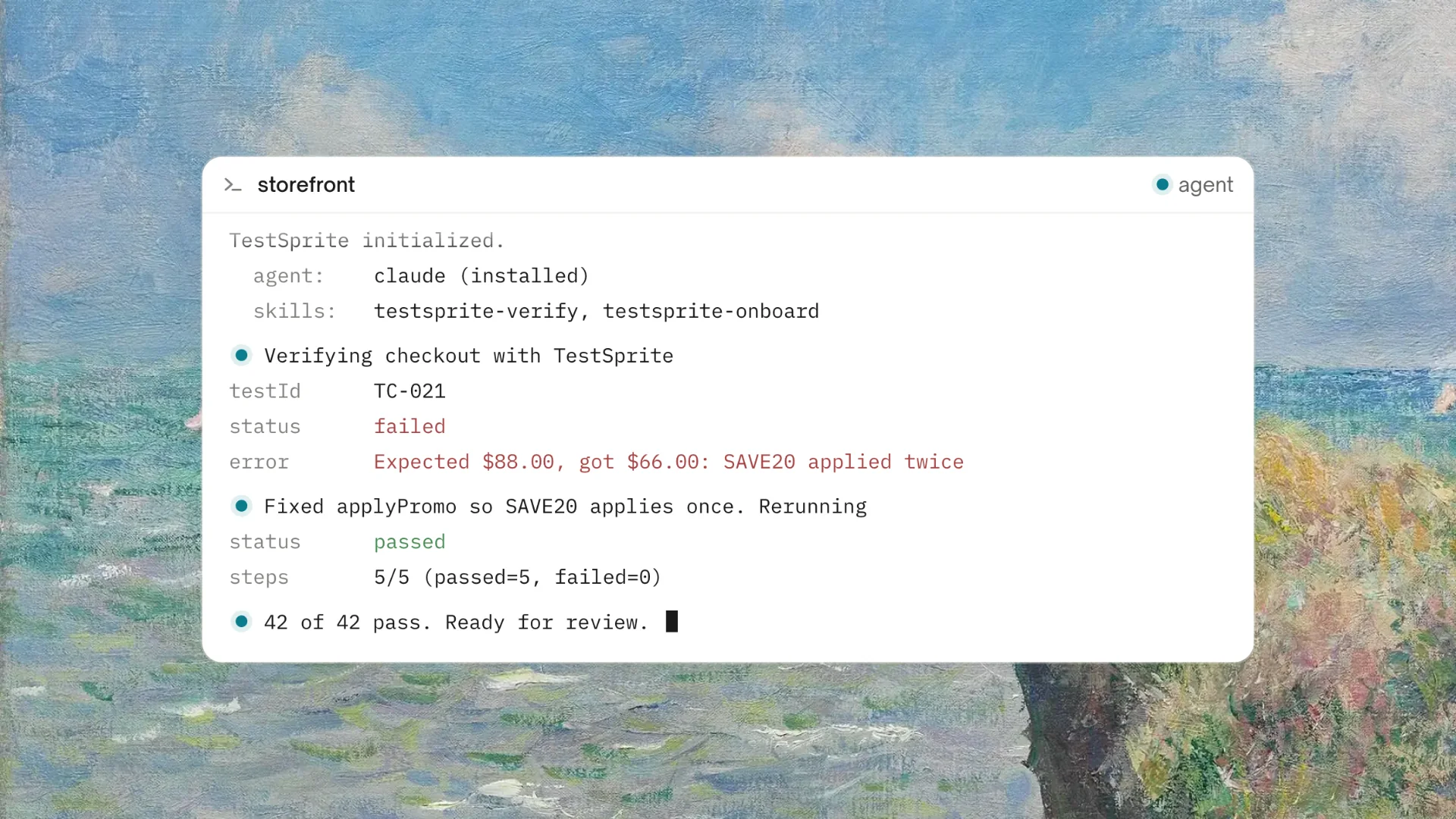
Through the TestSprite MCP Server, the full pipeline triggers from one instruction inside Cursor, Claude Code, Windsurf, or VS Code. Results return to the same window, structured for the coding agent to act on in the same session.
From Months to Minutes: What Setup Actually Involves
The contrast in time-to-first-value is worth stating plainly.
An enterprise platform implementation involves scoping workshops, environment provisioning, application modeling, test case design, team training, and a phased rollout. Organizations plan quarters around it.
TestSprite setup: create a free account, generate an API key, add ten lines of JSON to the IDE's MCP configuration, and point it at a running environment. The first exploration session starts minutes later. The first genuine finding often arrives the same day.
Execution infrastructure is included rather than provisioned. Tests run in a secure ephemeral cloud sandbox that spins up in seconds and tears down automatically. Auto-Auth handles password endpoints, OAuth refresh tokens, and AWS Cognito flows before every run, so authenticated coverage works in scheduled regressions without credential ceremony.
Backend Coverage Without the Modeling Step
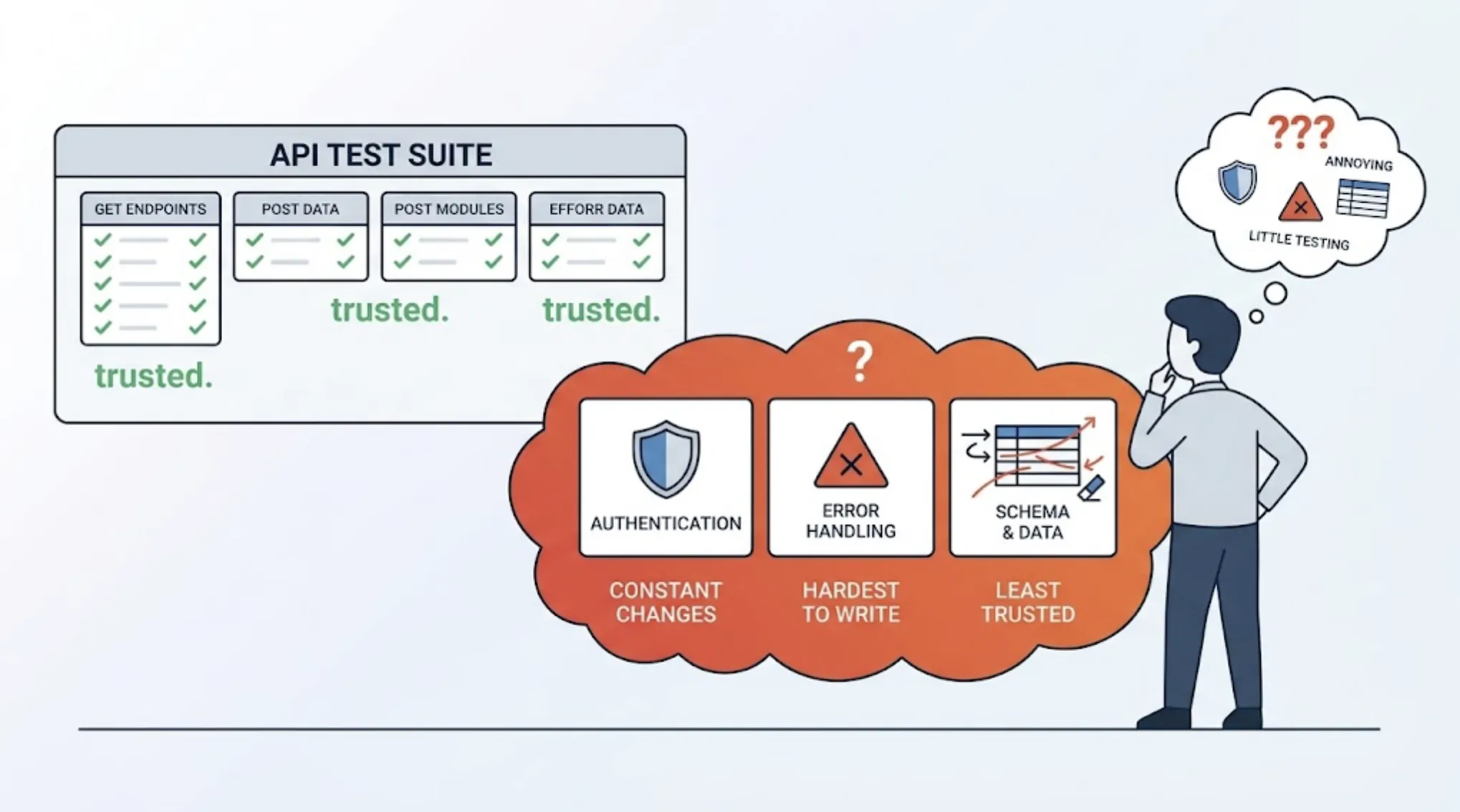
Enterprise platforms handle API testing through the same model-driven approach: define the service model, specify the expected contracts, maintain both as services evolve.
TestSprite's Backend Testing 2.0 skips the definition step. Before generating any assertion, the agent calls each endpoint and observes the real response: actual field names, actual status codes, actual response shapes. The observed contract becomes the baseline. When a Claude Code session changes what an endpoint returns, the next run flags the deviation as a specific finding: which endpoint, which field, what the prior observation showed.
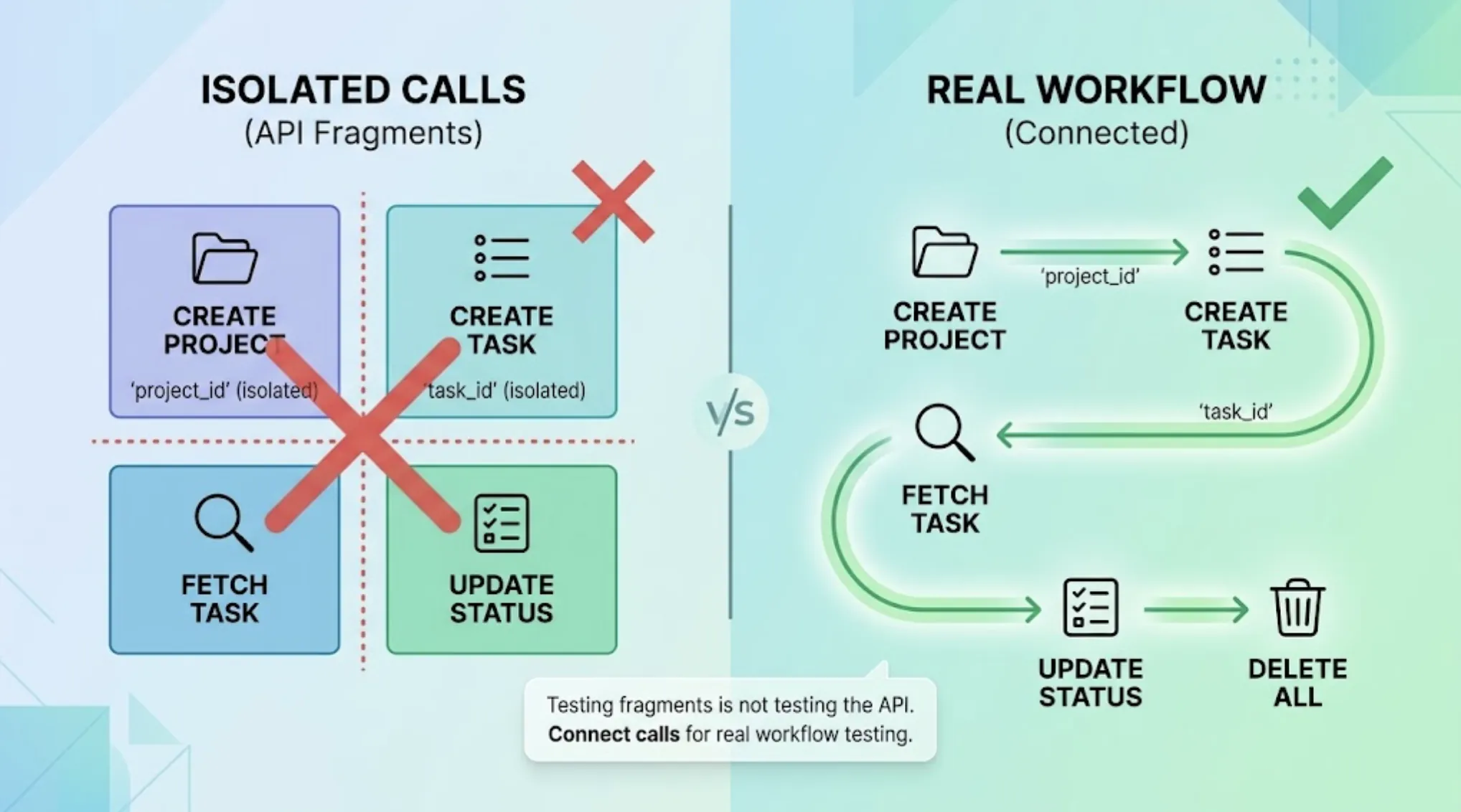
Dynamic variables captured from real responses flow automatically through multi-step sequences. CRUD lifecycles run end to end on the first attempt. The integration chains that would require careful service modeling assemble themselves from observation.
A Scenario: The Mid-Size Team That Outgrew the Evaluation
A forty-person software company was three weeks into evaluating an enterprise test automation platform. The vendor's implementation estimate: four months to production readiness, plus training for two designated test engineers. Meanwhile, their product team had adopted Claude Code six months earlier and was shipping faster than ever, which was exactly why leadership wanted testing addressed.
One developer connected TestSprite to Claude Code during the evaluation period, mostly out of curiosity. Setup took an afternoon coffee break.
After that week's largest session, which restructured the billing and invoicing module, the developer triggered TestSprite.
The exploration agents navigated the billing flows as an account administrator would. They generated an invoice, applied a credit note, and checked the account balance summary.
They found that applying a credit note correctly reduced the invoice total on the invoice detail view, but the account balance summary continued to reflect the pre-credit amount. The restructured module wrote credit adjustments to the new ledger table. The balance summary aggregated from the old one. Customers who received credits would see account balances that ignored them, and the finance team would field the disputes.
The finding arrived in the Claude Code terminal with the full navigation context. The coding agent repointed the summary aggregation, and the fix merged that day.
The evaluation conversation changed after that. The four-month implementation would eventually deliver structured coverage. The ten-minute tool had already caught a customer-facing financial bug during its own trial period. For a team of their size, shipping at their pace, the second model matched reality.
Conclusion
The best alternatives for AI-native test automation depend on organizational shape. Large enterprises with slow-changing ERP landscapes, dedicated QA departments, and multi-year horizons still get real value from model-based platforms, and their governance depth is genuine.
For product teams shipping with AI coding tools, the implementation weight of enterprise platforms works against the very speed those teams adopted AI to gain. TestSprite matches their shape instead: setup in minutes, coverage generated from the product itself, behavioral anchoring that survives weekly restructuring, full-stack verification including observed API contracts, and results delivered inside the IDE where fixes happen.
AI-native isn't a feature added to an enterprise architecture. It's an architecture that starts where your code does.
Start with TestSprite's free plan and get your first finding before an enterprise evaluation would finish its first workshop.