What Are the Best Selenium Alternatives for Modern AI Test Automation?
Zeshi Du6 min read

If you're looking for a Selenium alternative, the question you're really asking depends on why Selenium stopped working for your team.
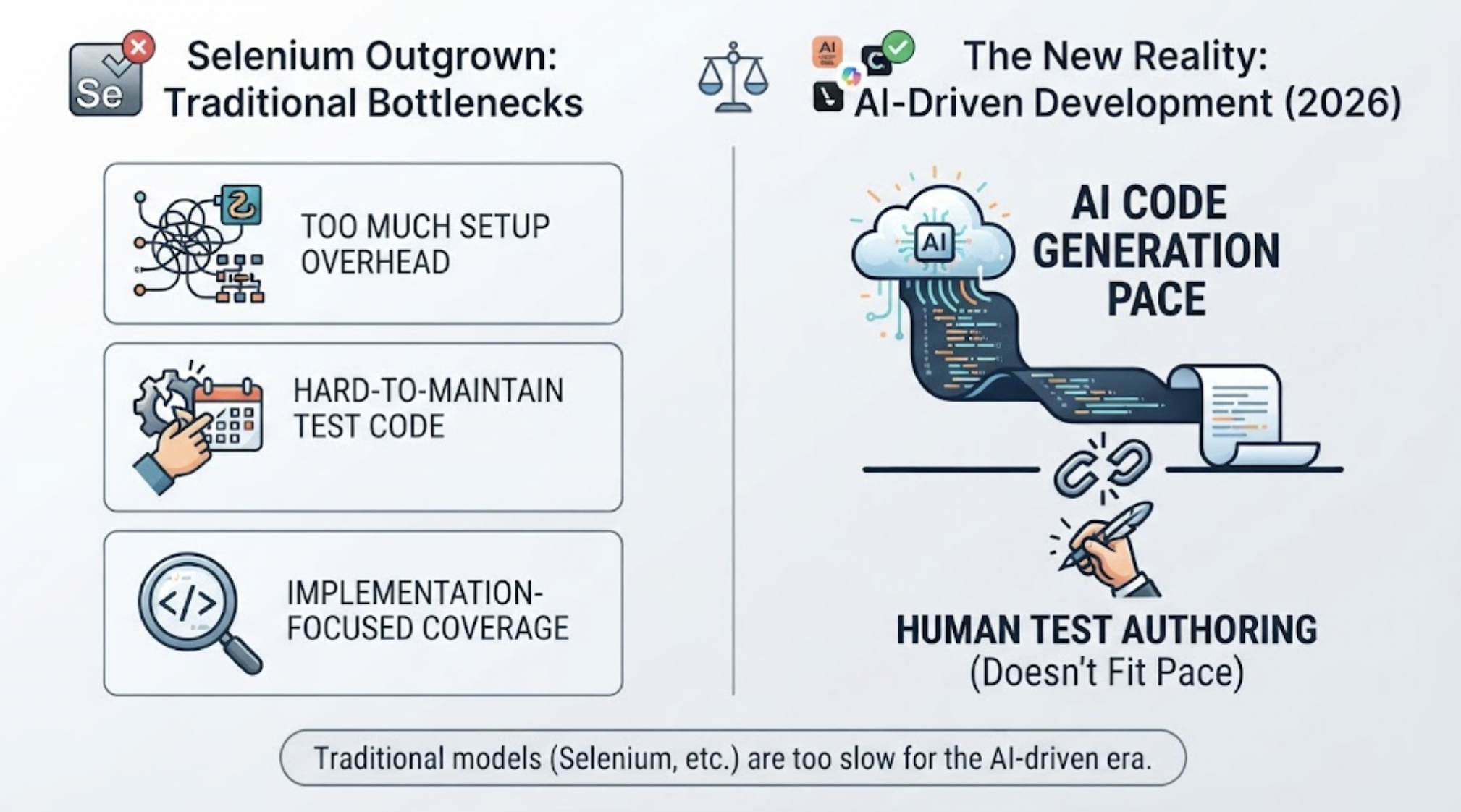
The teams that outgrow Selenium usually run into the same set of problems: too much setup overhead, test code that's hard to maintain as the application evolves, and coverage that reflects the implementation rather than the user experience. Different tools solve different parts of this.
But the teams most likely to be reading this in 2026 have a specific additional problem: they're using AI coding tools like Claude Code, Cursor, or GitHub Copilot, and the traditional test automation model, whether it's Selenium or any other framework where humans write browser automation code, doesn't fit the pace at which AI generates code.
Understanding this context makes the alternative much clearer.
What Selenium-Style Automation Requires
Selenium-style test automation, including the modern frameworks that improved on Selenium's rough edges, follows a consistent model: an engineer decides what to test, writes browser automation code that simulates user actions step by step, and maintains that code as the product changes.
The setup and configuration burden that made Selenium notorious has improved significantly in modern frameworks. But the core model remains: the engineer is the author, the framework is the executor, and the test coverage reflects the engineer's decisions.
This model has worked well for decades because the development pace was slow enough that engineers could keep up. A sprint's worth of features could be covered by a sprint's worth of test authoring. The test suite stayed current because someone had the time to keep it current.
Why the Traditional Model Breaks at AI Coding Speed
AI coding agents change the equation at the authoring layer, not just the execution layer.
When Claude Code or Cursor produces changes in a session, it can touch dozens of files, modify multiple API endpoints, and refactor several components simultaneously. The pace at which these changes need to be verified exceeds the pace at which engineers can write browser automation code to verify them.
The maintenance burden compounds. Every AI coding session is a potential test breakage event: component names change, selector attributes shift, API response structures evolve. A traditional test suite that was written against the previous implementation needs constant updating. For teams running multiple AI coding sessions per day, this becomes a full-time job.
The coverage gap persists. Even when the suite is current, it covers what engineers specified. The integration failures that live at the seams between AI-generated changes, the ones that only appear when multiple modified components interact under real user conditions, aren't in any specification.
The Alternative That Fits AI Coding Speed
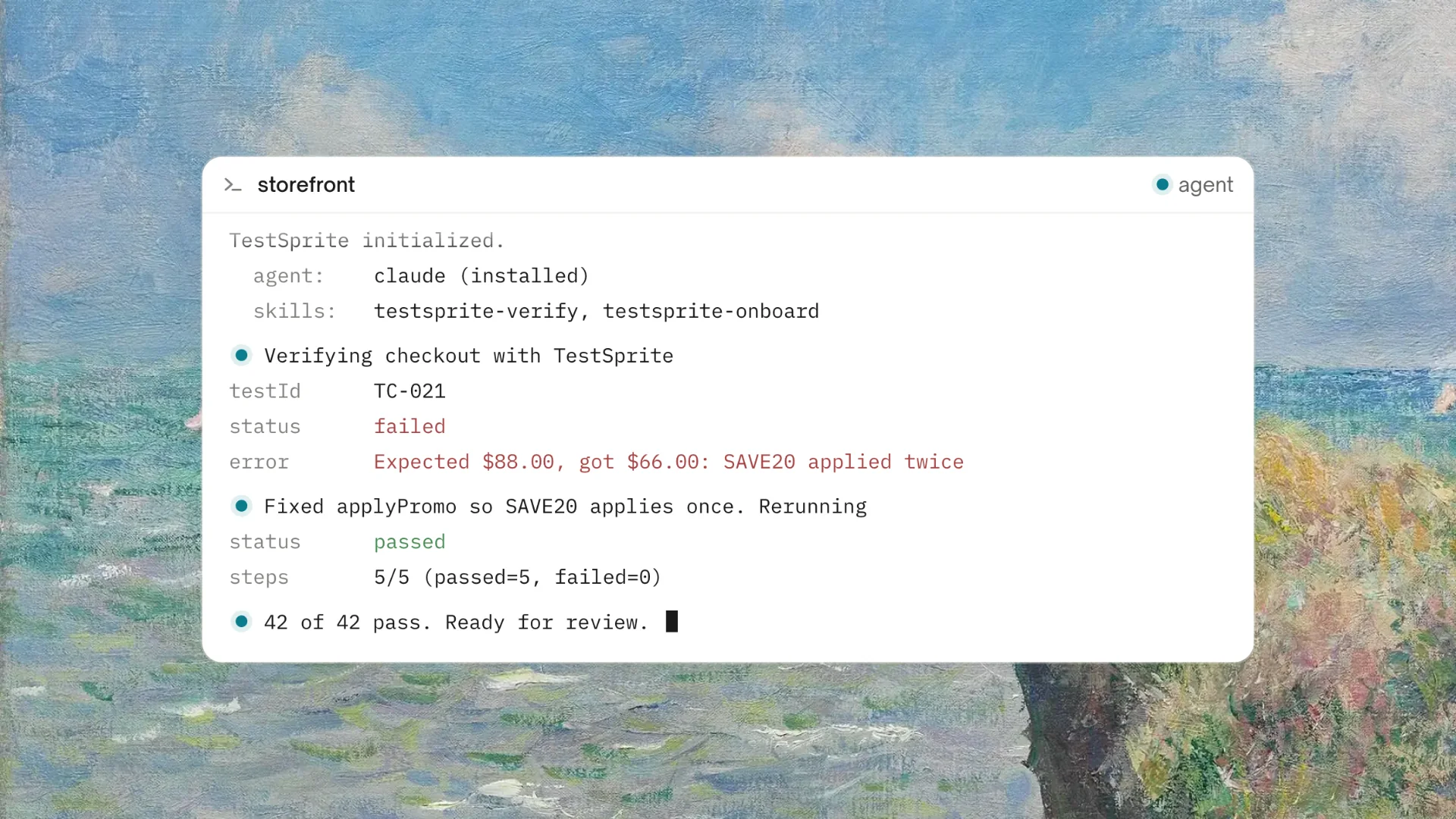
TestSprite is built for the context that Selenium and its successors weren't designed for: teams where AI generates the code and verification needs to happen immediately, inside the development environment, without requiring engineers to write and maintain browser automation scripts.
Other verification tools read your code and guess. TestSprite opens your app and uses it.
The shift is fundamental. Instead of an engineer deciding what to test and writing code to verify it, TestSprite's exploration agents navigate the running application and discover what to test by using the product. They find the flows by interacting with the product the way users do.
Through the TestSprite MCP Server, one instruction from inside Cursor, Claude Code, Windsurf, or VS Code starts the full pipeline:
"Help me test this project with TestSprite."
No test code to write. No WebDriver to configure. No async handling to manage. No selector maintenance after each refactor. The coverage comes from the product, not from the engineer's specification.
What "Modern" Means in AI Test Automation
The word "modern" in test automation used to mean better tooling around the same model: faster execution, better async handling, easier setup, more readable syntax. Playwright and Cypress were modern Selenium alternatives in this sense.
The next step in that evolution isn't a better framework. It's a different model.
Modern AI test automation, in the context of teams building with AI coding agents, means the testing pipeline operates autonomously rather than requiring human authorship at each step. The agents discover the scenarios. The agents execute them. The agents interpret the results and surface the findings in a form the coding agent can act on.
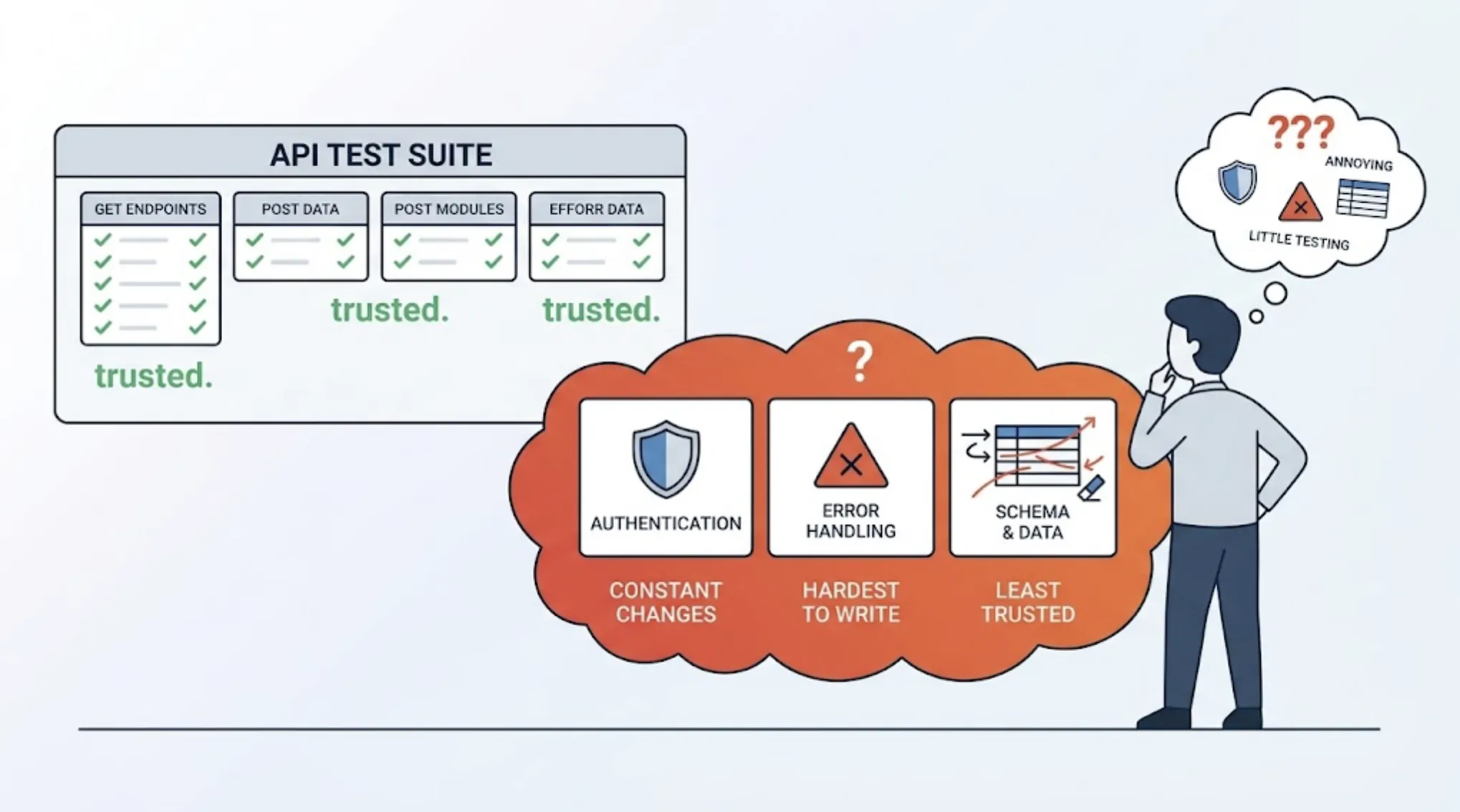
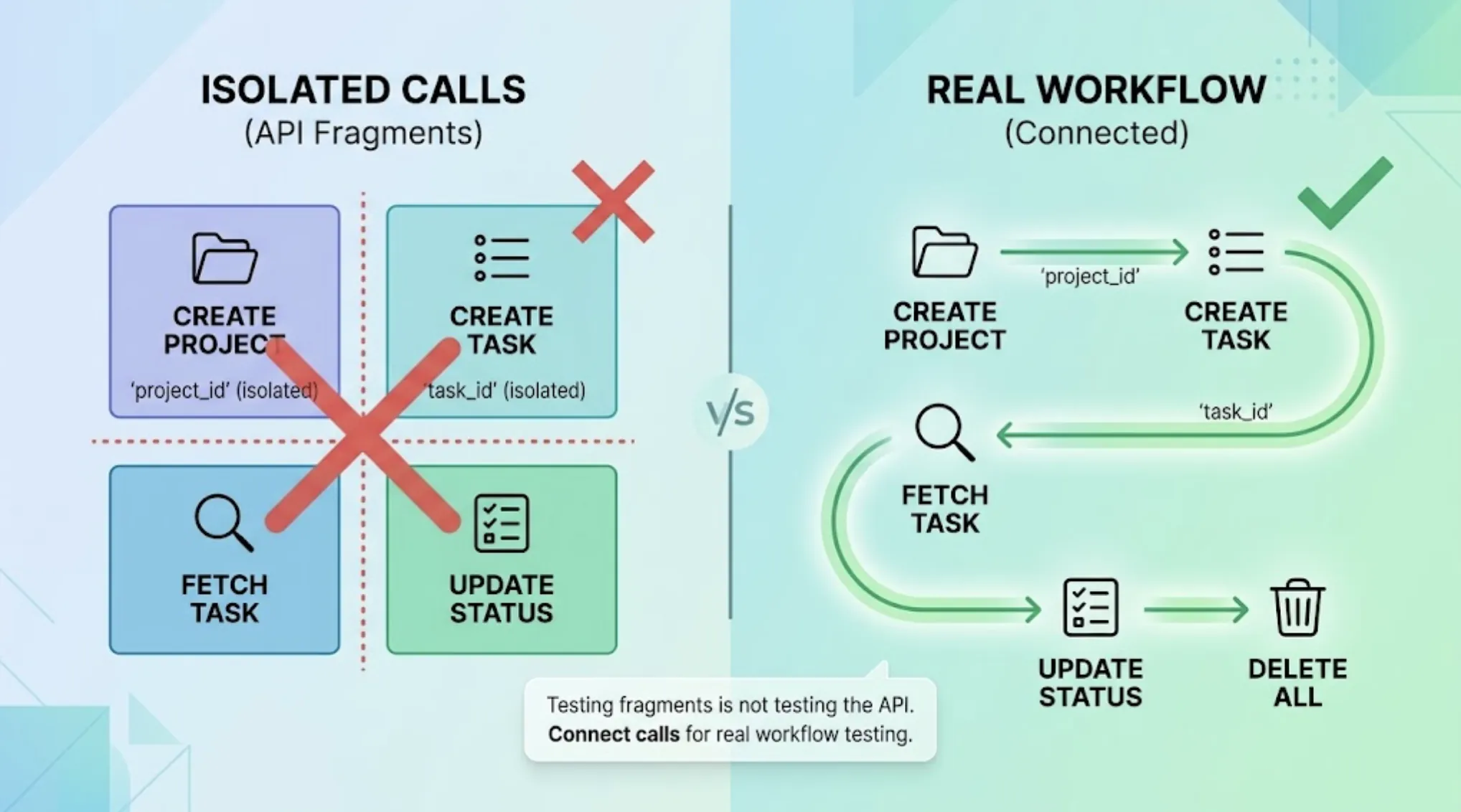
TestSprite's Backend Testing 2.0 extends this to the API layer. Before generating any assertion, the agent calls each endpoint and observes the real response: actual field names, actual status codes, actual response shapes. Assertions are grounded in observation. When an AI coding session changes the API, the next run catches contract deviations as specific findings rather than as vague test failures.
Auto-Heal Rerun handles the structural changes that would previously have required manual selector updates. When a UI element moves or a component gets renamed, the test adapts if the behavior didn't change. If the behavior changed, the test surfaces it.
What the Setup Actually Looks Like
One of the persistent complaints about Selenium was the setup overhead: configuring WebDriver, managing browser versions, dealing with cross-platform inconsistencies. Modern frameworks have improved this substantially, but there's still setup to manage.
TestSprite's cloud execution model eliminates the local test infrastructure entirely. Tests run in a secure ephemeral cloud sandbox that spins up in seconds, executes in isolation, and tears down automatically. No local browser drivers to configure. No browser version management. No infrastructure to maintain.
The MCP Server setup takes about two minutes: a TestSprite account, an API key, and ten lines of JSON in the IDE's MCP configuration file. After that, the testing infrastructure runs in the cloud, not on the developer's machine.
A Scenario: The Test Suite That Kept Breaking
A five-person engineering team built their test suite on a modern framework. They'd moved away from Selenium years ago for exactly the reasons Selenium became hard to maintain: the setup complexity and the selector brittleness.
Their newer suite was better, but when they adopted Claude Code as their primary development tool, the maintenance overhead returned. Every Claude Code session was a test breakage event. Component reorganizations, hook refactors, and API response updates produced selector failures and assertion mismatches that required investigation and manual updates.
They connected TestSprite to Claude Code through the MCP Server.
After a Claude Code session that updated the subscription management section, adding a usage metrics display alongside the plan information, they triggered TestSprite.
The exploration agents navigated the subscription management section as a subscriber reviewing their account would. They checked the current plan, the usage metrics, and the billing history.
They found that the usage metrics displayed correctly for the current billing period. When the agents switched the display to the previous billing period, the usage metrics remained showing the current period's data. The plan information updated to show the previous period correctly. The usage metrics display was reading from a separate API call that wasn't updating its query parameter when the billing period selector changed.
The team's existing test suite verified the subscription management section's individual components. It didn't include a test that changed the billing period and verified that the usage metrics responded to the change, because that interaction was introduced in the current Claude Code session and no test had been authored for it yet.
TestSprite's agents tested it by navigating the section the way a subscriber reviewing their previous month's usage would: change the period, observe whether everything updated.
The failure description returned to the Claude Code terminal. The coding agent identified the API call that wasn't receiving the updated query parameter and applied the fix in the same session.
Conclusion
The best alternatives to Selenium for modern AI test automation are the tools that match the development model that AI coding agents represent: code that's generated at speed, changed frequently at the implementation level, and verified by agents that navigate the product rather than scripts that execute specifications.
Modern frameworks like Playwright and Cypress improved on Selenium's setup and maintenance story while keeping the same authoring model. For teams where authoring is the bottleneck, this doesn't fully solve the problem.
TestSprite changes the model. Its exploration agents discover and run tests autonomously, its Backend Testing 2.0 grounds assertions in observed API behavior, and its cloud sandbox eliminates local test infrastructure. For teams building with AI coding tools, this is the modern AI test automation alternative that matches how software is now being built.
Start modern AI test automation with TestSprite from inside your IDE today.