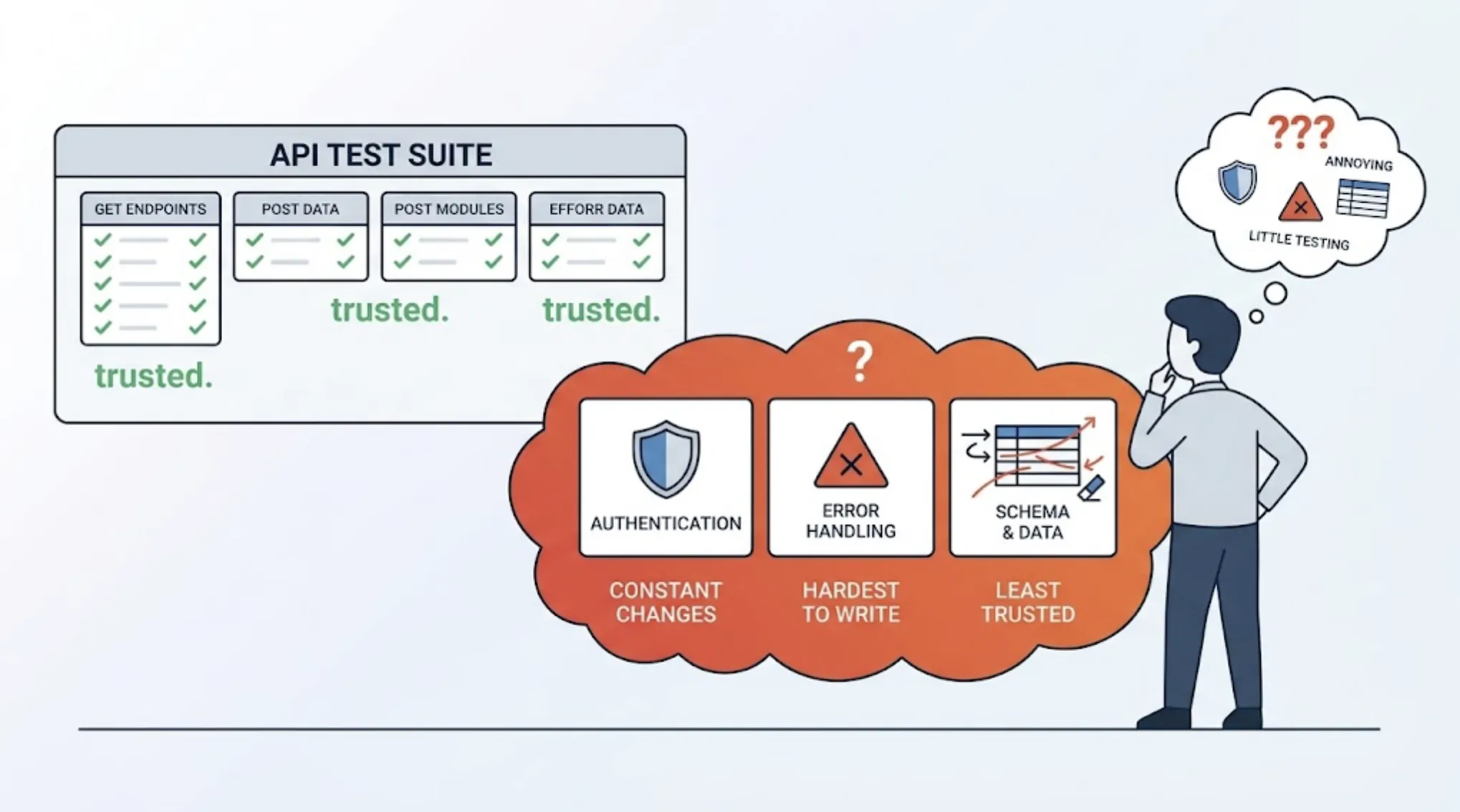
What Are the Best Postman Alternatives for AI-Powered API and Integration Testing?
Zeshi Du6 min read

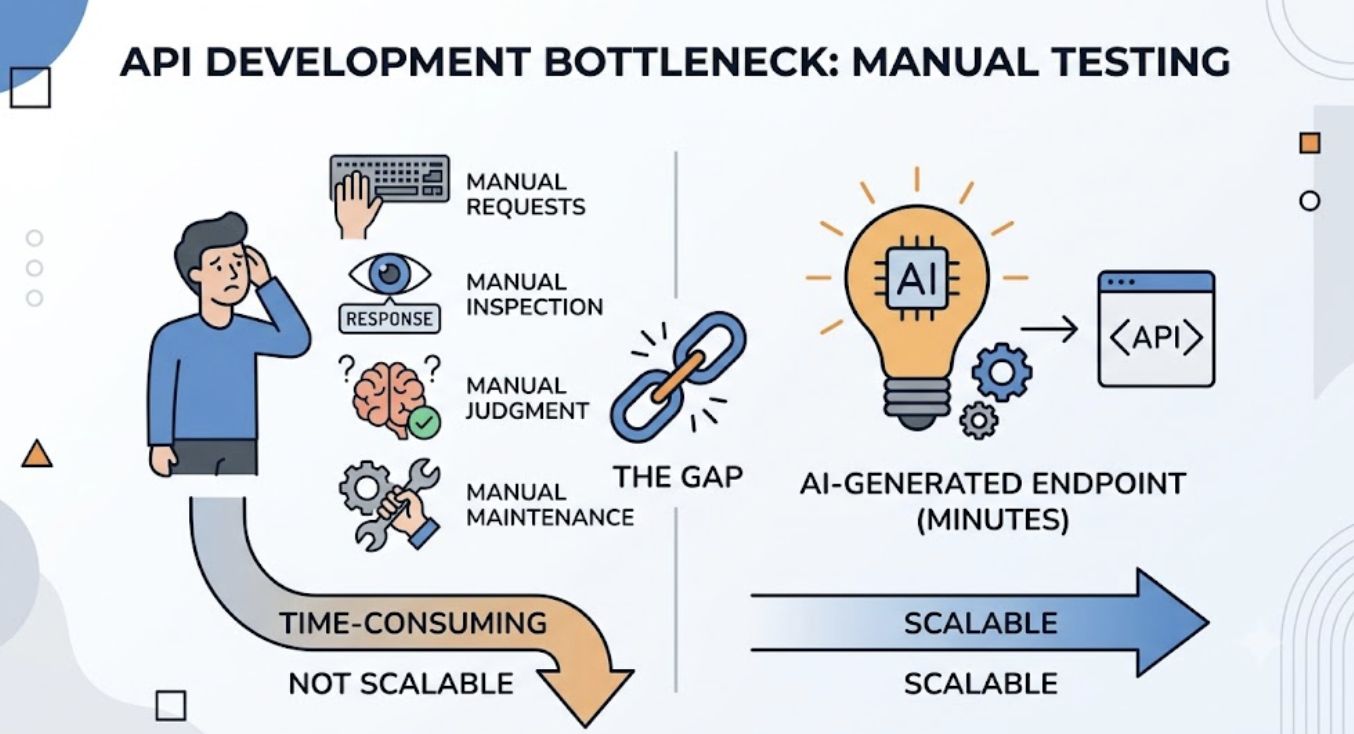
Teams searching for Postman alternatives usually aren't unhappy with Postman itself. They're unhappy with what Postman requires them to do: manually craft each API request, manually inspect each response, manually decide what the correct response looks like, and manually maintain that judgment as the API evolves.
For teams using AI coding tools to build backend APIs, this manual process doesn't scale. Claude Code or Cursor can generate a new API endpoint in minutes. The same team member manually testing that endpoint, setting up request collections, writing assertions, and updating them when the API changes takes significantly longer.
The Postman alternative that fits AI coding teams isn't a tool that makes manual API testing more efficient. It's a tool that eliminates the manual layer entirely.
What Manual API Testing Actually Costs
Manual API testing with a collection-based tool has three costs that compound for teams using AI coding agents.
The setup cost. Every new endpoint requires a new request in the collection: the method, the URL, the headers, the request body, the expected response structure. For a backend built quickly with Claude Code, the setup time can exceed the development time.
The maintenance cost. When an AI coding session changes how an API responds, the collection needs updating. A renamed field, a changed status code, a restructured response body: each requires finding the affected requests, updating the assertions, and verifying the changes are correct. For teams running frequent backend sessions, this is a recurring maintenance tax.
The specification gap. Manual API testing covers the requests that someone configured. Multi-step flows, where the response from one call contains values that need to be passed to the next call, require manual variable capture and chaining. For complex API interactions, this setup is labor-intensive and error-prone.
What Autonomous API Testing Looks Like
TestSprite approaches API testing the way a developer manually testing an API would, but without the manual work.
Other verification tools read your code and guess. TestSprite opens your app and uses it.
TestSprite's Backend Testing 2.0 calls each API endpoint and observes the real response before generating any assertion. Real field names. Real status codes. Real response shapes. The assertions it creates reflect what the API actually returns, not what the code says it should return or what a developer configured in a collection.
This observation-first approach has a specific advantage for AI-generated backend code. When Claude Code generates an API endpoint, the running response frequently differs from what the source code appears to specify. Serialization layers apply naming conventions that code inspection doesn't account for. A handler might use camelCase internally while the response uses snake_case. The observation-first approach captures the actual API contract from the first call, not a prediction of it.
Multi-Step Integration Testing Without Manual Wiring
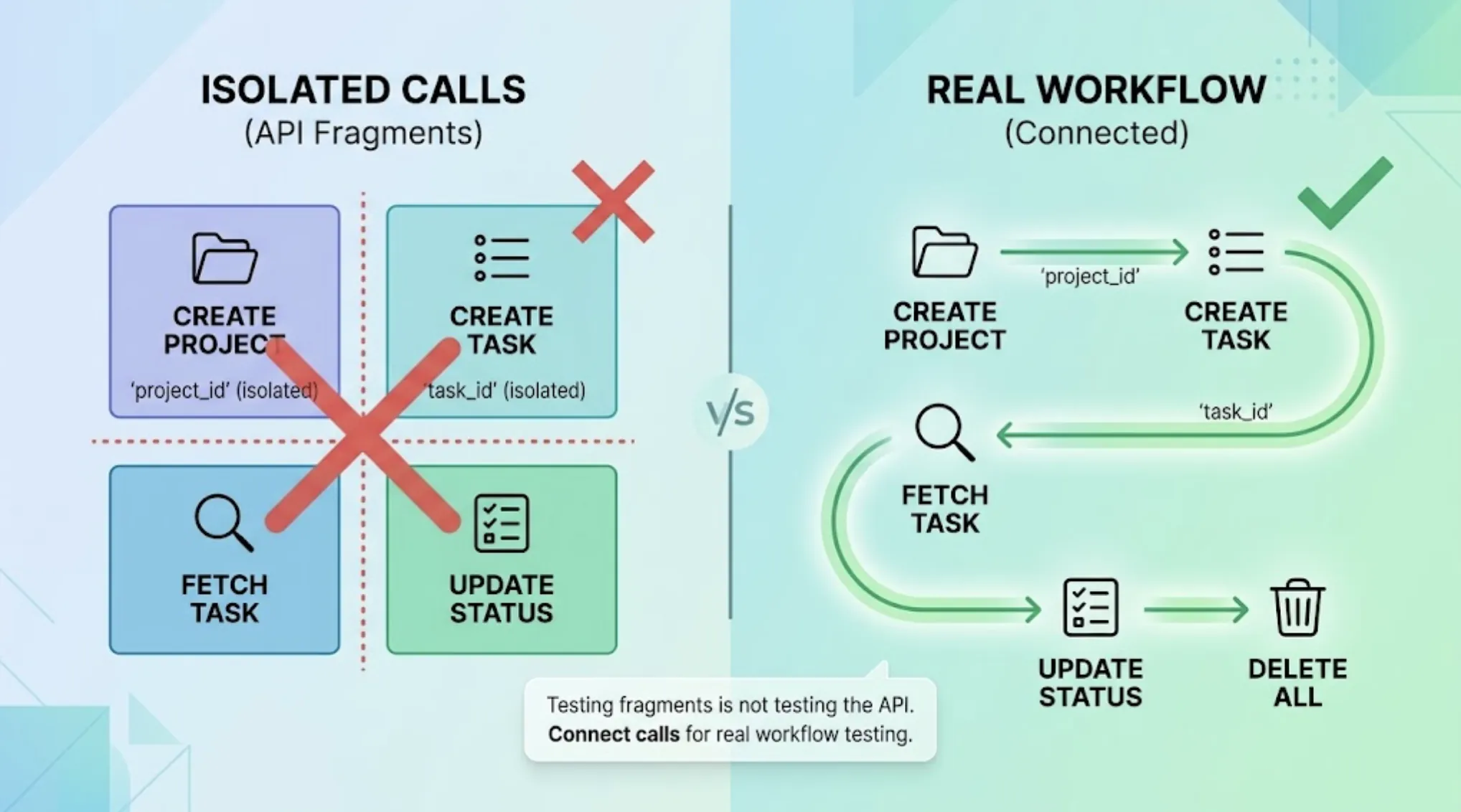
The feature that makes API integration testing genuinely difficult is the need to carry values from one API call to the next.
A user registration endpoint returns a userId. The next call to create the user's first project requires that userId in the request body. The endpoint that adds a team member requires the projectId from the project creation response. Manually testing this chain requires capturing each value, storing it as an environment variable, and referencing it in each subsequent request.
For AI coding teams where these multi-step flows change frequently, manually maintained variable chains break constantly and require regular intervention.
TestSprite captures dynamic variables from real API responses automatically. When the registration endpoint returns { "userId": "usr_4f9a" }, that value is captured and passed to the project creation call. The project creation response provides projectId, which flows to the team member endpoint. The full chain runs end to end on the first attempt without the developer wiring any of it manually.
CRUD lifecycle tests work the same way. Create a resource, read it, update it, delete it, verify it's gone. The real ID from the create response flows through each subsequent step automatically. When an AI coding session changes how resources are identified, the next test run catches the deviation as a specific finding.
GitHub Actions Integration for Continuous API Coverage
Manual API testing with collection-based tools typically runs when a developer triggers it. The coverage is as current as the last time someone ran the tests.
TestSprite's GitHub Actions integration extends the same autonomous API coverage into CI. Every pull request that touches backend code triggers an automated API test run against the preview environment. Results post as PR comments.
When a Claude Code session changes an API endpoint and opens a pull request, the CI run verifies whether the change broke the API contract before anyone reviews the diff. The reviewer sees test coverage alongside the code change.
Auto-Auth handles authentication automatically. OAuth tokens, password endpoint flows, and AWS Cognito refresh sequences run before every test execution. Authenticated API flows work correctly in CI without the developer managing credentials or configuring authentication in the test setup.
A Scenario: API Testing That Kept Up with Claude Code
A backend team was using a collection-based API testing tool to verify their REST API. The tool worked well when the API was stable. After they adopted Claude Code for backend development, the collection maintenance became a bottleneck. Every Claude Code session that updated an API response structure required updating the test collection before they could verify the new behavior.
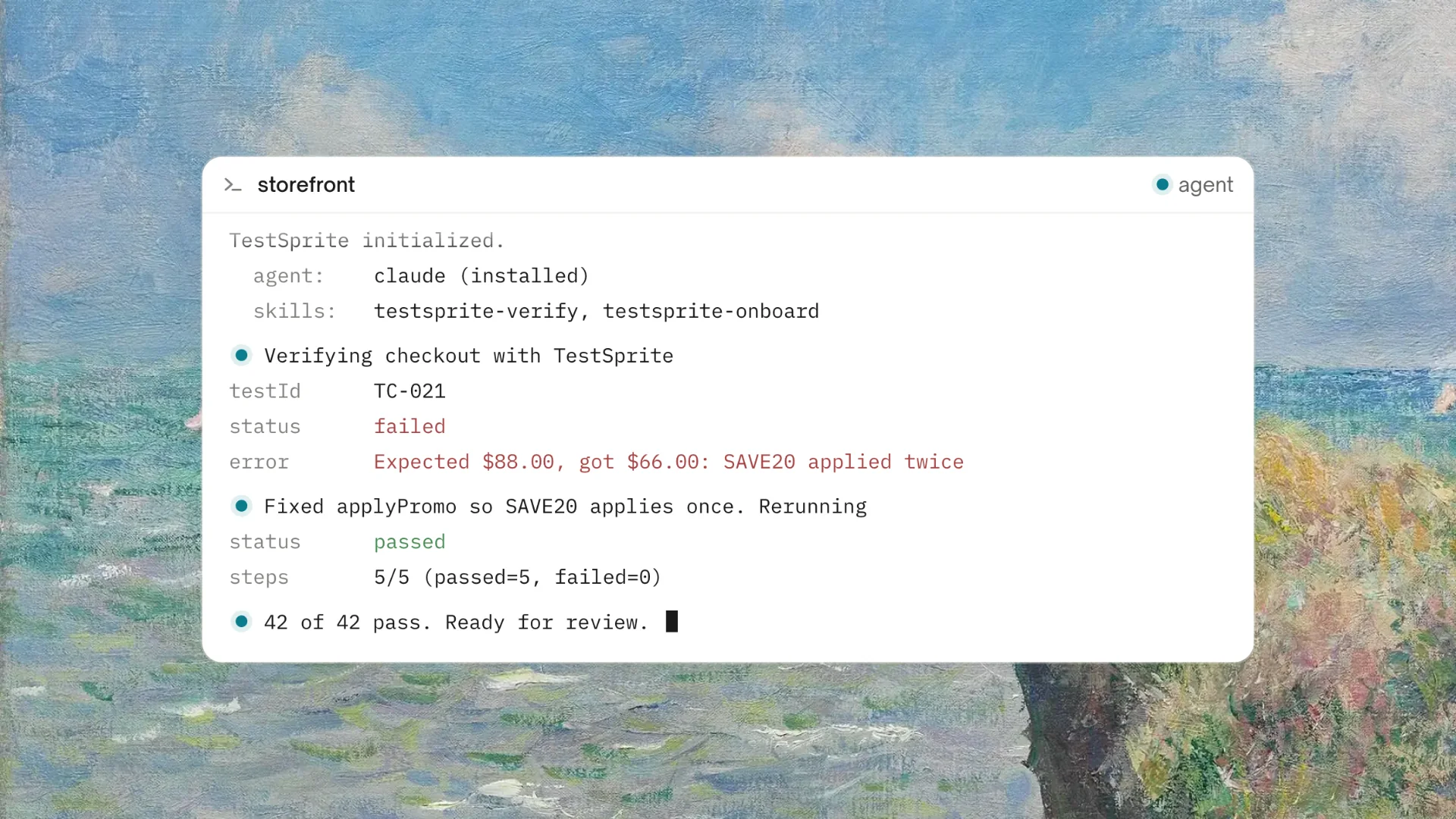
They connected TestSprite to Claude Code through the MCP Server.
After a Claude Code session that updated the subscription billing API to add usage-based pricing tiers, they triggered TestSprite.
The observation agents called the subscription endpoints and recorded the real responses. The subscription status endpoint now included a usageThresholds array that the previous response didn't contain. The billing calculation endpoint now returned tierRate as a nested object rather than a flat field.
The prior session's established baseline showed these as contract changes: two endpoints were returning different shapes than they had previously. The tierRate change was flagged as a specific deviation: prior response had { "tierRate": 0.05 }, current response has { "tierRate": { "base": 0.05, "overage": 0.08 } }.
The frontend component that consumed the billing endpoint was reading response.tierRate as a number. With the nested structure, it received an object instead of a number. The calculation displayed [object Object] in the billing summary instead of the rate.
The collection-based tool wouldn't have caught this because the collection would need to have been updated to reflect the new response structure before the assertion could detect the deviation. TestSprite caught it because it observed the actual response and compared it against the prior observed contract.
The finding returned to the Claude Code terminal. The coding agent updated the frontend component to read response.tierRate.base and handle the overage scenario. The fix applied in the same session.
Conclusion
The best alternatives for AI-powered API and integration testing are the tools that observe the API's real behavior rather than testing against specifications that humans configured.
Manual collection-based tools require someone to configure each request, maintain the configuration as the API evolves, and manually wire multi-step flows with variable capture. For teams using AI coding tools to build APIs quickly, this maintenance burden outpaces the development pace.
TestSprite's Backend Testing 2.0 observes before asserting, captures dynamic variables automatically, runs CRUD lifecycle tests end to end, and catches contract deviations as specific findings when AI coding sessions change what an endpoint returns.
For teams building APIs with Claude Code or Cursor, autonomous API testing that operates at the pace of AI coding is the practical alternative to collection-based manual verification.
Start autonomous API testing with TestSprite from inside your AI IDE today.