What Are the Best Cypress Alternatives for AI-Powered Web App Testing?
Zeshi Du6 min read

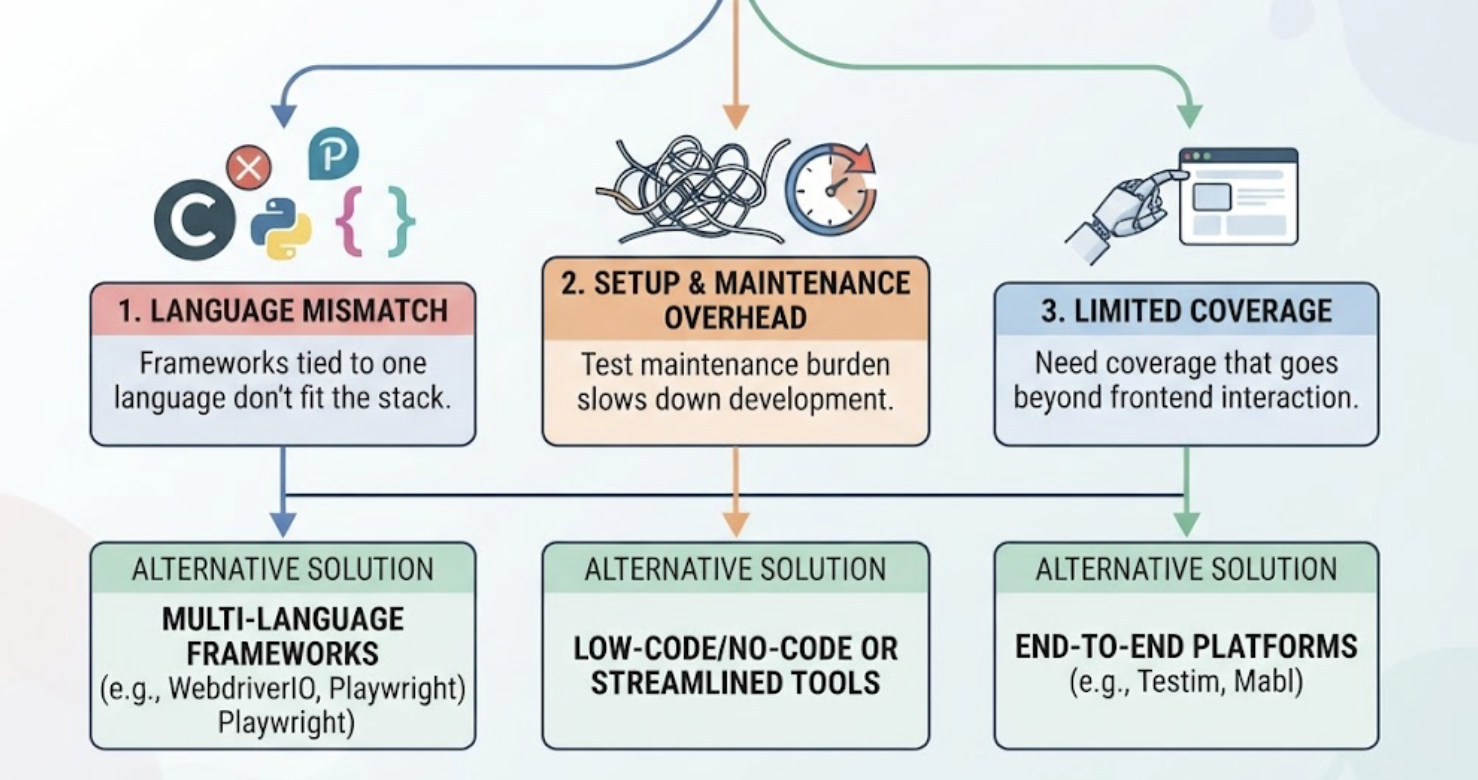
The teams most likely to search for Cypress alternatives aren't necessarily looking for a different framework. They're usually running into one of three specific problems: Cypress's JavaScript-only constraint doesn't fit their stack, the test setup and maintenance overhead isn't sustainable at their current development pace, or they need coverage that goes beyond frontend interaction.
Understanding which problem is the actual constraint determines which alternative actually solves it.
Where Framework-Level Alternatives Fall Short
Replacing Cypress with another browser automation framework solves the JavaScript constraint if that's your problem. But it doesn't solve the deeper challenge: you still have to write the tests.
For teams using Claude Code, Cursor, or GitHub Copilot, the test authoring and maintenance burden is where the friction actually lives. AI coding sessions change component structures, rename elements, and refactor state management frequently. Each change is a potential test breakage. For teams already stretched thin, maintaining a test suite in parallel with AI-assisted development becomes the bottleneck.
Switching from one framework to another doesn't address this. The maintenance burden follows the approach, not the tool.
What AI-Powered Web App Testing Actually Requires
For teams using AI coding tools, AI-powered testing isn't just tests that run faster or tests that generate from code. It's tests that come from navigating the running application the way users do, and that stay accurate without requiring manual updates after every AI coding session.
That combination, product-layer exploration plus self-maintaining coverage, is the gap that framework alternatives don't fill.
TestSprite is an autonomous AI testing agent that works at this layer. Its exploration agents visit the running application and navigate it the way real users would. They don't read the source files that changed in the last Claude Code session. They visit the live product and find its flows by using it.
Other verification tools read your code and guess. TestSprite opens your app and uses it.
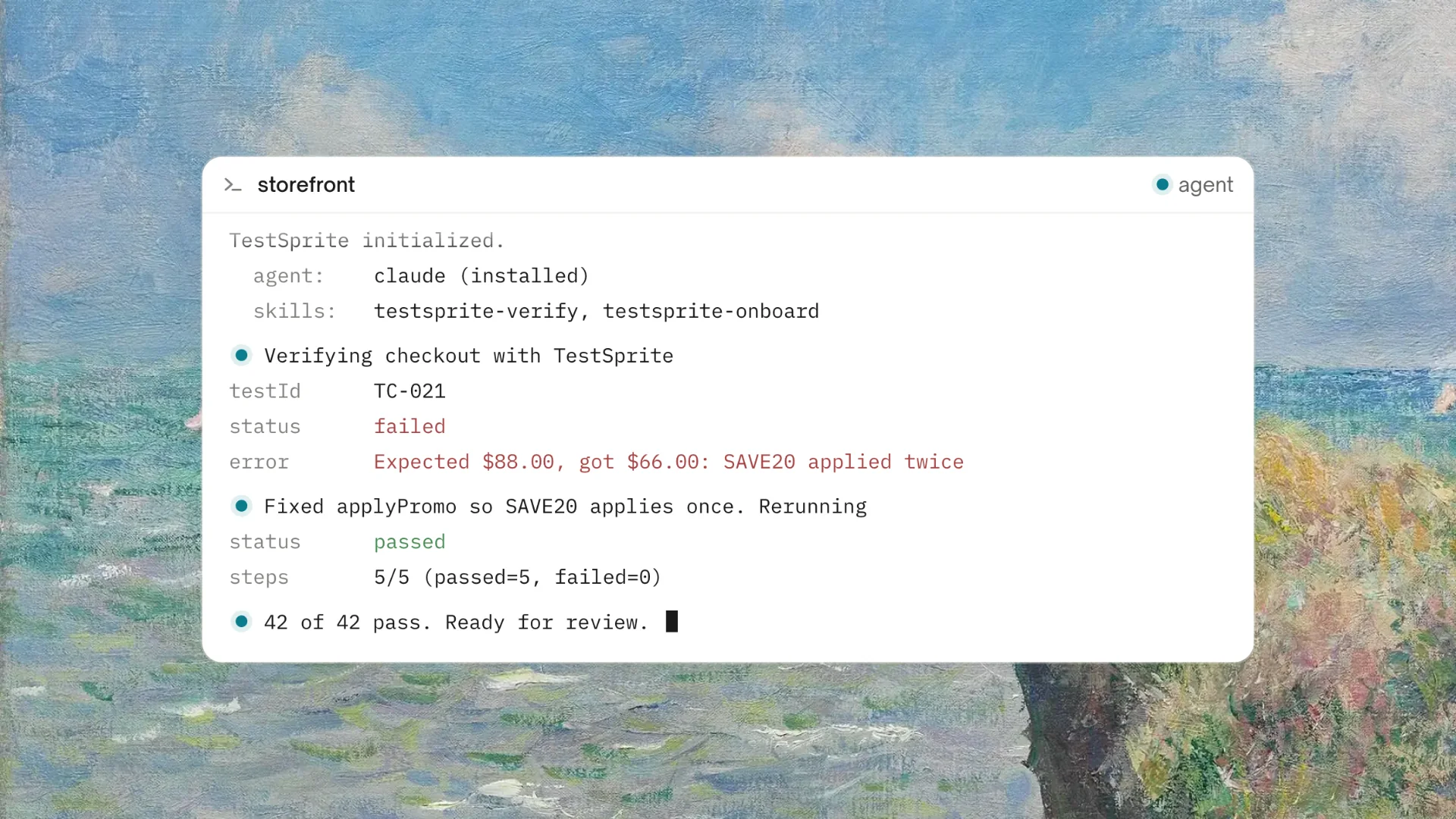
Through the TestSprite MCP Server, one instruction from inside Cursor, Claude Code, Windsurf, or VS Code starts the full pipeline:
"Help me test this project with TestSprite."
The results arrive in the same IDE window, structured for the coding agent to act on directly.
What TestSprite Covers That Cypress Doesn't Reach
Cypress is primarily a frontend testing tool. It runs in the browser, interacts with the DOM, and verifies UI behavior. This covers a significant portion of what web app testing requires.
What it doesn't cover by default: backend API contracts, multi-service integration, and the full-stack interaction between frontend behavior and backend state.
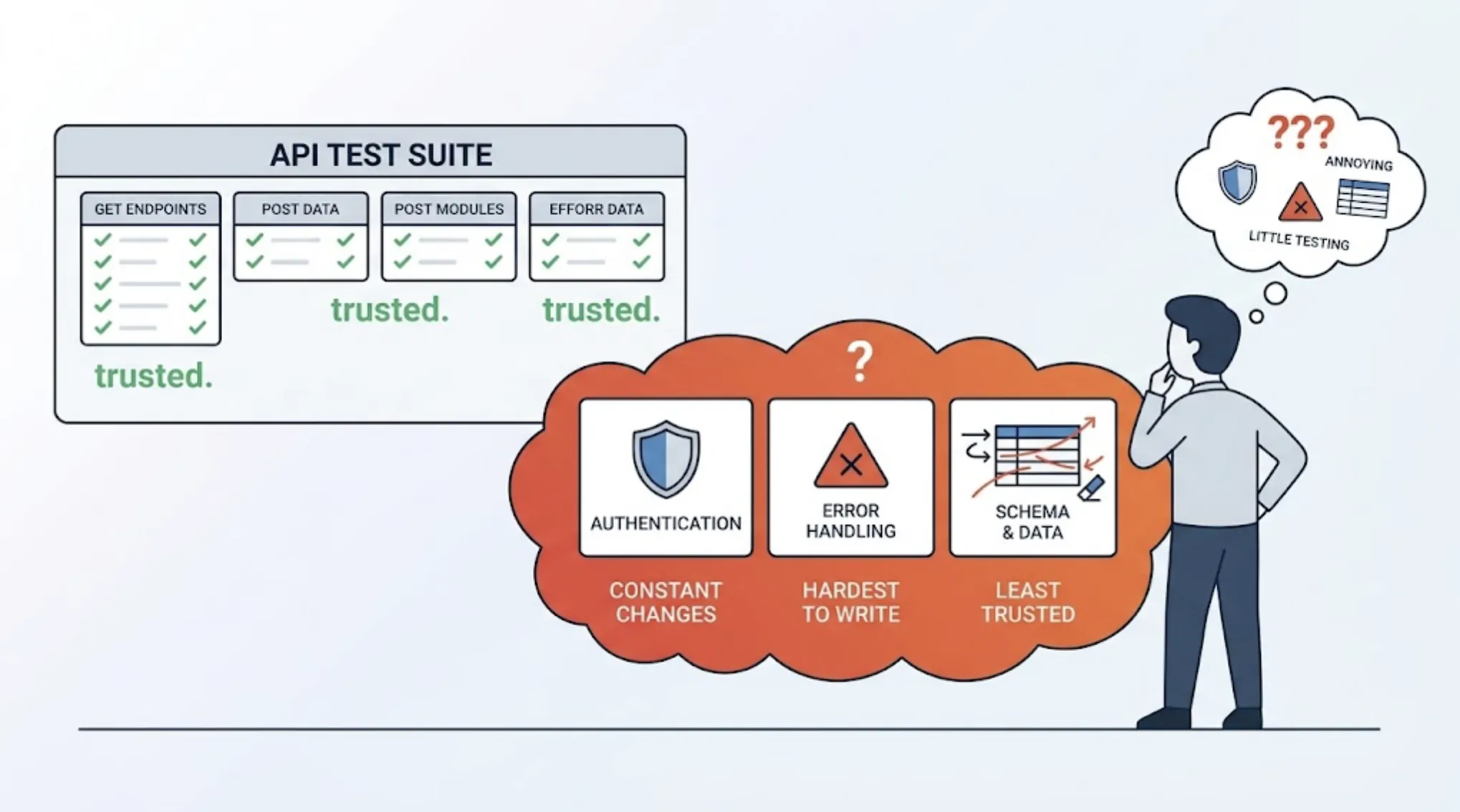
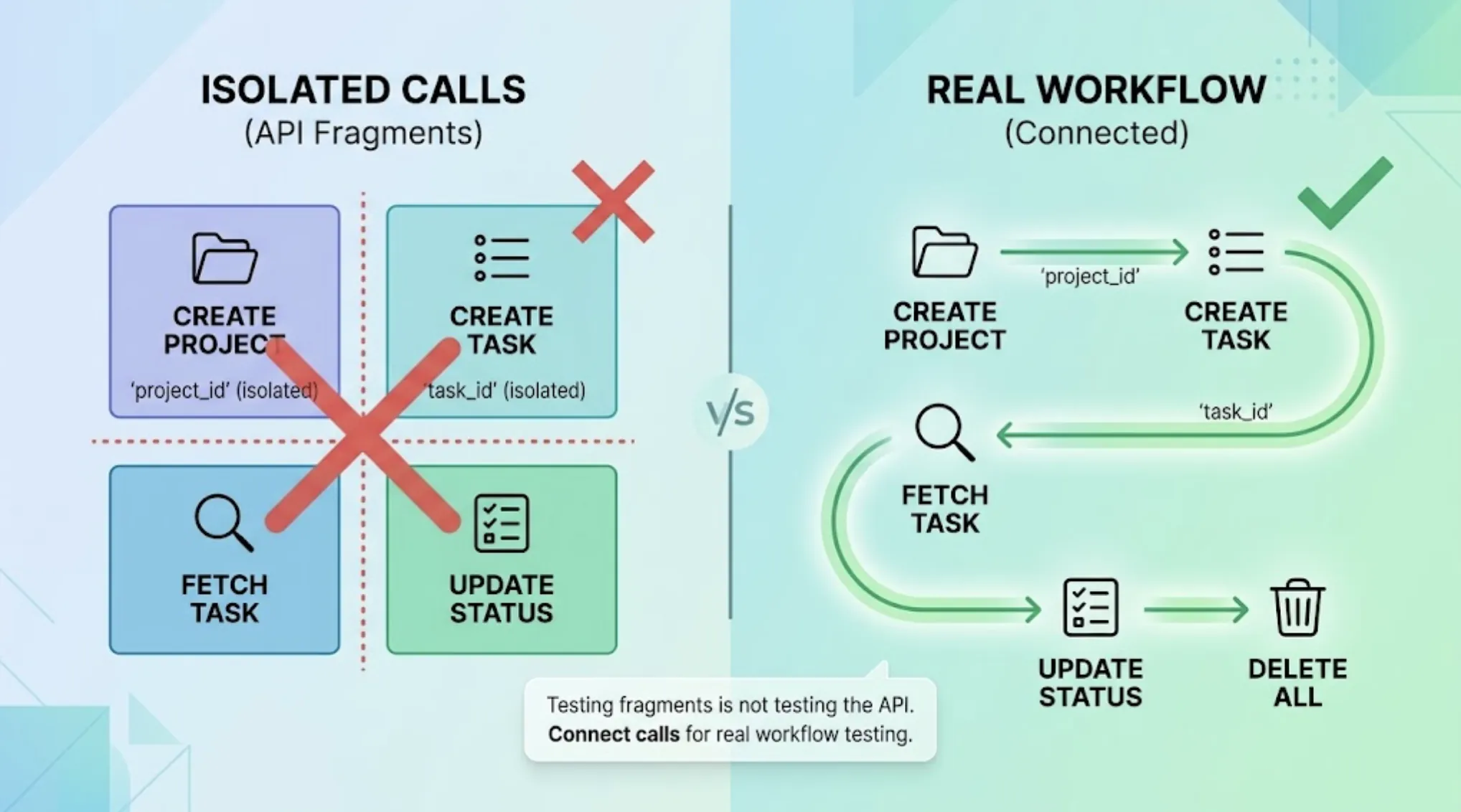
TestSprite covers the full stack in a single session. Frontend flows get explored by agents that navigate the UI. Backend APIs get tested by Backend Testing 2.0, which calls each endpoint and observes the real response before generating any assertion. Real field names. Real status codes. Real response shapes.
For web app teams where a Claude Code session might touch the frontend and the API it calls in the same commit, full-stack coverage from a single instruction is more practical than separate frontend and backend test suites that have to be kept in sync.
The Maintenance Difference That Matters for AI Coding Teams
When a component gets renamed, a Cypress test looking for that component by name fails. When a layout shifts, Cypress tests anchored to DOM positions fail. When an API response field gets renamed in a refactor, Cypress tests asserting on the old field name fail.
These aren't regressions. They're maintenance events. They require investigation, discovery that the product is actually fine, and manual test updates.
For teams using AI coding tools where these kinds of changes happen frequently, maintenance events can consume a significant portion of engineering time.
TestSprite's Auto-Heal Rerun handles this at the source. When a test fails after a structural change, the agent determines whether the product's behavior changed or just its implementation. A renamed component that still submits the form correctly produces no false failure. A renamed component that now fails to submit the form surfaces as a genuine regression.
This distinction keeps the coverage trustworthy without requiring the developer to manually investigate and update after each AI coding session.
For Teams That Already Have Cypress Coverage
If your team has an existing Cypress suite covering your most critical flows, TestSprite doesn't replace it. It covers what the Cypress suite doesn't reach.
The Cypress suite covers what was specified. TestSprite covers the product surface that wasn't specified: the new features built with AI coding agents that don't have Cypress tests yet, the integration failures that live at the seams between flows, and the full-stack behavior that frontend-only coverage misses.
The combination works better than either alone. Cypress provides deep, precise coverage for the specified flows. TestSprite provides broad, autonomous coverage for the rest.
A Scenario: Full-Stack Coverage from One Instruction
A three-person startup builds a content management platform using Claude Code for backend development and Cursor for frontend work. They have a small Cypress suite covering their editor and publishing flows.
They connect TestSprite to Cursor through the MCP Server and use it for post-session verification.
After a session that updates the media upload feature, adding support for video files alongside images, they trigger TestSprite.
The exploration agents navigate the platform across its full surface. They work through the media upload flow, the content editor, the publish flow, and the content analytics section.
They find two issues.
The first is a frontend issue in the media upload flow: uploading a video file successfully stores the file and shows a progress bar that completes correctly. After the upload completes, the video doesn't appear in the media library without a page refresh. The upload handler fires a success event. The media library component listens for image upload events but not video upload events, because the event type was introduced in the current session and the library component wasn't updated to handle it.
The second is a backend issue: the content analytics API endpoint was updated to include video view counts alongside image view counts. The response field for video views is videoViews, but the frontend analytics component reads video_viewsusing snake_case. The field exists in the response but with a different naming convention, so the analytics section displays 0 video views for all content.
The Cypress suite covers the editor and publishing flows, both of which pass. It doesn't cover the media upload event handling or the analytics API field naming.
The two failure descriptions return to the Cursor chat. The coding agent identifies the missing video upload event listener in the media library component and the field naming mismatch in the analytics component. Both fixes apply in the same session.
Full-stack coverage from one instruction. Frontend and backend failures found in the same run. Neither was in the Cypress suite.
Conclusion
The best alternatives for AI-powered web app testing are the tools that operate at the product layer rather than the framework layer: autonomous agents that navigate the live application, cover both frontend and backend in a single run, and maintain that coverage without requiring manual updates after each AI coding session.
Framework alternatives to Cypress address specific technical constraints like language support or test runner architecture. They don't address the maintenance burden of manually authored tests at AI coding speed.
TestSprite addresses the maintenance burden by exploring the product rather than executing specifications, by grounding backend assertions in observed API behavior, and by keeping coverage current through Auto-Heal as the product evolves through AI coding sessions.
For web app teams using AI coding tools who want coverage that matches their development pace, that's the alternative worth evaluating.
Start AI-powered web app testing with TestSprite from inside your AI IDE today.