What Are the Best BrowserStack Alternatives for AI-Powered Web App Testing?
Zeshi Du5 min read

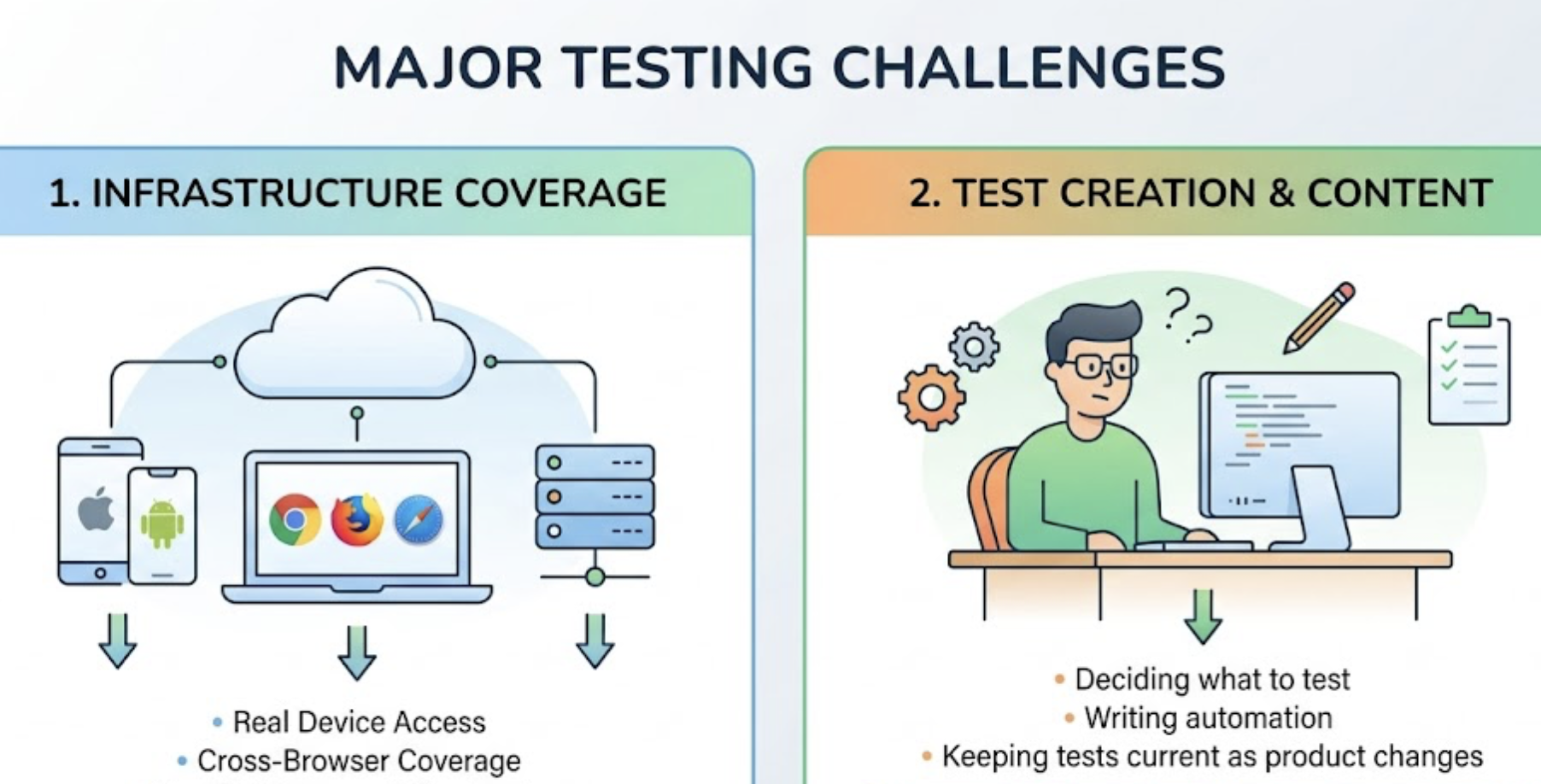
Teams searching or alternatives in this space are usually solving one of two very different problems, and the right answer depends entirely on which one is yours.
The first problem: you need somewhere to run tests. Cross-browser coverage, real device access, execution infrastructure that your team doesn't have to maintain. Cloud testing infrastructure platforms solve this well. They give you the environments; you bring the tests.
The second problem: you need the tests themselves. Someone has to decide what to test, write the automation, and keep it current as the product changes. No amount of execution infrastructure solves this. An empty test suite runs equally fast on every browser.
For teams using AI coding tools like Claude Code and Cursor, the second problem is almost always the real one. The code ships faster than anyone can write tests for it. The infrastructure question is secondary when there's nothing to run on it.
The Infrastructure Layer vs the Intelligence Layer
Cloud testing infrastructure operates at the execution layer. You write tests in Selenium, Playwright, or Cypress, and the platform runs them across browser and device combinations you couldn't maintain locally. For products where cross-browser rendering and device-specific behavior are primary risks, this execution breadth is genuinely valuable.
What the infrastructure layer doesn't provide is the intelligence layer: deciding what to test, generating the coverage, interpreting failures, and maintaining the suite as the product evolves. That work stays with your team. The platform runs what you wrote.
TestSprite operates at the intelligence layer and brings its own execution infrastructure with it.
Other verification tools read your code and guess. TestSprite opens your app and uses it.
Its exploration agents navigate the running application the way real users would, discovering flows by using the product rather than executing scripts someone authored. The tests generate themselves from exploration. The execution happens in TestSprite's secure ephemeral cloud sandbox: spins up in seconds, runs in isolation, tears down automatically. No infrastructure to select, configure, or pay for separately.
For teams whose bottleneck is test creation rather than test execution, this is the layer that solves the actual problem.
What "AI-Powered" Should Mean for Web App Testing
Cloud infrastructure platforms have added AI features over the years: visual diffing, flakiness detection, test insights. These improve the experience of running tests that humans wrote.
AI-powered web app testing, in the sense that matters for teams building with AI coding tools, means something more fundamental: the AI does the testing work. It discovers the flows. It generates the coverage. It runs the verification. It interprets the results and routes them somewhere actionable.
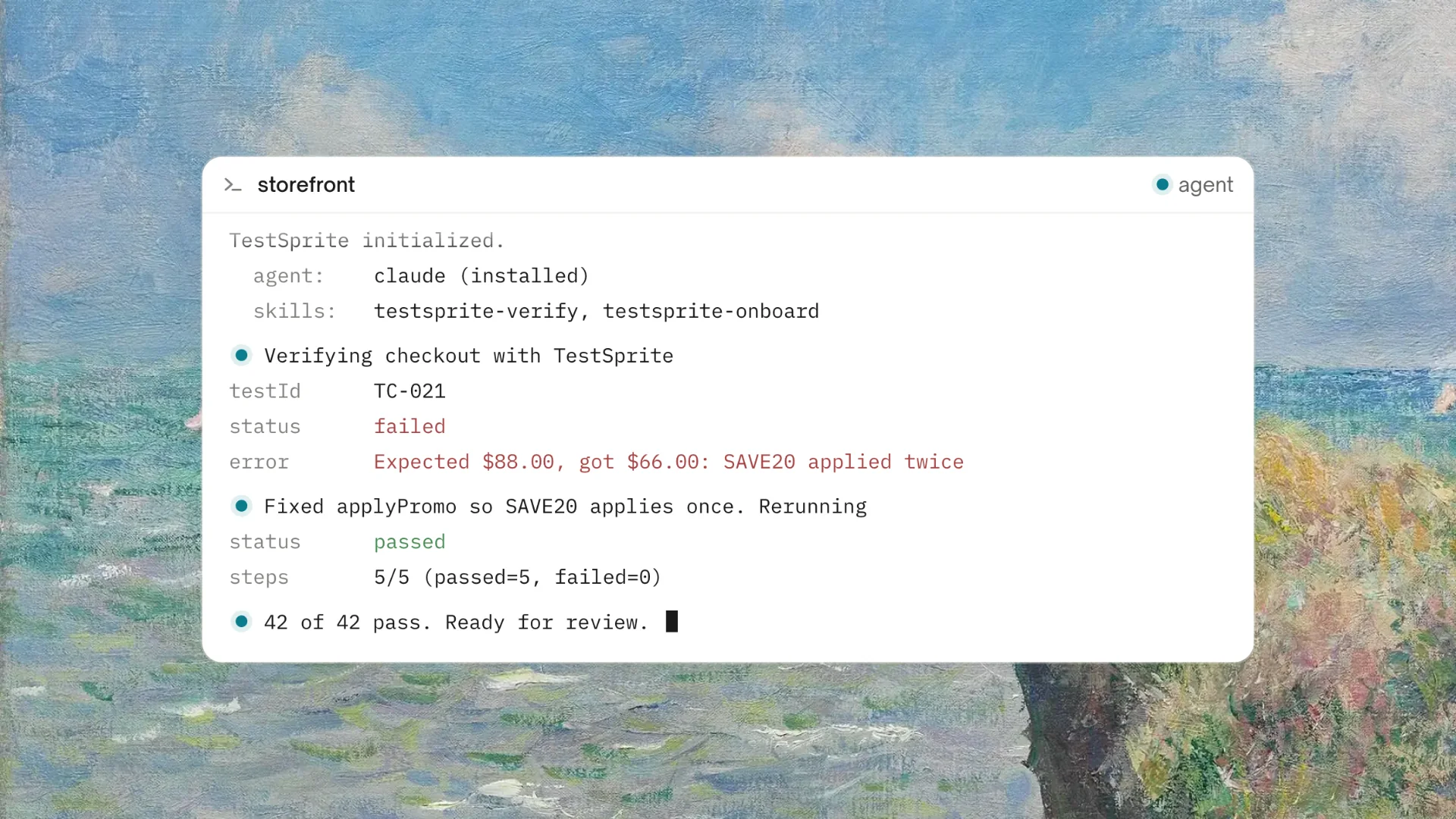
Through the TestSprite MCP Server, that full cycle runs from one instruction inside Cursor, Claude Code, Windsurf, or VS Code:
"Help me test this project with TestSprite."
The agents explore the deployed application, cover the frontend flows and the backend APIs, and return findings to the same IDE window where the code was written. The coding agent receives structured failure descriptions and can propose fixes in the same session.
No test scripts to upload to an execution grid. No parallel infrastructure to configure. The intelligence and the execution arrive together.
Backend Coverage That Infrastructure Platforms Don't Reach
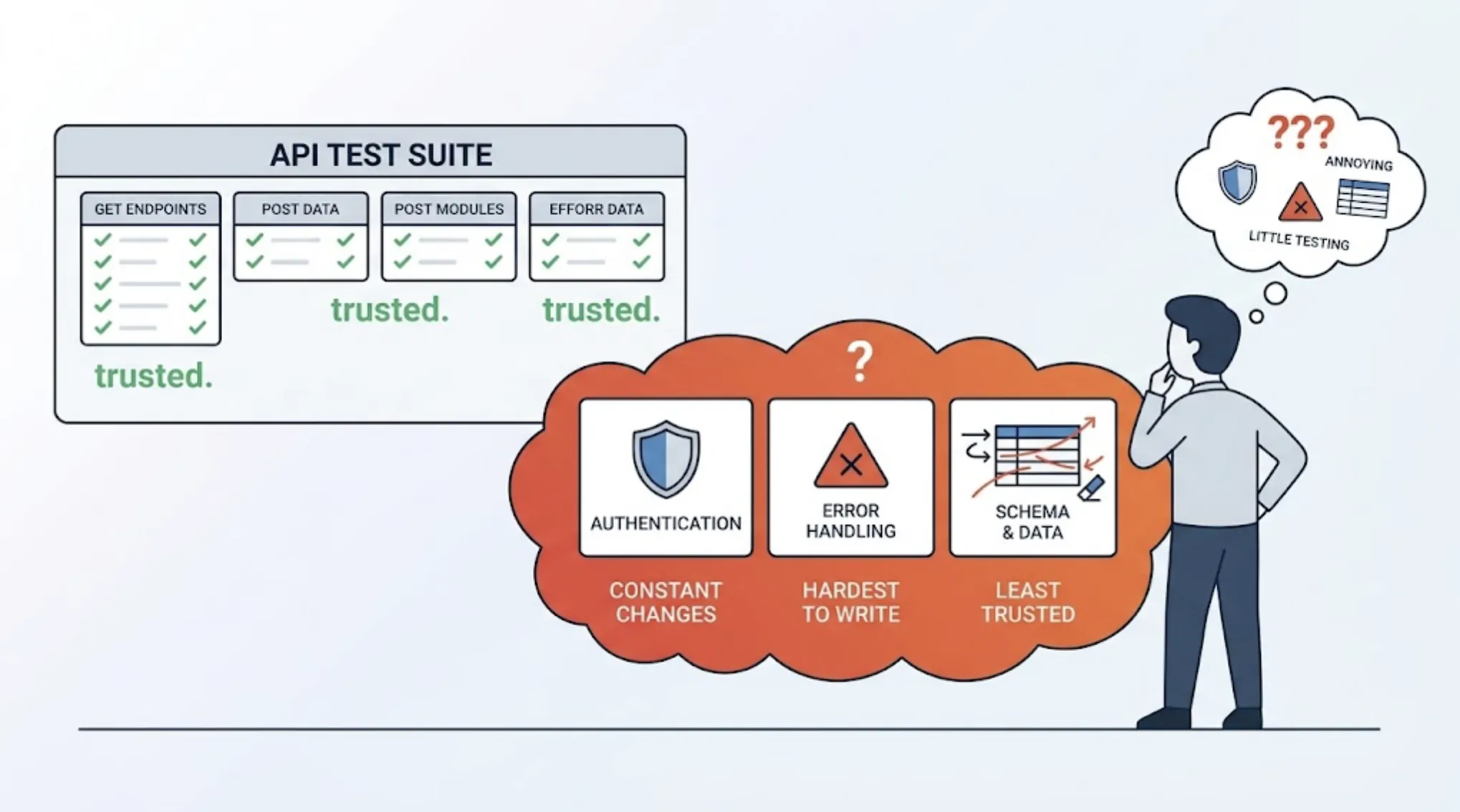
Cross-browser execution platforms are frontend-oriented by design. The browser is the unit of execution. Backend API testing requires separate tooling.
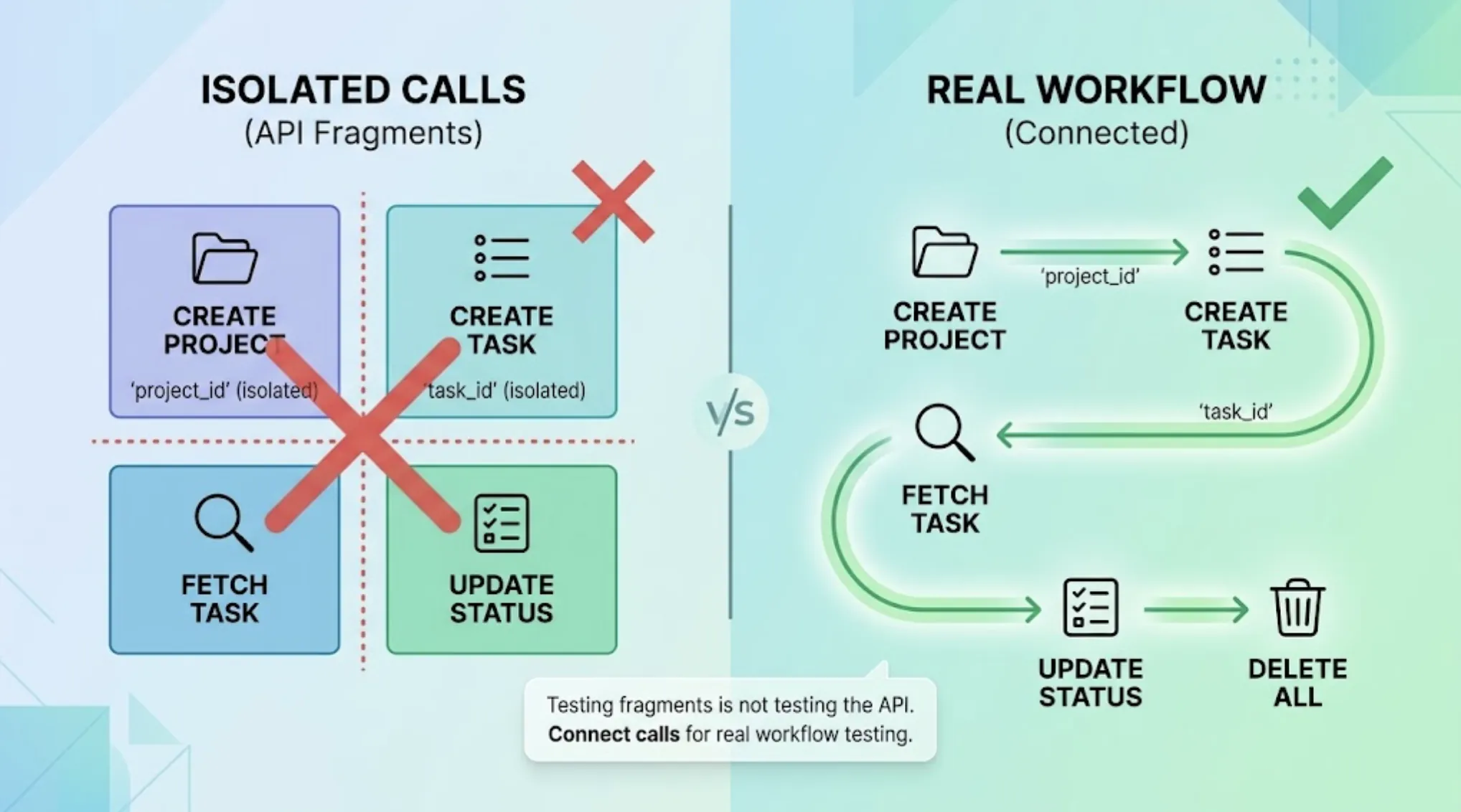
TestSprite covers both layers in a single run. Backend Testing 2.0 calls each API endpoint and observes the real response before generating any assertion: actual field names, actual status codes, actual response shapes. Dynamic variables from real responses flow automatically through multi-step sequences. CRUD lifecycle tests run end to end without manual wiring.
For web apps where a Claude Code session touches the API and the frontend consuming it in the same commit, single-run full-stack coverage matters more than execution breadth. The failure that reaches users most often isn't a browser-specific rendering issue. It's the frontend component reading a field the backend session renamed.
The Maintenance Equation
Running tests across thirty browser and device combinations multiplies the value of tests that work and the cost of tests that don't.
A selector that broke after a Cursor session fails on every browser in the grid. The failure count looks alarming; the cause is one renamed component. Someone investigates across the matrix, confirms it's a maintenance issue, updates the selector, and reruns. The infrastructure faithfully amplified a false positive thirty times.
TestSprite's Auto-Heal Rerun addresses this at the source. When a test fails after a structural change, the agent determines whether product behavior actually changed. A renamed component that still works adapts silently. A component that stopped working surfaces once, clearly, with a product-level description of what broke.
For teams using AI coding tools where structural changes happen every session, this distinction determines whether the test results are signal or noise.
A Scenario: The Team That Had Infrastructure and No Tests
A four-person startup building a logistics SaaS subscribed to a cloud testing platform early, planning to build out cross-browser coverage. Eight months later, the reality: they had written eleven Playwright tests, seven of which were disabled because maintenance had fallen behind. The infrastructure subscription ran monthly. The coverage was near zero.
Their development ran through Claude Code. Test authoring never kept pace, and every session that reorganized components broke something in the small suite that existed.
They connected TestSprite to Claude Code through the MCP Server. Setup took ten minutes.
After the next session, which updated their shipment tracking feature, they triggered TestSprite. The exploration agents navigated the product: created a shipment, updated its status through the tracking stages, and checked the customer-facing tracking page.
They found that internal status updates displayed correctly in the admin view, but the customer tracking page showed shipments stuck at "Processing" regardless of actual status. The session had changed the status field values in the tracking model. The admin view read the new values. The customer page mapped the old values to display labels, and the new values matched nothing, falling through to the default.
A customer checking their delivery would see a package permanently processing while it was actually out for delivery. Support tickets waiting to happen.
The failure description arrived in the Claude Code terminal. The coding agent updated the customer page's status mapping. Fixed before push.
The team's takeaway: their problem had never been execution infrastructure. It was that no tests existed to execute. The intelligence layer was the missing piece.
Conclusion
The best alternatives for AI-powered web app testing depend on which layer is actually missing for your team.
If you have a well-maintained test suite and need broader execution environments, cloud testing infrastructure remains the right category for cross-browser and real-device coverage.
If the tests themselves are the missing piece, if authoring can't keep pace with AI coding speed and maintenance keeps falling behind, TestSprite provides the intelligence layer: autonomous exploration that generates coverage from the product, behavioral anchoring that survives implementation churn, full-stack verification in a single run, and its own ephemeral cloud execution included.
For most teams building with Claude Code or Cursor, the missing layer is intelligence, not infrastructure.
Start with TestSprite's free plan and get coverage without writing a single test today.