What Are the Best ACCELQ or Leapwork Alternatives for AI Test Automation?
Zeshi Du5 min read

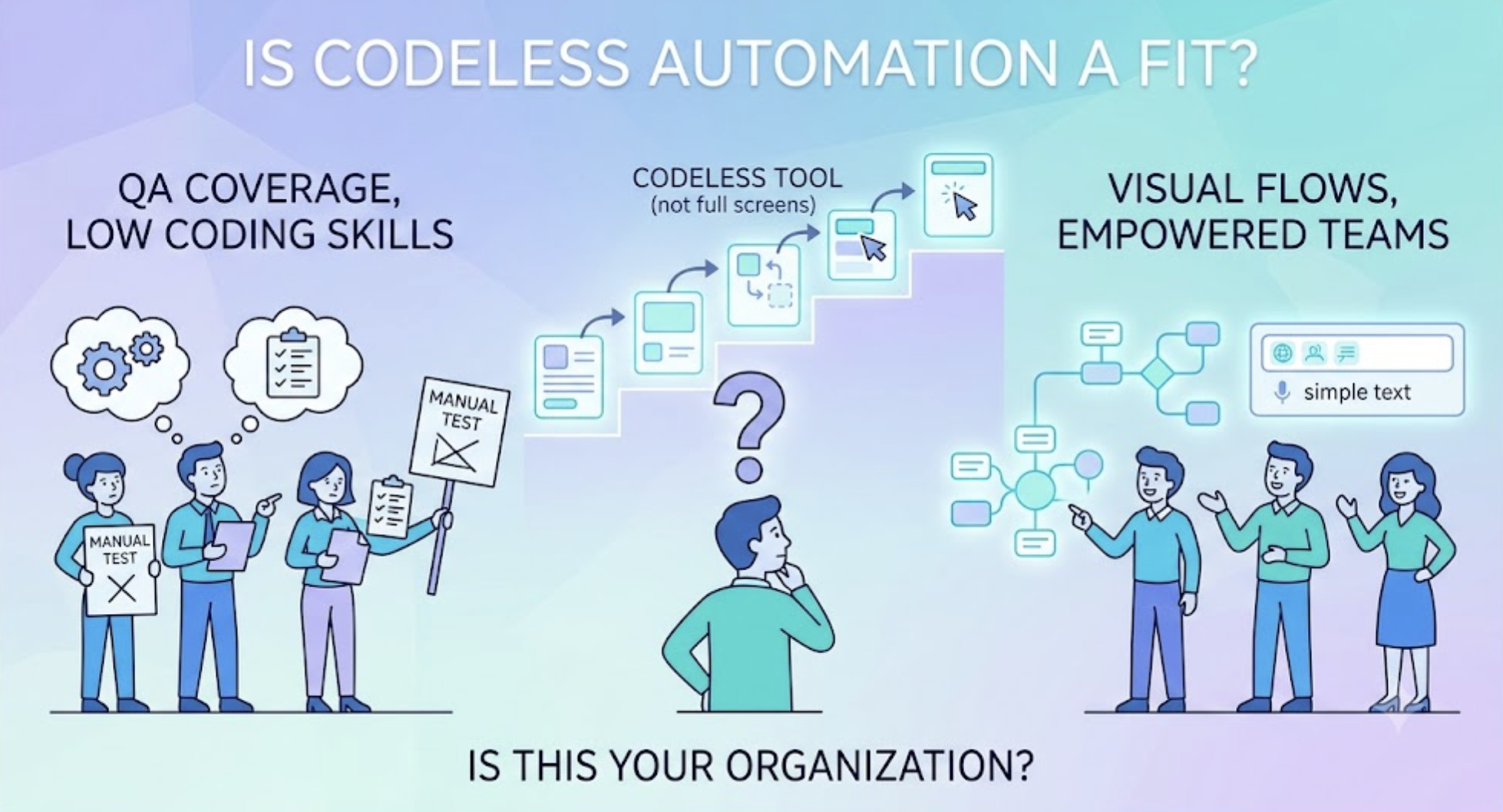
Codeless test automation platforms were designed to solve a staffing problem: QA teams that needed test coverage but didn't have engineers who could script it. Visual flow builders, drag-and-drop step editors, and natural language actions opened test creation to business testers and manual QA staff.
That was the right solution for the organizations it was designed for. The question worth asking before evaluating alternatives is whether your team is one of them.
Teams building with Claude Code, Cursor, or GitHub Copilot usually aren't. They don't have business testers waiting for an accessible authoring tool. They have two or four developers shipping fast, and nobody, technical or otherwise, has hours to spend assembling test flows in a visual editor. The codeless promise solves a problem this team doesn't have while leaving untouched the one it does.
Who Codeless Was Built For, and Who's Actually Buying It
The codeless value proposition assumes a specific person exists: someone with product knowledge and time to build tests, who lacks only the programming skills. Give that person a visual builder, and coverage gets created.
On an AI coding team, that person doesn't exist. There's no manual QA staff to empower. The developers could script tests if they had time; the constraint was never syntax. Buying an accessible authoring tool for a team with no one to do the authoring changes the interface without changing the outcome: coverage still doesn't get built.
The evaluation question shifts accordingly. Not "which platform makes test creation easiest?" but "which tool creates the tests?"
The Flowchart Is Still a Maintained Asset
Visual flow-based platforms replace code with diagrams, but the diagram inherits the same lifecycle problem the code had.
A test flow assembled from drag-and-drop blocks encodes assumptions about the application: which screens exist, which elements appear where, which sequence completes a journey. When a Cursor session reorganizes the component structure or a Claude Code session reroutes a flow, those assumptions break. Someone opens the visual editor, finds the broken blocks, and rewires them.
At AI coding speed, this happens weekly. The flowchart decays exactly as fast as a Playwright script would, and repairing it takes the same kind of attention. Codeless changed the medium of the maintenance work, not its volume.
What Removes the Authoring Step Entirely
TestSprite takes the position that the authoring step, visual or scripted, is the thing to eliminate.
Other verification tools read your code and guess. TestSprite opens your app and uses it.
Its exploration agents navigate the running application the way real users would. They discover flows by using the product: clicking through journeys, filling forms with real inputs, following multi-step sequences, carrying session state across steps. Nobody assembles blocks. Nobody drags steps into order. The coverage generates itself from the exploration, and it regenerates as the product changes.
Auto-Heal Rerun handles the structural drift that would otherwise mean rewiring: when a component moves or gets renamed but the behavior is intact, the test adapts silently. When behavior actually breaks, the failure surfaces with a product-level description of what a user experienced.
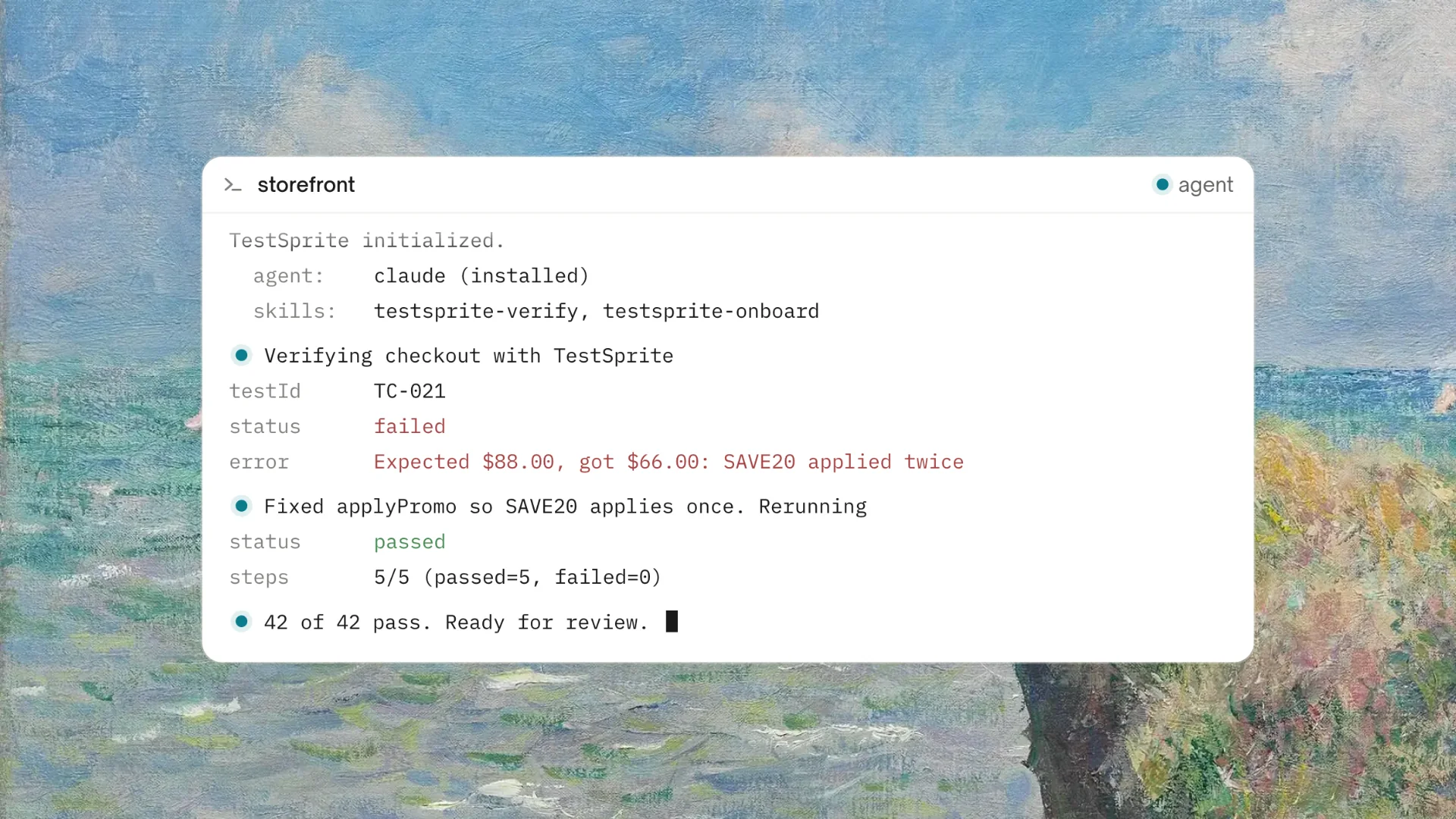
Through the TestSprite MCP Server, everything runs from one instruction inside Cursor, Claude Code, Windsurf, or VS Code:
"Help me test this project with TestSprite."
Results return to the same IDE window, structured for the coding agent to act on in the same session. For a developer mid-flow after a Claude Code session, that's the entire testing workflow.
Backend Coverage That Visual Builders Can't Draw
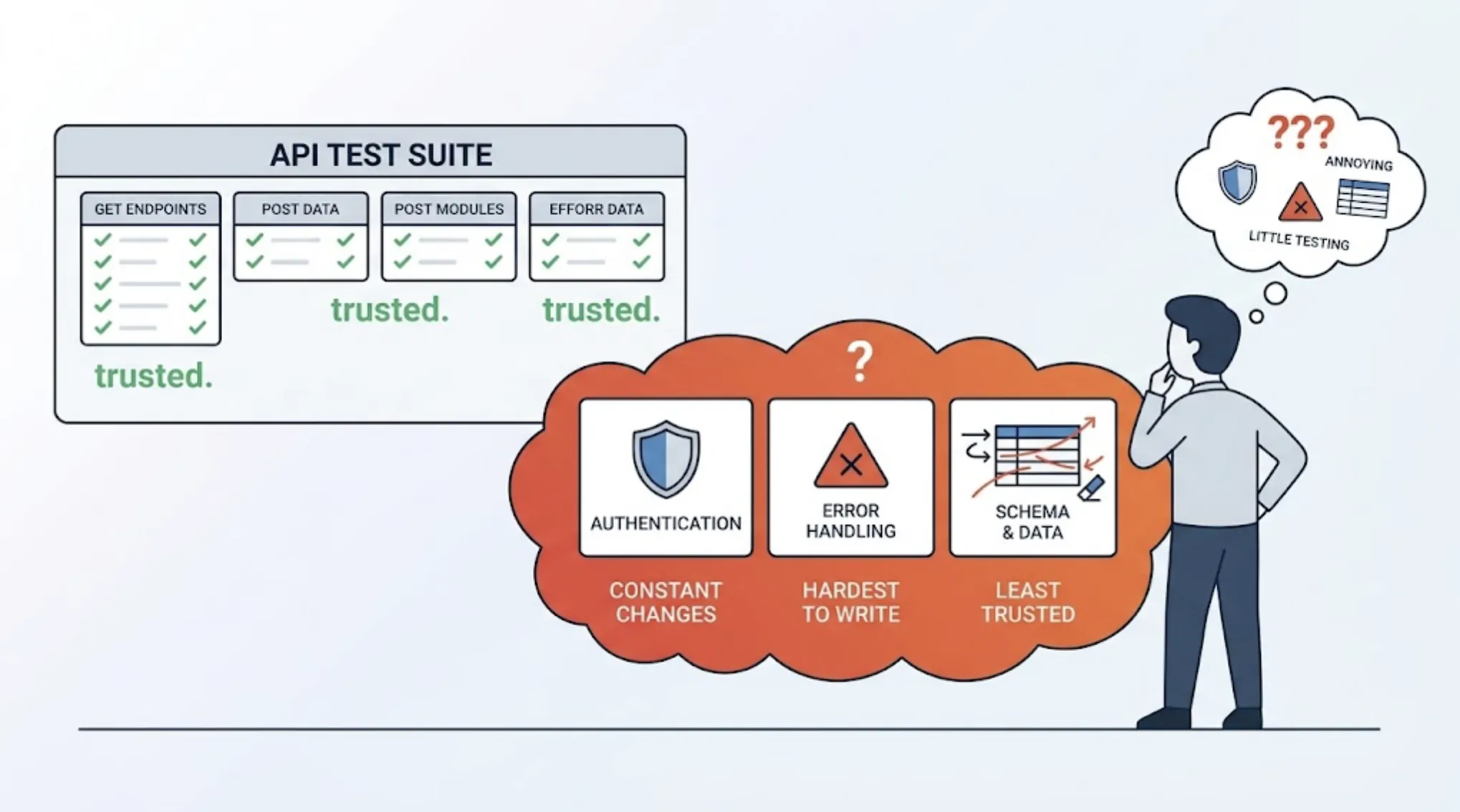
Visual flow builders are UI-oriented by nature. API testing on codeless platforms typically means a separate module where someone configures endpoints, expected responses, and validation rules, which is authoring again, just with forms instead of flowcharts.
TestSprite's Backend Testing 2.0 works from observation. Before generating any assertion, the agent calls each endpoint and records what actually comes back: real field names, real status codes, real response shapes. The observed contract becomes the baseline, and deviations after AI coding sessions surface as specific findings.
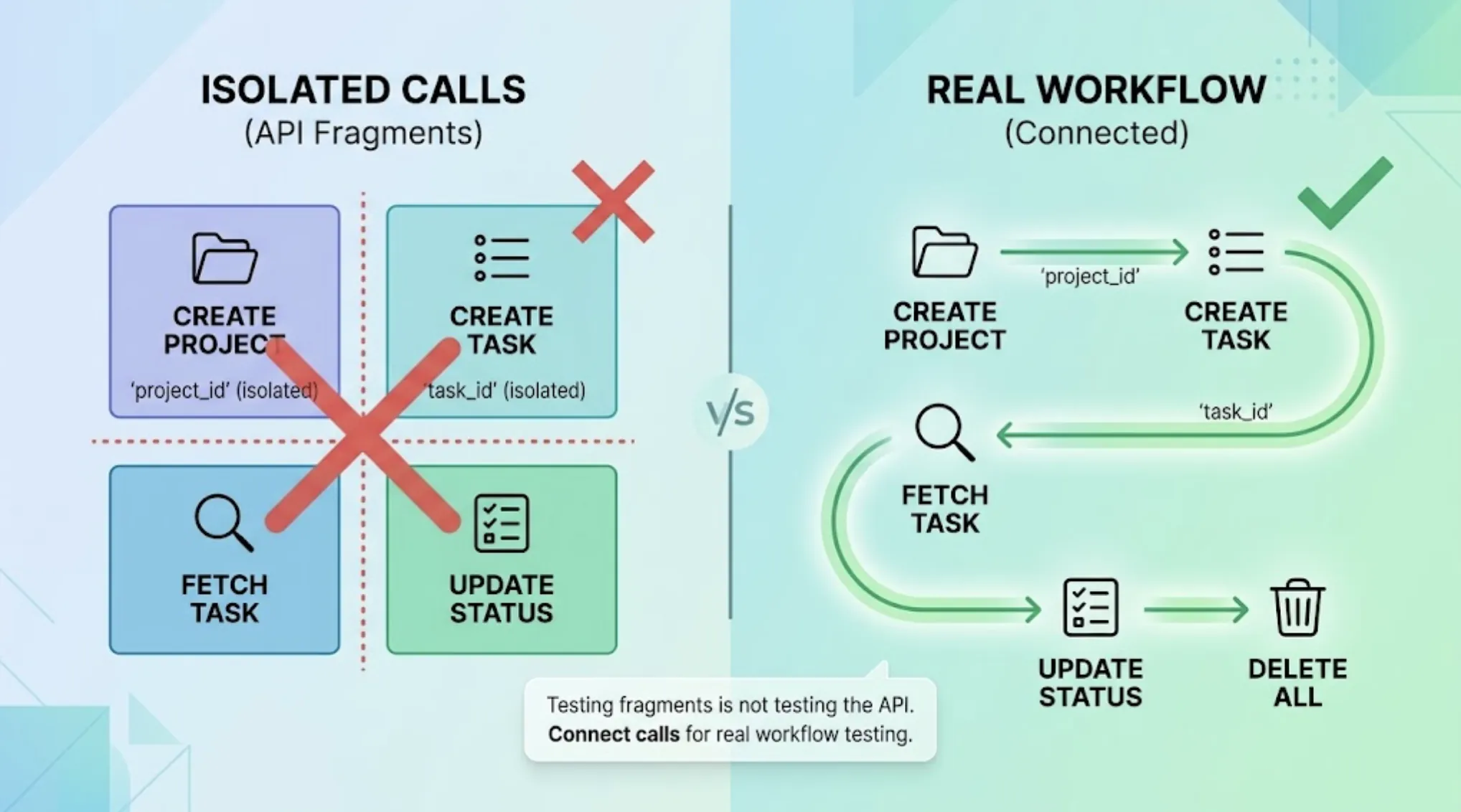
Dynamic variables captured from real responses flow automatically through multi-step sequences. A CRUD lifecycle runs end to end on the first attempt, with the real ID from the create response threading through read, update, and delete. No configuration forms, no manually specified contracts.
A Scenario: The Insurance Platform That Skipped the Builder
A six-person team building an insurance quoting SaaS evaluated a codeless platform. The demo was impressive, but the follow-up math wasn't: someone would need to assemble flows for quoting, underwriting rules, policy issuance, and renewals, then keep those flows current while Claude Code kept restructuring the product weekly. They had no QA staff to assign. It would fall on a developer, which defeated the purpose.
They connected TestSprite to Claude Code instead. Setup took one morning standup's length.
After a session that reworked the quote-to-policy conversion flow, they triggered TestSprite.
The exploration agents navigated the platform as an agent quoting a customer would. They generated a quote, adjusted coverage options, converted the quote to a policy, and checked the policy detail and the customer's document center.
The conversion succeeded and the policy detail page was correct. The document center, where customers download their policy documents, showed the declarations page generated from the original quote values, not the adjusted ones. The rework had changed when coverage adjustments were committed, and document generation now fired before the final values landed. Every customer who adjusted coverage during quoting would receive documents showing the wrong coverage amounts, a compliance problem as much as a bug.
The agents caught it by doing what a diligent insurance agent does after binding a policy: opening the documents to verify them. The finding arrived in the Claude Code terminal, the coding agent moved document generation after the commit, and the fix merged before the session ended.
Nobody had assembled a flow for "adjust coverage, convert, verify documents." Nobody would have. That's the point.
Conclusion
Codeless platforms answer a real question, "how do we let non-programmers build tests?", for organizations that have non-programmers ready to build them. If your organization has manual QA staff or business testers who need an accessible authoring path, that category serves them.
For AI coding teams, the question is different: how does coverage exist when nobody has time to author it in any medium? TestSprite answers that one. Exploration agents generate coverage from the product itself, Auto-Heal keeps it current through weekly restructuring, Backend Testing 2.0 verifies API contracts from observation, and the whole cycle runs from one instruction inside the IDE where the code was written.
The best alternative to easier authoring is no authoring.
Start with TestSprite's free plan and get coverage without building a single flow today.