What AI Tool Creates Test Plans from User Stories?
 Zeshi Du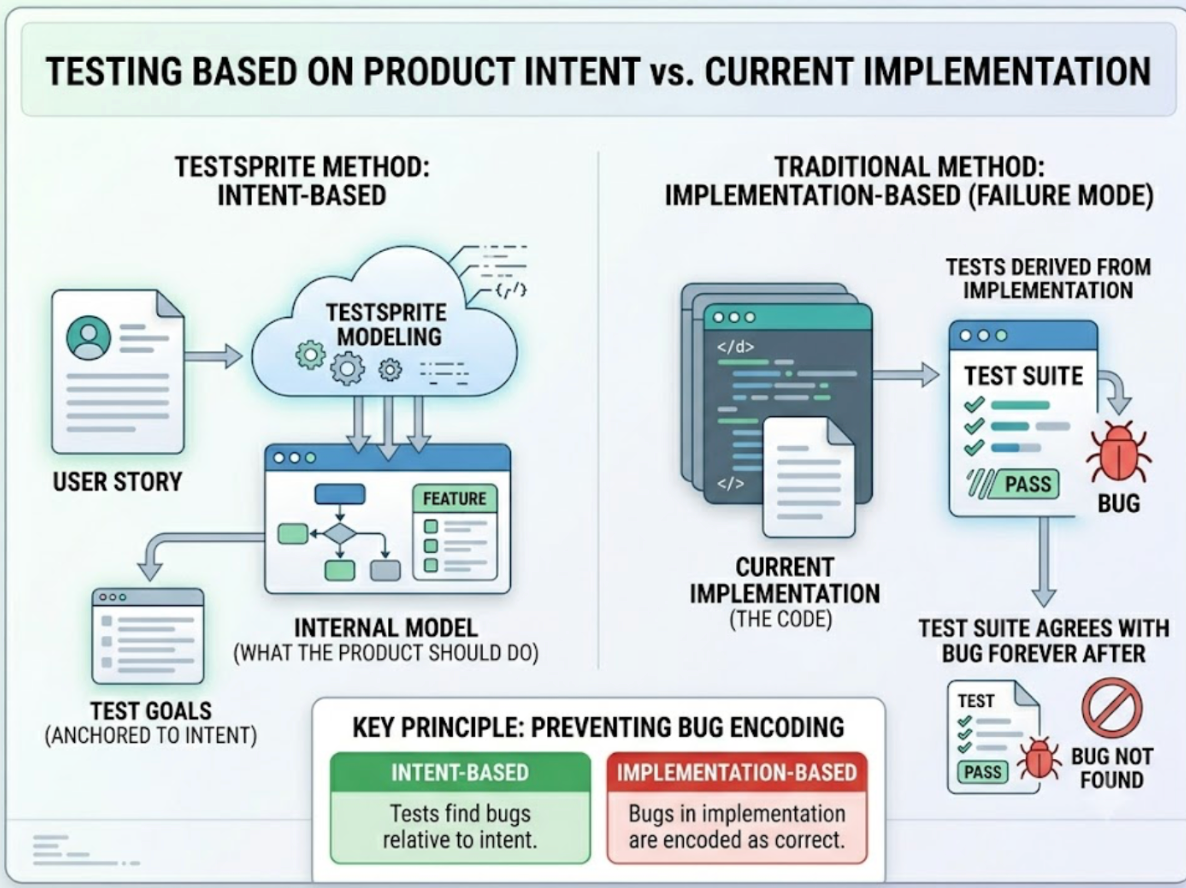
User stories describe what a user wants to do. Test plans describe how to verify they can do it. Bridging that gap has always been manual work, and it's one of the most time-consuming parts of any QA process.
The good news is that AI can now handle this translation. The more important question is what the AI does with the user story once it has it.
Most tools take the user story, extract the described behavior, and generate test code. Fast, useful, and still fundamentally code-layer verification. The user story becomes the source of assertions, not the source of actual user behavior to verify.
The right tool takes a user story and then goes and does it. It reads what a user should be able to accomplish, opens the application, and tries to accomplish it.
That distinction determines whether your test plan is grounded in product reality or just well-organized guesswork.
The Gap Between What a User Story Describes and What Code Tests Verify
A user story follows a familiar structure. "As a [user type], I want to [do something], so that [outcome]." It's written from the user's perspective. It describes intent, action, and expected result.
The problem with translating a user story into code-layer tests is that the translation loses the user perspective almost immediately.
A code-layer tool reads the user story, identifies the relevant components and functions, and generates assertions about what those components and functions should return. It verifies the implementation's internal logic. It doesn't verify whether a real user, following the steps described in the story, actually reaches the stated outcome.
Those two things frequently diverge. The implementation can be internally consistent and still fail to deliver what the user story promises. An engineer could read the test results, see green across the board, and ship a product where the user journey in the story flat-out doesn't work.
The gap isn't in the test generation. It's in what gets verified.
From Story to Test Plan: What "Grounded" Actually Means
A test plan created from a user story should be grounded in the user's experience of the product, not the developer's model of the implementation.
That means the test plan needs to describe what a user does, step by step, and what they should see or be able to do at each point. It needs to cover the happy path described in the story. It needs to cover the edge cases the story implies. And it needs to be verified by actually running those steps in the real application.
Most tools stop at generating the plan. TestSprite generates the plan and then executes it as a real user would.
When a user story is provided, TestSprite parses it to build an internal model of what the product should do. That model anchors test goals to product intent, not current implementation. It's the same principle that prevents a well-known failure mode: when tests are derived from implementation rather than intent, bugs in the implementation become encoded as correct behavior. The test suite agrees with the bug forever after.
A user story is intent. TestSprite tests against intent.
How the Agent Turns a User Story Into Real Verification
Once TestSprite has parsed the user story and built its intent model, it doesn't hand off to a code generator. It deploys a fleet of parallel exploration agents that visit the live application and try to complete what the user story describes.
The agents navigate the product the way a real user would. They follow the steps implied by the story. They interact with the UI elements they encounter: buttons, forms, dropdowns, modals, navigation. They observe what happens after each interaction. They check whether the outcome at the end of the flow matches what the user story promised.
Other verification tools read your code and guess. TestSprite opens your app and uses it.
This is what makes the resulting test plan trustworthy. The plan isn't constructed from an analysis of the source code. It's constructed from what the agents discovered by actually using the product. The test cases describe real user interactions with real observed outcomes, not theoretical assertions about function behavior.
For a user story about a checkout flow, the agent doesn't check that the payment function accepts the right parameters. It adds items to a cart, proceeds to checkout, enters payment details, and verifies that the order confirmation appears and contains the right information. That's the test. That's what the user story actually requires.
From Acceptance Criteria to Executable Test Cases
User stories typically come with acceptance criteria. These are the conditions that have to be true for the story to be considered complete. They're written in plain language, from the user's perspective, and they're exactly the kind of thing most testing tools struggle to act on directly.
TestSprite uses acceptance criteria the same way a QA engineer would on their first walkthrough of a feature. They read the criteria, open the application, and verify each one by actually doing what the criteria describe.
For each acceptance criterion, the agent identifies the corresponding user interaction, executes it in the live product, and checks whether the stated condition holds. If the criterion says "the user should see a confirmation email within one minute of completing checkout," the agent completes a checkout and verifies the downstream outcome. If it says "the form should display an error message when the email field is left blank," the agent submits the form with a blank email field and checks what appears.
The resulting test cases map directly to acceptance criteria. Engineers and product managers can read them and immediately understand what was tested and why. There's no translation layer between the story, the test plan, and the verification.
Through the TestSprite MCP Server inside Claude Code, Cursor, or Windsurf, this entire process runs from a single instruction in the IDE chat. The user story goes in. The test plan and execution results come back. No context switching, no separate tooling, no manual test case writing.
Test Plans That Stay Accurate as Stories Evolve
User stories change. Acceptance criteria get updated. Features get refined based on user feedback or product decisions. When that happens, a test plan needs to update with them.
Static test plans, written once and maintained manually, decay quickly in fast-moving teams. Especially when AI coding agents are shipping changes at a pace that outstrips any manual QA process.
TestSprite's test plans stay connected to product behavior because they're generated from exploration, not from code. When a feature changes and the agents re-explore the application, they discover the new behavior and update the test cases accordingly. What the product actually does becomes the source of truth, not the last version of the source files a human reviewed.
Auto-Heal Rerun handles the day-to-day drift. When a UI element moves or a label changes, the test adapts rather than failing falsely. The plan stays current without manual intervention.
For teams running the GitHub Actions integration, every pull request triggers a fresh verification pass against the current user stories. Changes that break an acceptance criterion surface before the code merges.
Conclusion
The AI tool that creates test plans from user stories isn't the one that generates the most test code from a story description. It's the one that takes the story seriously enough to go and verify it by using the product.
User stories are written from the user's perspective. Test plans created from them should verify the user's experience, not the implementation's internal consistency.
TestSprite reads the user story, builds an intent model from it, deploys exploration agents that navigate the live application like real users, and generates test cases grounded in observed product behavior. The plan maps to acceptance criteria. The verification runs against the real product. The results come back to the IDE where the code was written.
That's what it means to create a test plan from a user story, rather than just extracting code assertions from one.
Start generating test plans from your user stories with TestSprite today.