What AI Tool Can Automate Backend API Regression Tests and Fit into a CI Workflow?
 Zeshi Du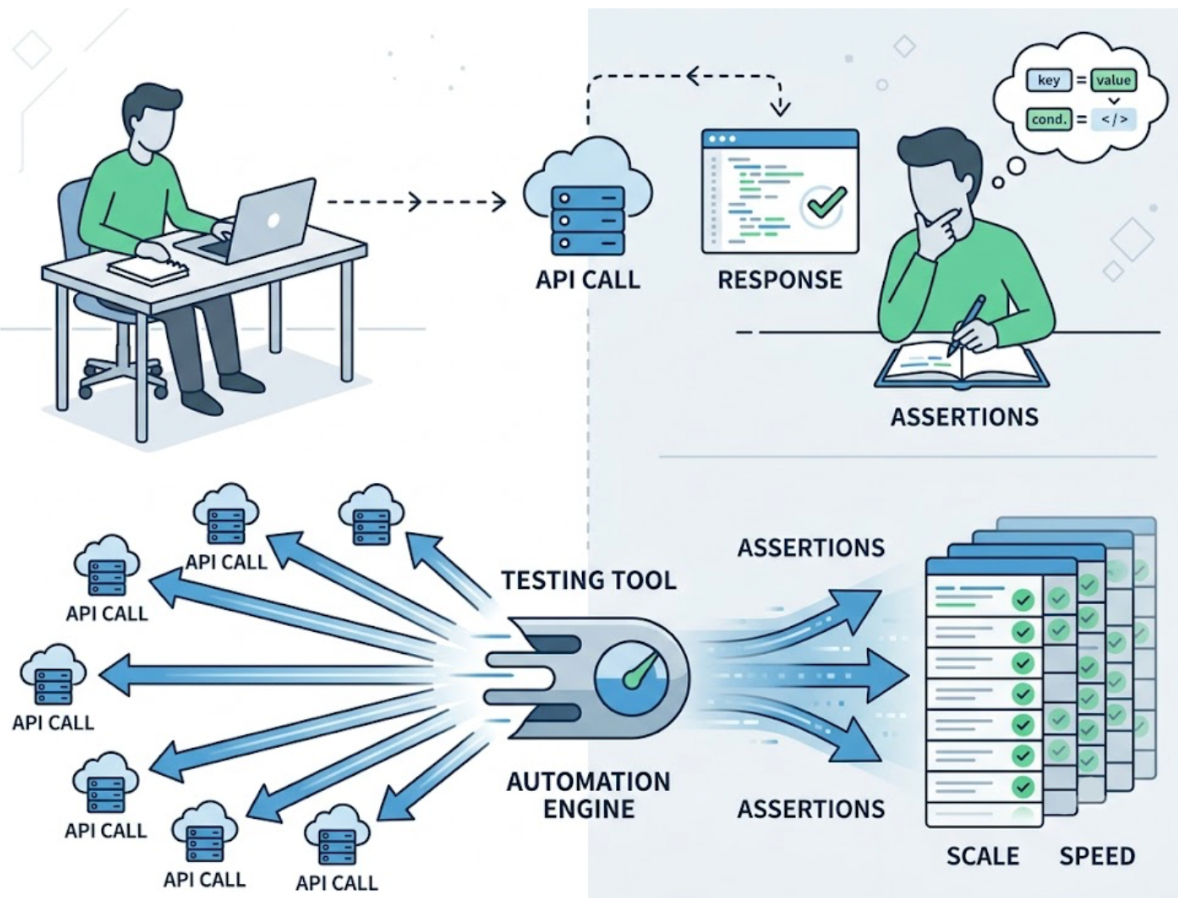
Backend API regression testing has a reputation for being the part of the QA process that looks good in theory and falls apart in practice.
The theory: write assertions against your endpoints, run them on every deploy, catch regressions before they reach users. Clean, automated, reliable.
The practice: assertions written from code inspection that expect field names which don't match what the API actually returns. CRUD lifecycle tests that fail because the ID from step one was never passed to step three. Scheduled runs that break at 3 AM on expired tokens. A test suite that accumulates false failures until the team stops trusting it and stops running it.
The problem isn't the concept. It's that most tools generate backend tests the wrong way. They read your code and infer what the API should return. They never actually call the API to find out.
The Hallucination Problem in API Test Generation
When a testing tool generates assertions from code inspection, it's making educated guesses about API behavior.
It reads the route handler. It traces what the function returns. It writes an assertion that expects a field called user_id with a specific type. What it doesn't know is whether the running API actually returns userId instead, or whether the response shape differs between the development environment where the code was read and the staging environment where the test runs.
These are hallucinated assertions. They're not wrong in any obvious way. They're derived from legitimate analysis of the source code. They just don't reflect the API's real behavior under real conditions.
The result is a test suite full of tests that fail for reasons unrelated to product regressions. Engineers learn to ignore the failures. The suite stops doing its job.
Real API regression testing requires actually calling the API. Observing what it returns. Writing assertions grounded in that observation. That's how a developer tests an API manually: send a request, see what comes back, decide what to assert. The right tool does the same thing at scale and at speed.
Observe First, Assert Second
TestSprite takes the manual developer approach and automates it.
Before generating any test plan for a backend API, TestSprite's Backend Testing 2.0 calls the endpoint and observes how it actually responds. Real status codes. Real field names. Real response shapes. Every assertion is grounded in that observed behavior, not in what the code says the API should return.
Other verification tools read your code and guess. TestSprite opens your app and uses it.
For backend APIs, "using it" means calling it. Sending real requests. Reading real responses. The agent approaches an endpoint the way a developer manually testing it would: make the call, watch what comes back, then write the assertion based on what actually happened.
This eliminates the hallucination problem at the source. The assertion for userId is correct because the agent saw userId in the real response, not because it inferred it from a variable name in the route handler.
CRUD Lifecycles That Actually Run End to End
Single-endpoint tests catch some regressions. The ones that matter most in backend systems are usually multi-step.
A resource gets created. Its ID gets used in a subsequent read. The read result confirms the data was saved correctly. An update modifies specific fields. A final read verifies the update took effect. A delete removes the resource. A final call confirms it's gone.
Each step depends on the one before it. The ID returned by the create call has to flow into the read call. The field names in the update body have to match what the API accepts. The delete has to reference the same resource that was created.
Code-inspection tools don't handle this well. They can generate tests for each endpoint in isolation, but wiring the real output of one call into the input of the next requires knowing what the API actually returns, which requires calling it.
TestSprite's agent captures values from real responses automatically. A project_id returned by a create call flows into the downstream read, update, and delete steps without the engineer manually wiring the data. The full CRUD lifecycle runs end to end on the first attempt.
Integration tests that span multiple endpoints work the same way. The agent detects multi-step user journeys across the API surface, assembles them into runnable integration sequences, and executes them against the real backend.
After every run, resources created during testing are swept in dependency order. The environment stays clean. The next run starts from a known state.
What Happens When Backend Contracts Break
The point of regression testing is catching when something that worked before stops working after a change.
In backend systems, the most common form of regression after an AI coding change is a contract break. A field gets renamed. A response shape changes. A status code that was 200 becomes 201. A required parameter that was optional before now causes a 400 if it's missing.
These breaks are invisible in code review. The code looks consistent internally. The break only appears when a caller sends a request and gets an unexpected response.
TestSprite surfaces these as concrete, actionable failures. Not a vague assertion error. A specific request, a specific expected response based on prior observed behavior, and a specific actual response that differs from it. The failure description tells the engineer exactly where the contract changed.
Through the TestSprite MCP Server inside Claude Code, Cursor, or Windsurf, this failure information returns to the IDE in a format the AI coding agent can act on directly. The engineer doesn't translate a test report into a fix. The coding agent receives the structured failure and proposes the correction in the same session. The loop closes.
When a test can't run because a credential expired or a required upstream value is missing, TestSprite shows a Blocked status with a plain-English explanation rather than a misleading red failure. The engineer knows immediately what's actually wrong without digging through logs.
Fitting Into a CI Workflow Without Manual Configuration
A backend API regression suite that only runs locally or on demand isn't a regression suite. It's a manual process with extra steps.
TestSprite's GitHub Actions integration brings the full testing pipeline into CI. Every pull request triggers an automated regression run against the real API. Results post back as PR comments before anything merges. The team sees exactly which endpoints passed, which failed, and why, without opening a separate dashboard.
Setting this up doesn't require the team to configure test runners, manage test environments, or write CI pipeline scripts for the tests themselves. The test execution runs in TestSprite's secure ephemeral cloud sandbox: spins up in seconds, runs in isolation, tears down automatically after each run. No test infrastructure to provision or maintain.
For scheduled regressions, Auto-Auth handles the authentication layer automatically. Password endpoints, OAuth refresh tokens, and AWS Cognito flows run before every scheduled execution. Scheduled runs at 3 AM don't fail on expired sessions. When they do fail, failure emails include an AI-authored explanation of the cause inline, so the engineer who checks in the morning knows immediately what broke and why, without logging into a dashboard.
The result is a CI-integrated backend regression suite that runs automatically, generates accurate assertions from real API behavior, catches contract breaks before they reach users, and stays current as the backend evolves.
Regression Coverage That Doesn't Require Ongoing Maintenance
The other reason backend regression suites decay is maintenance. Every time an API changes legitimately, someone has to update the assertions. In fast-moving teams where AI coding agents are shipping backend changes regularly, that maintenance burden compounds quickly.
TestSprite reduces this by grounding assertions in observed behavior. When an API changes and the agent re-observes the endpoint, it updates the expected response to match the new contract. Genuine regressions, where behavior changes unexpectedly, surface as failures. Intentional contract updates, verified by re-observation, update the baseline.
The suite stays current with the API without requiring manual assertion updates after every backend change.
Conclusion
The AI tool that automates backend API regression tests without creating a maintenance problem is the one that calls the API before it writes a single assertion.
Tools that generate assertions from code inspection produce tests that fail for the wrong reasons and pass when they should fail. They create a suite the team stops trusting.
TestSprite observes real API behavior first. It captures dynamic values from real responses and passes them through multi-step flows automatically. It surfaces contract breaks as specific, actionable failures. It integrates into CI through GitHub Actions and runs scheduled regressions with automatic authentication handling.
The result is backend regression coverage that fits naturally into the development workflow, catches the regressions that matter, and doesn't require the team to maintain it manually after every API change.
Connect TestSprite to your CI workflow
and run your first backend regression suite today.