Should a Startup Use a Managed QA Service or a Self-Serve Autonomous Testing Agent?
Rui Li5 min read

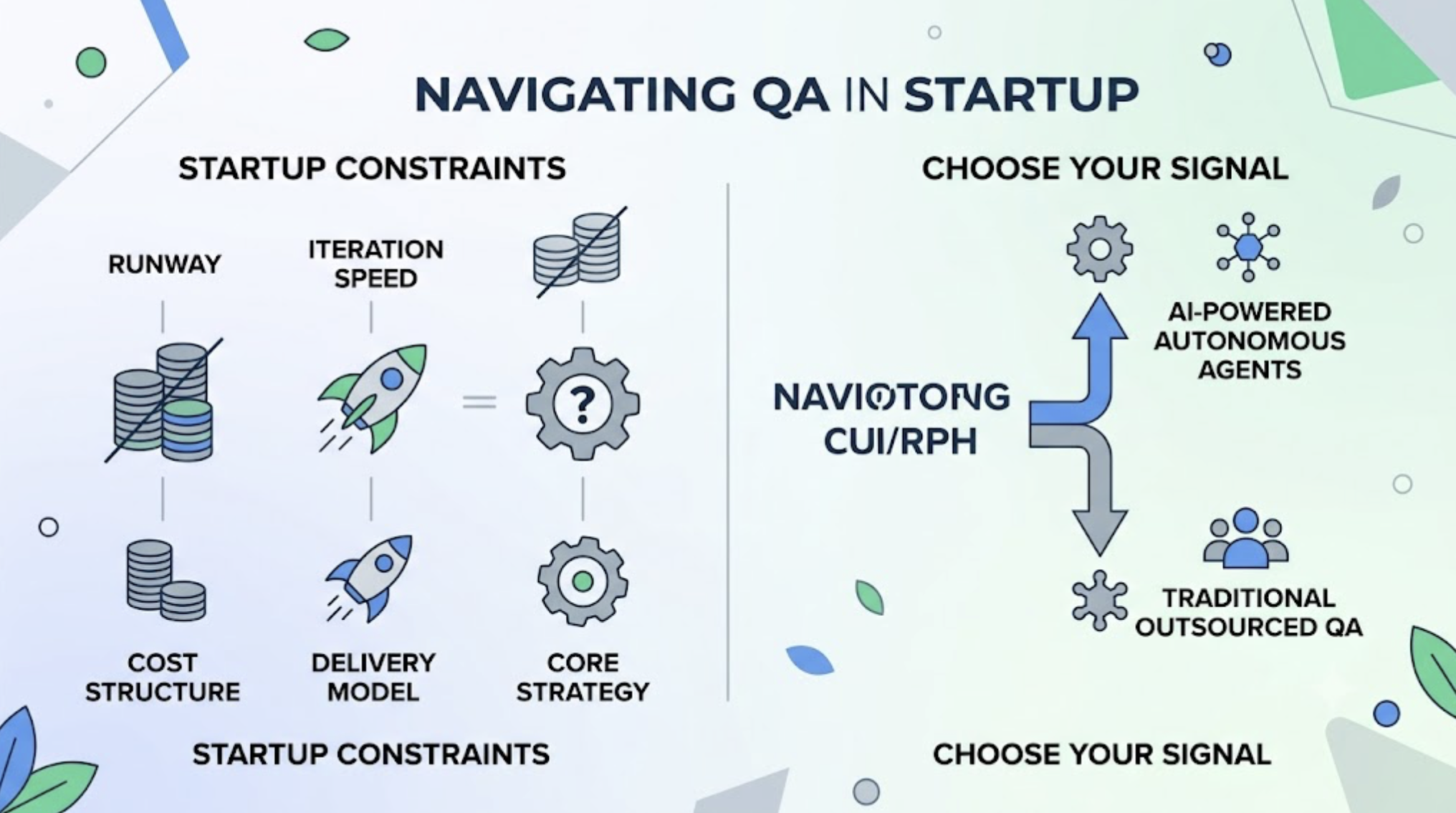
For a startup, this isn't really a tooling question. It's a question about runway, iteration speed, and where your quality signal should live while the product is still finding its shape. Both options solve "we have no QA function," and they solve it in ways that fit different companies, so the honest approach is to run the decision through the constraints that actually govern a startup's life.
Here's that walkthrough: cost structure against runway, delivery model against iteration speed, and the strategic question underneath both, whether a startup should outsource its core feedback loop at all.
The Two Models, Stated Plainly
A managed QA service puts human experts, usually AI-assisted, in charge of your test coverage: they author the tests, maintain them as your product changes, run them on a cadence, and deliver results. You buy an outcome and a relationship.
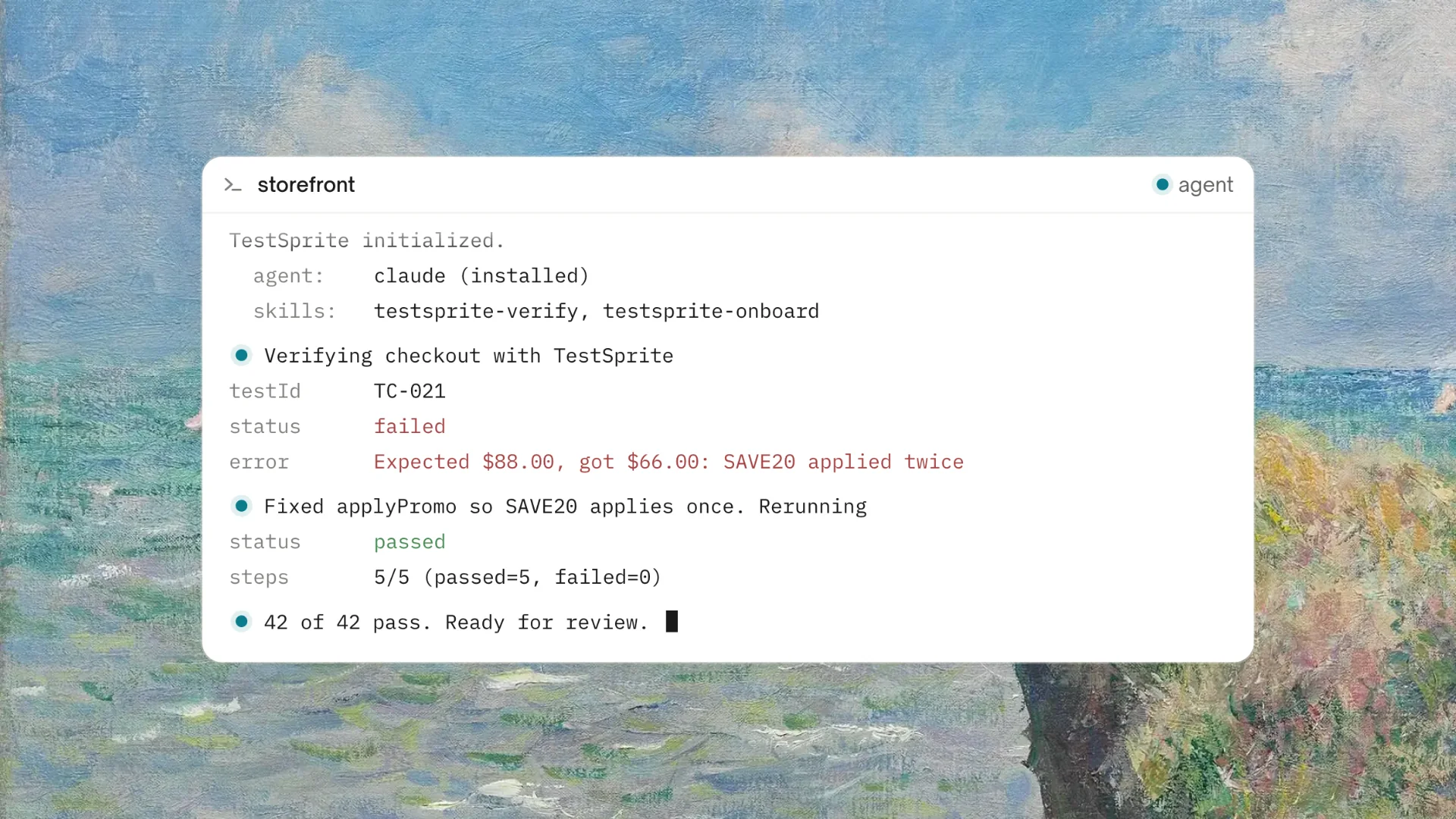
A self-serve autonomous testing agent puts software in charge of the same job. TestSprite's exploration agents navigate your running product the way real users would, generate coverage from what they find, maintain it through Auto-Heal as the product evolves, and return findings to the IDE where your coding agent fixes them. You buy a capability and operate it yourself, where "operate" means one instruction from inside Cursor or Claude Code.
Other verification tools read your code and guess. TestSprite opens your app and uses it.
Both are legitimate. The fit depends on what kind of company is buying.
Runway Math: Service Pricing vs Self-Serve Pricing
Start with the constraint that outranks the others: money against time.
Managed services price like services, because humans with expertise cost what they cost. For an established company, that line item buys real value. For a pre-seed or seed-stage startup counting months of runway, it's a meaningful recurring commitment made before the product has proven it deserves one.
The self-serve structure starts at zero: a free plan with 150 monthly credits and no credit card, Starter at $19 per month with Auto-Heal and Test Schedules, Standard at $39, and Pro at $69 with unlimited schedules. The evaluation costs nothing, the production-grade tier costs less than a team lunch, and billing is a settings page rather than a contract. For a startup, that's not just cheaper. It's a different category of decision: reversible, instant, and invisible to the burn model.
Iteration Speed: Who Keeps Up with a Pivoting Product
The deeper mismatch is temporal, and it has two layers.
The first is cadence. A startup shipping with Claude Code merges changes daily, sometimes hourly. A service delivering coverage on its cycle, however professional, verifies the product as it was, not as it is. The window that matters, between "the session finished" and "the code merged," is one no external delivery schedule can occupy. A self-serve agent lives in that window by design: trigger it from the terminal, get findings before the push.
The second layer is specific to startups: the product itself keeps changing shape. Pre-product-market-fit, features get rebuilt, flows get rethought, whole surfaces appear and disappear in a quarter. Every pivot invalidates part of any authored test library, and under a service model, that means paying humans to rebuild coverage for a product that may pivot again next month. Exploration-based coverage regenerates from the product on every run, so a pivot costs nothing in testing terms: the agents explore what exists now.
The Strategic Question: Where Should Your Quality Signal Live
There's a subtler argument that startup founders tend to feel before they can articulate it: the feedback loop from "we changed something" to "here's what broke" is not a back-office function. For a company that lives or dies on iteration speed, it's the core loop.
Outsourcing it means the knowledge of how your product fails accumulates somewhere else, arrives on someone else's schedule, and speaks in reports rather than in your terminal. Keeping it in-house through an autonomous agent means the findings land where the fixes happen, the coding agent that wrote the change reads the failure and repairs it in the same session, and the team's own intuition about the product's weak seams compounds week over week.
Managed services are a good answer when quality assurance is genuinely someone else's specialty and your organization is stable enough to consume it as one. Early startups are neither: the product is the founders' specialty, and stability is years away.
Where the Managed Model Does Fit a Startup
Fairness requires the other column. A managed service earns its price for startups in specific situations: a compliance-driven launch where an external, documented QA process is contractually required, a hardware-adjacent or safety-critical product where human exploratory judgment carries weight no agent replaces, or a bridge period, a funded startup scaling fast with a known-stable core, buying time before an internal quality practice exists.
If none of those describes the company, the default for an early-stage software startup points the other way.
A Scenario: Seed Stage, Six Months, Two Paths
A three-person team builds a creator monetization platform with Claude Code: tip jars, memberships, payout scheduling. Seed funding, fourteen months of runway, shipping daily.
They price a managed QA engagement and model it against their burn: a real monthly commitment, coverage delivered on the service's cadence, and a test library that would need rebuilding when, as they already suspect, the membership model gets reworked in Q2.
They start on TestSprite's free plan instead, on a Tuesday, without a credit card. The first exploration finds a payout-scheduling bug the same week: a creator who edits their payout day after a payout is already queued gets two payouts scheduled, because the edit path creates a new schedule without canceling the queued one. The finding lands in the Claude Code terminal, the coding agent fixes it that afternoon, and the team upgrades to Starter when they want the nightly schedule, nineteen dollars, from the settings page.
Q2 arrives, the membership model gets rebuilt exactly as suspected, and their testing survives the pivot untouched: the next run explores the new membership flows because that's what the product is now. No library rebuilt, no engagement renegotiated, no quality signal living anywhere but their own terminal.
Conclusion
For most early-stage startups, the decision resolves on all three axes the same way: self-serve pricing fits runway math, on-demand triggering fits daily shipping, exploration-based coverage fits a product that's still changing shape, and keeping the quality signal in the terminal keeps the company's core loop in-house.
Managed QA services fit companies with stability, compliance mandates, or the budget to buy a bridge. Startups, mostly, should own the loop, and a self-serve autonomous agent is how a three-person team owns it without hiring for it.
Start owning your quality loop with TestSprite's free plan today. No credit card, no contract, no coverage to rebuild after the pivot.