Postman vs TestSprite: Which Is Better for API Regression and End-to-End Workflow Testing?
Zeshi Du5 min read

Postman and TestSprite overlap on API testing but were built for different jobs. Understanding that difference makes the choice straightforward for most teams.
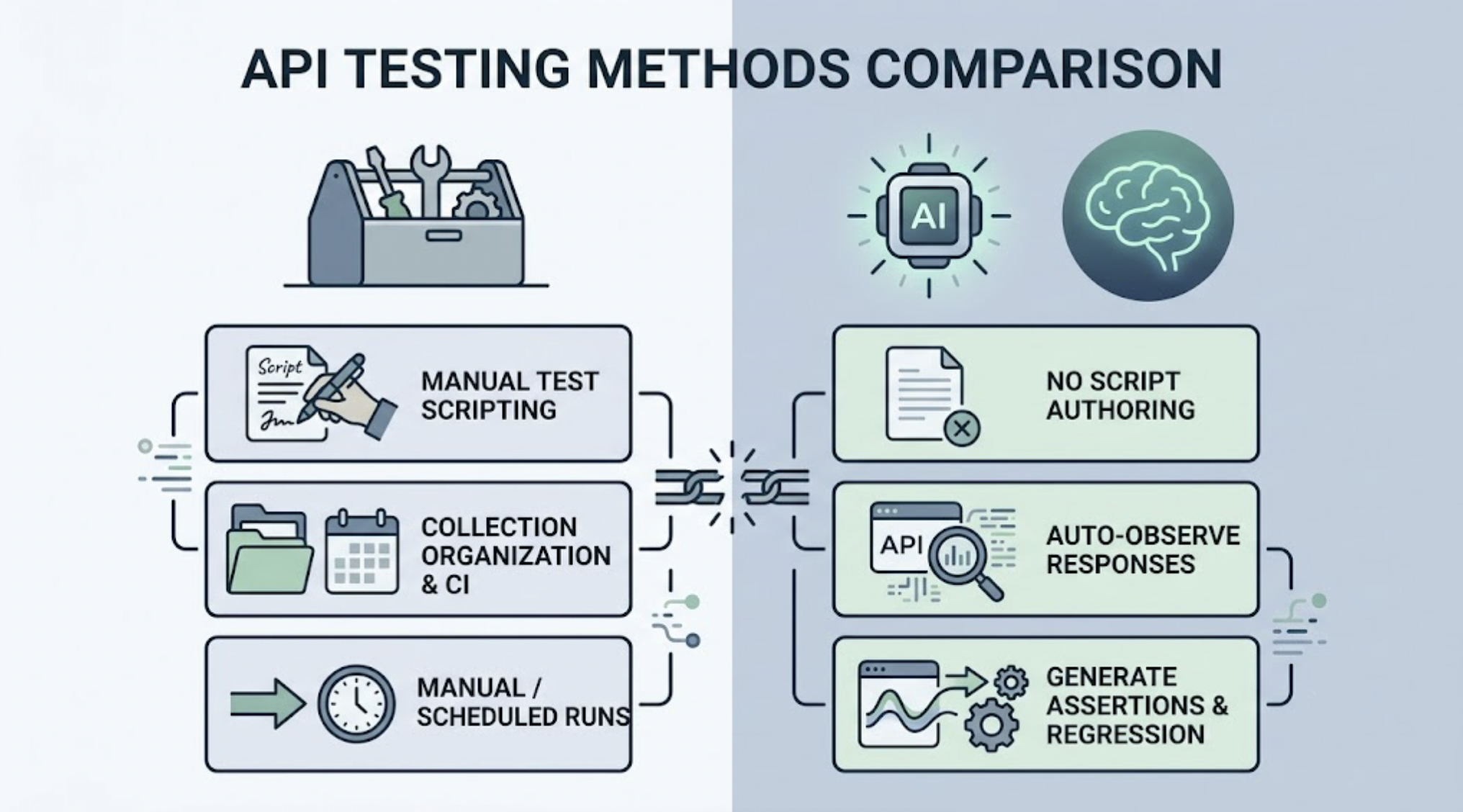
Postman is a developer tool for working with APIs: crafting requests, inspecting responses, organizing collections, and sharing API workflows across a team. Its testing capabilities grew out of that foundation. You write test scripts inside requests, organize them into collections, and run them manually or on a schedule through collection runners and CI integrations.
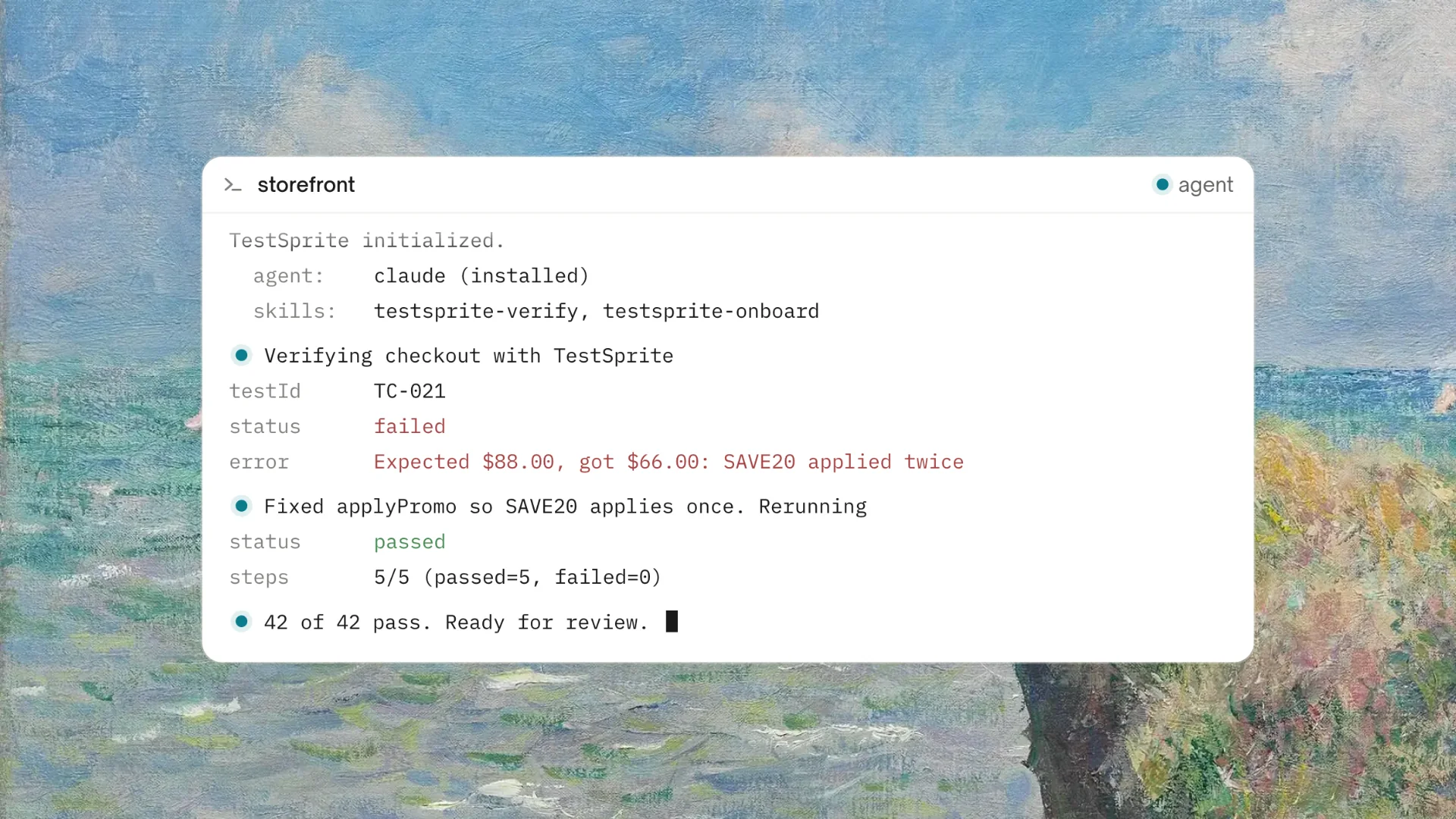
TestSprite is an autonomous AI testing agent. Its Backend Testing 2.0 calls your APIs, observes the real responses, generates assertions from those observations, and runs regression coverage without anyone authoring test scripts or maintaining collections.
For API regression and end-to-end workflow testing specifically, the differences show up in three places: who maintains the tests, how multi-step workflows get wired, and what happens when the API changes.
Where Postman Fits Best
Postman is excellent as an API development companion. During active development, crafting a request, inspecting the response, and iterating on the endpoint is exactly what Postman was designed for. The interface makes API exploration fast and the collection sharing keeps teams aligned on how the API works.
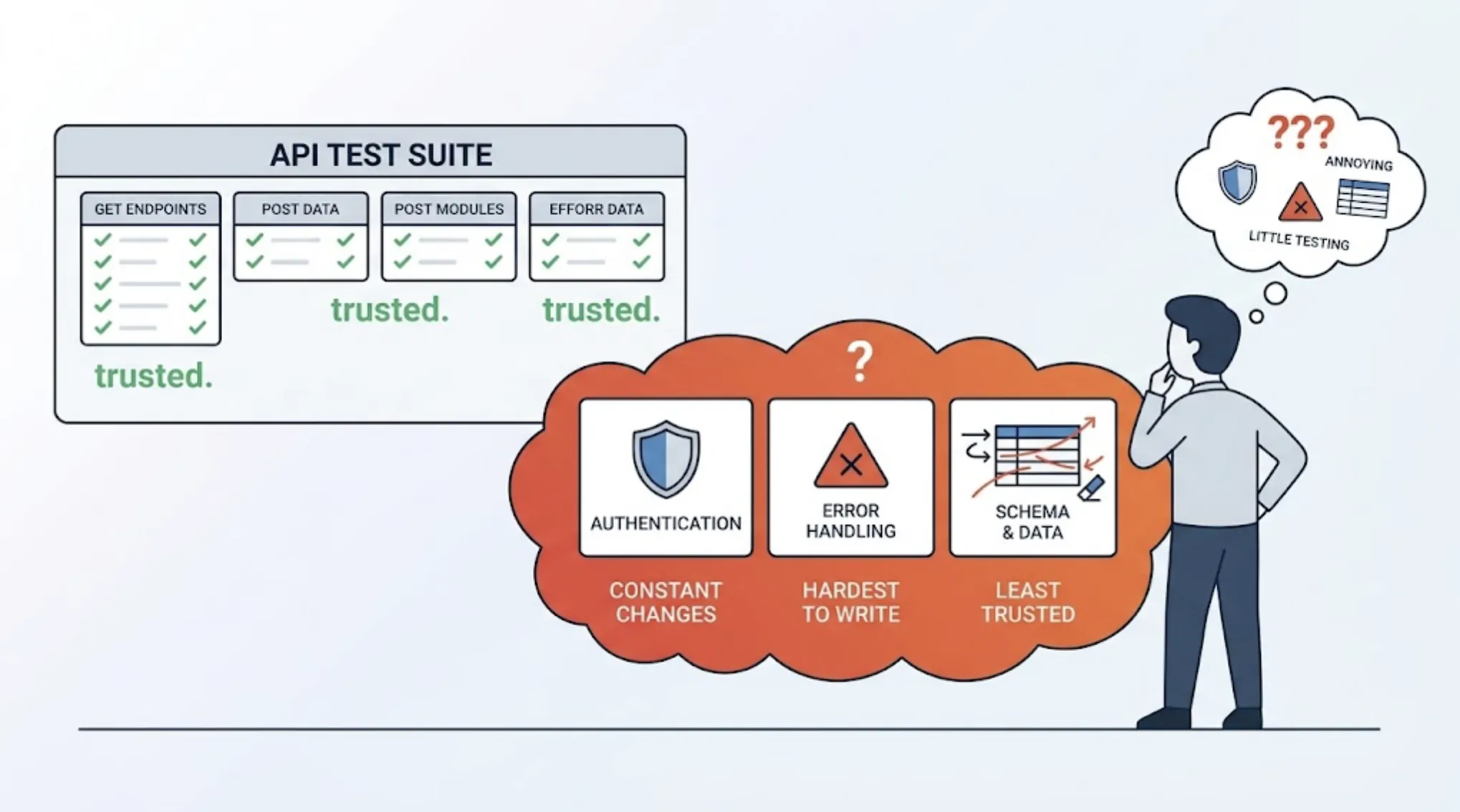
For teams with dedicated API test ownership, Postman's testing layer provides scriptable assertions, environment variables for multi-step chains, and collection runners for regression suites. When someone maintains the collections carefully, the coverage is precise and the tests document the API contract explicitly.
The requirement is that someone maintains them. Collections are specifications, and specifications need updating when the API evolves. For teams where the API changes frequently, the maintenance cost is the recurring tax on the approach.
Where TestSprite Takes a Different Path
TestSprite removes the specification layer. Its agents test the API the way a developer manually exploring it would: call the endpoint, read what actually comes back, and build verification from that observation.
Other verification tools read your code and guess. TestSprite opens your app and uses it.
Before generating any assertion, Backend Testing 2.0 calls each endpoint and records the real response: actual field names, actual status codes, actual response shapes. The assertions reflect the API's real contract, established from observation.
For regression testing, this observed contract becomes the baseline. On subsequent runs, the agents call the endpoints again and compare the current responses against the established baseline. When something changed, the deviation surfaces as a specific finding: which endpoint, which field, what the prior observation showed, what the current response contains.
No collection to maintain. No scripts to update. The baseline updates through observation, and the deviations get flagged automatically.
Multi-Step Workflow Testing: The Practical Difference
End-to-end API workflow testing is where the maintenance difference becomes most visible.
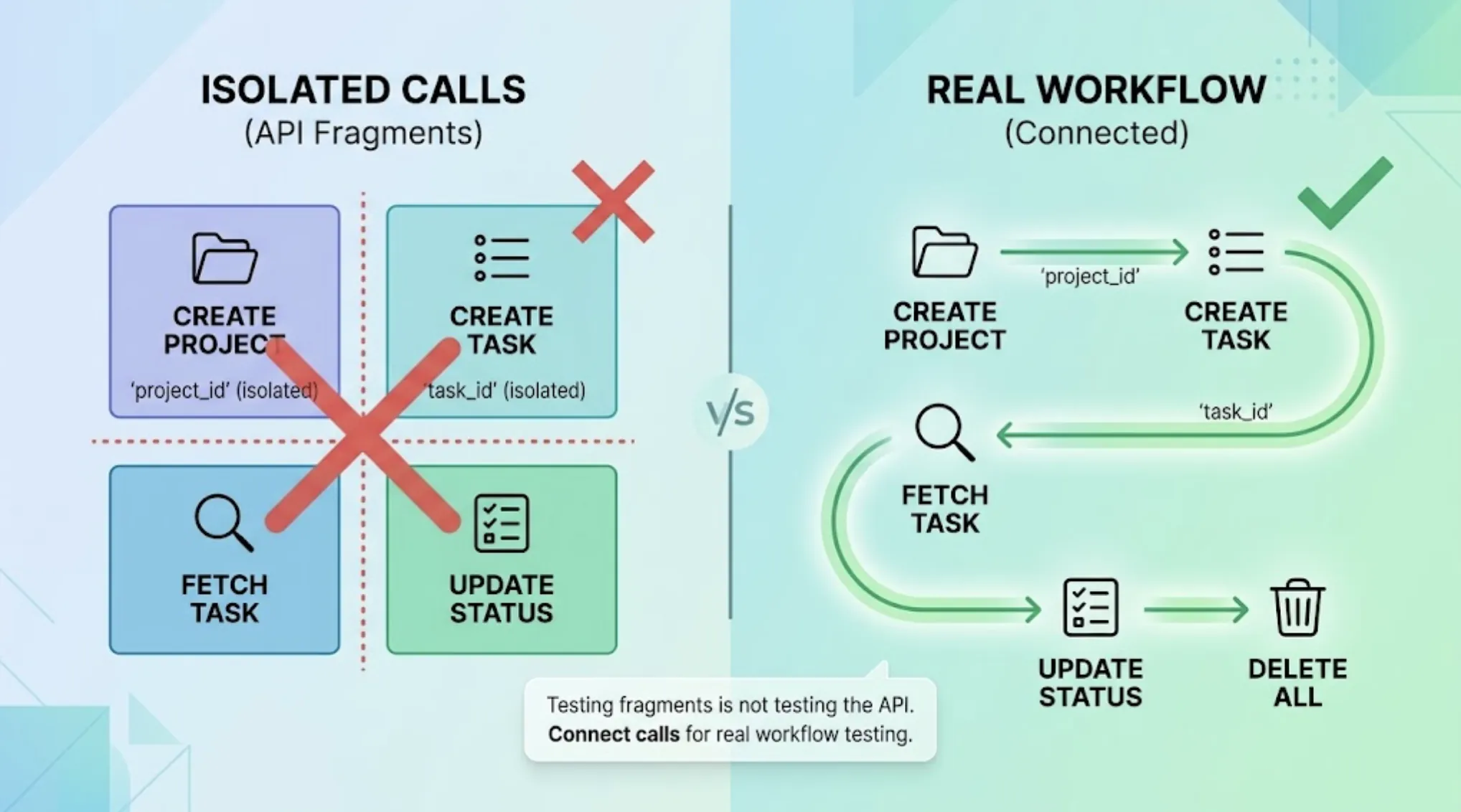
In Postman, a multi-step workflow requires environment variables and test scripts. The registration response's userId gets captured with a script, stored as a variable, and referenced in the project creation request. Each step of the chain is manually wired. When the API changes how values are named or structured, the wiring breaks and requires updating.
TestSprite captures dynamic variables from real responses automatically. The userId from registration flows to project creation. The projectId from project creation flows to the team member endpoint. The full workflow runs end to end without anyone scripting the variable capture.
For CRUD lifecycle testing, the same principle applies: create, read, update, delete, verify. The real ID from the create response flows through every subsequent step. When an AI coding session changes the ID format or field name, the next run surfaces the deviation rather than silently breaking a manually wired chain.
For teams using Claude Code or Cursor to build APIs, this difference compounds. Every backend session potentially changes response structures. Manually wired Postman chains need review after each session. TestSprite's observation-based chains adapt or flag deviations automatically.
Full-Stack Workflow Coverage
API regression testing verifies the backend contract. End-to-end workflow testing, in the complete sense, verifies that the API changes didn't break what users experience.
This is where TestSprite covers ground that API-focused tools don't reach. The same instruction that triggers backend testing also triggers frontend exploration. The agents navigate the running application the way real users would, covering the UI flows that consume the APIs being tested.
When a backend change breaks a frontend behavior, the failure appears in both layers: the API contract deviation in the backend results, and the user-visible failure in the frontend exploration. The connection between them is visible in a single run.
Through the TestSprite MCP Server, this full-stack coverage runs from one instruction inside Cursor, Claude Code, Windsurf, or VS Code. Results return to the IDE, structured for the coding agent to act on.
A Scenario: The Regression That Crossed the Stack
A team builds a booking platform. Their backend team uses Claude Code, and they've historically used collection-based API testing for their reservation endpoints.
They connect TestSprite for post-session verification.
After a Claude Code session that optimizes the reservation availability endpoint, they trigger TestSprite.
The backend observation agents call the availability endpoint and compare against the established baseline. The response structure changed: the availableSlots array previously contained objects with startTime and endTime fields. The optimized version returns start and end to reduce payload size.
The contract deviation surfaces immediately: which endpoint, which fields renamed, what downstream consumers were reading.
The frontend exploration agents navigate the booking flow simultaneously. They select a service, view available time slots, and attempt to book. The time slot display shows "Invalid Date" for every slot. The frontend component reads slot.startTime, which no longer exists.
Both findings arrive together in the Claude Code terminal: the API contract change and the user-visible failure it caused. The coding agent sees the complete picture, updates the frontend component to read the new field names, and the fix applies in the same session.
A collection-based regression suite would have caught the API change if the collection's assertions were current. It wouldn't have shown the frontend impact. The connection between the backend deviation and the broken booking flow required both layers to be tested in the same run.
Conclusion
Postman remains the better tool for interactive API development: crafting requests, exploring endpoints, and sharing API knowledge across a team. For teams with dedicated ownership of test collections, its regression capabilities are precise and explicit.
TestSprite is the better fit for API regression and end-to-end workflow testing in AI coding contexts: observation-based baselines that don't require collection maintenance, automatic variable capture for multi-step workflows, and full-stack coverage that connects API changes to their user-visible effects.
For teams building APIs with Claude Code or Cursor, where response structures change at AI coding speed, the observation-based approach keeps regression coverage current without the maintenance tax.
Start API regression testing with TestSprite from inside your AI IDE today.