Playwright vs TestSprite: Do Hand-Written E2E Tests Still Make Economic Sense?
Zeshi Du5 min read

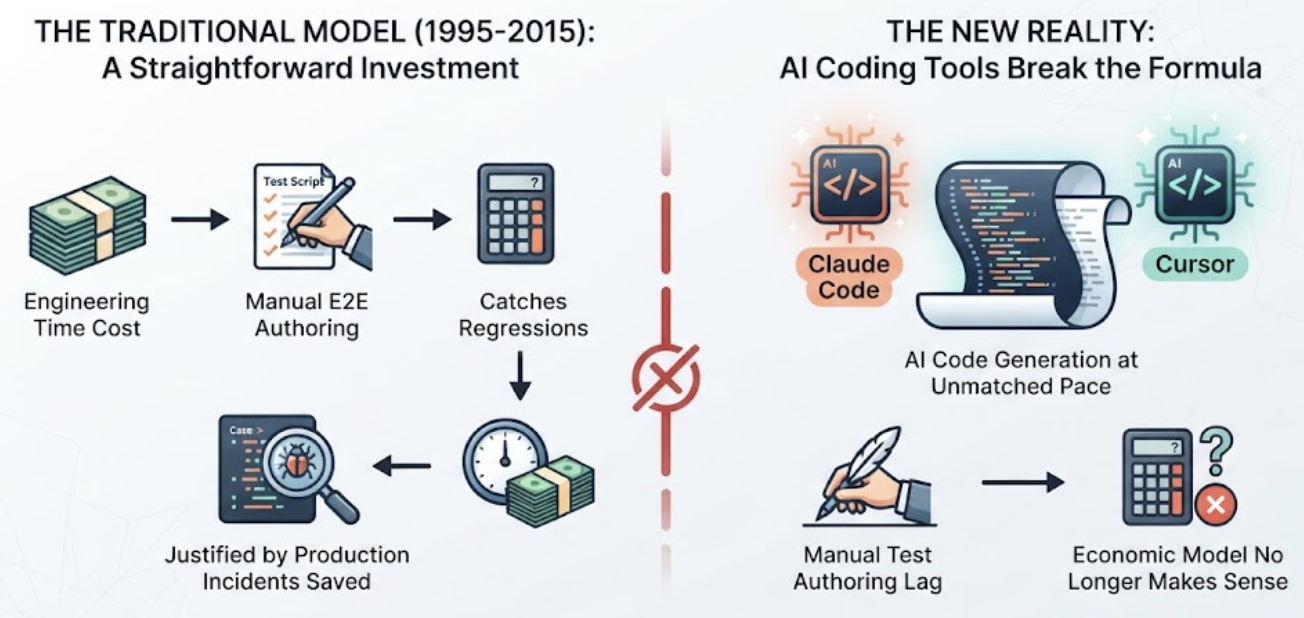
Manually writing E2E tests used to be a straightforward investment calculation. You spent engineering time authoring tests, the tests caught regressions, and the time saved on production incidents justified the authoring cost. The formula worked for two decades.
AI coding tools changed every variable in that formula. Not slightly. Structurally.
The question isn't whether Playwright is a good framework. It is. The question is whether the manual authoring model that Playwright assumes still makes economic sense when the code being tested is generated by Claude Code and Cursor at a pace no test author can match.
The Old Formula and Why It Worked
The traditional case for manually written E2E tests rested on three assumptions that held for most of software history.
Code changed at human speed. An engineer wrote a feature over days or weeks. A test author could keep pace, writing coverage as features shipped. The suite stayed roughly current with the product.
Implementation details were stable between features. Selectors, component structures, and API shapes changed when someone deliberately changed them. A test written against the current implementation stayed valid until the next intentional refactor.
The engineer who wrote the code knew what to test. The person who built the checkout flow knew its edge cases, its failure modes, and its integration points. Their test coverage reflected genuine product knowledge.
Under these assumptions, the authoring investment paid off. Tests were written once, ran for months, and caught real regressions.
What AI Coding Changed in Each Variable
Every one of those assumptions breaks in an AI coding workflow.
Code now changes at machine speed. A single Claude Code session can produce what used to be a sprint's worth of changes. No test author keeps pace. The gap between what shipped and what has coverage grows with every session, and it grows in the direction of less coverage, not more.
Implementation details change constantly, without intent. AI coding agents rename components, reorganize structures, and refactor state management as routine side effects of their work. A test anchored to last week's implementation breaks this week, not because anyone decided to change the tested behavior, but because the AI reorganized the code around it. Maintenance stops being an occasional event and becomes a per-session tax.
The AI wrote the code, and the AI doesn't tell you what to test. The developer reviewing a Claude Code diff doesn't have the intimate knowledge that comes from writing every line. The integration points that matter most, the seams between the AI's changes and the existing product, are precisely the places the developer's mental model is weakest.
The formula inverts. Authoring can't keep pace, maintenance costs compound per session, and the coverage that exists reflects a mental model that no longer matches how the code was produced.
What Replaces the Formula
TestSprite is built for the new variables rather than the old ones.
Other verification tools read your code and guess. TestSprite opens your app and uses it.
Instead of an author deciding what to test, exploration agents navigate the running application and discover the flows by using the product. Coverage doesn't depend on anyone's mental model of what changed. The agents cover the full product surface, including the seams between AI-generated changes where the developer's knowledge is weakest.
Instead of tests anchored to implementation details, tests are anchored to behavior. When a Cursor session renames components and reorganizes structures without changing what users experience, behavior-anchored tests keep passing. Auto-Heal Rerun handles the structural changes that do cause failures, distinguishing between "the implementation moved" and "the product broke."
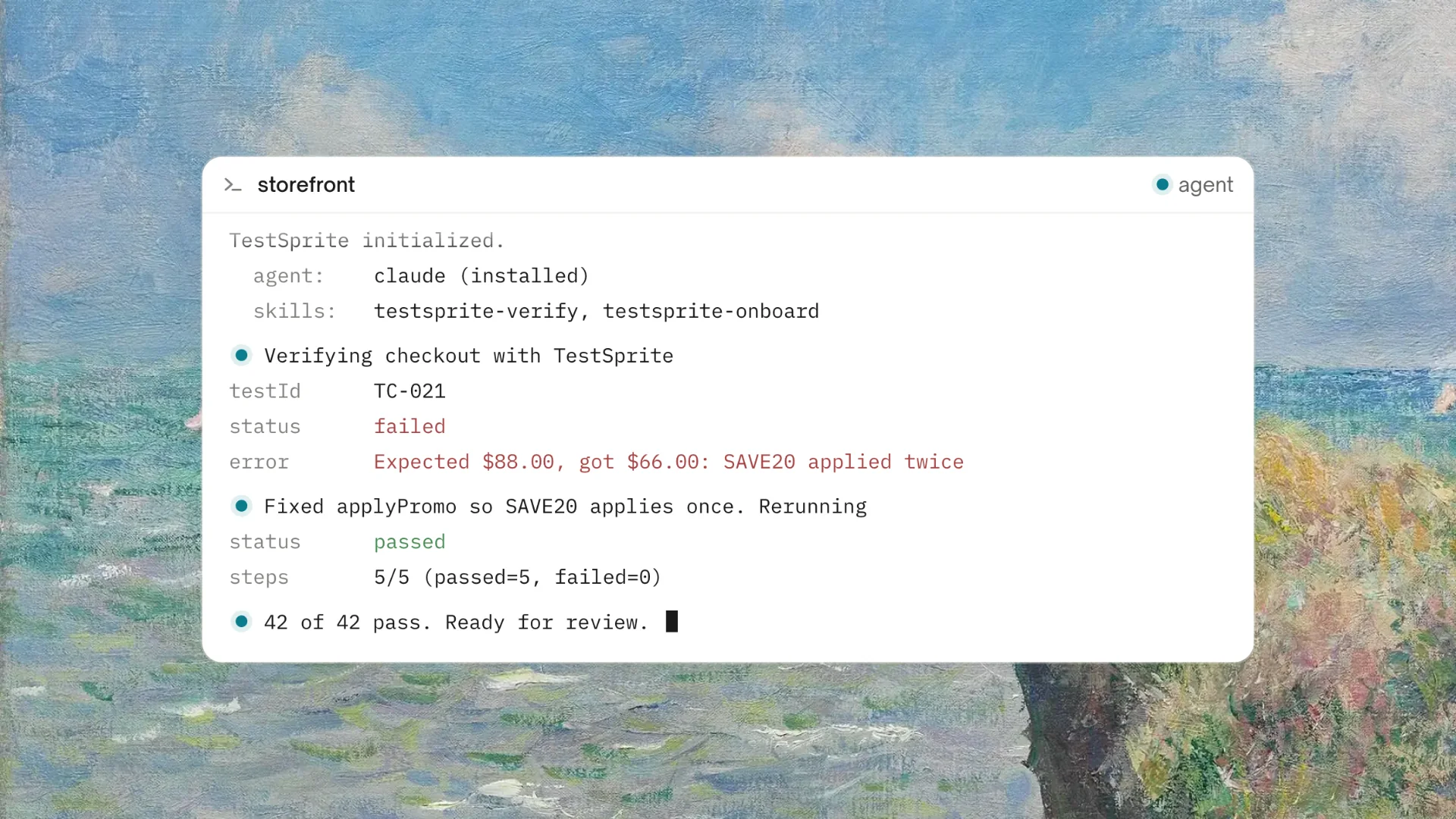
Instead of authoring at human speed, the pipeline runs at instruction speed. Through the TestSprite MCP Server, one instruction inside Claude Code, Cursor, Windsurf, or VS Code triggers the full cycle. Results return to the same window, structured for the coding agent to act on in the same session.
The new formula: coverage that generates itself from the product, maintains itself through behavioral anchoring, and runs at the same speed as the code being verified.
Where Manual Authoring Still Wins
The economic argument doesn't eliminate manually written tests. It narrows where they're worth the cost.
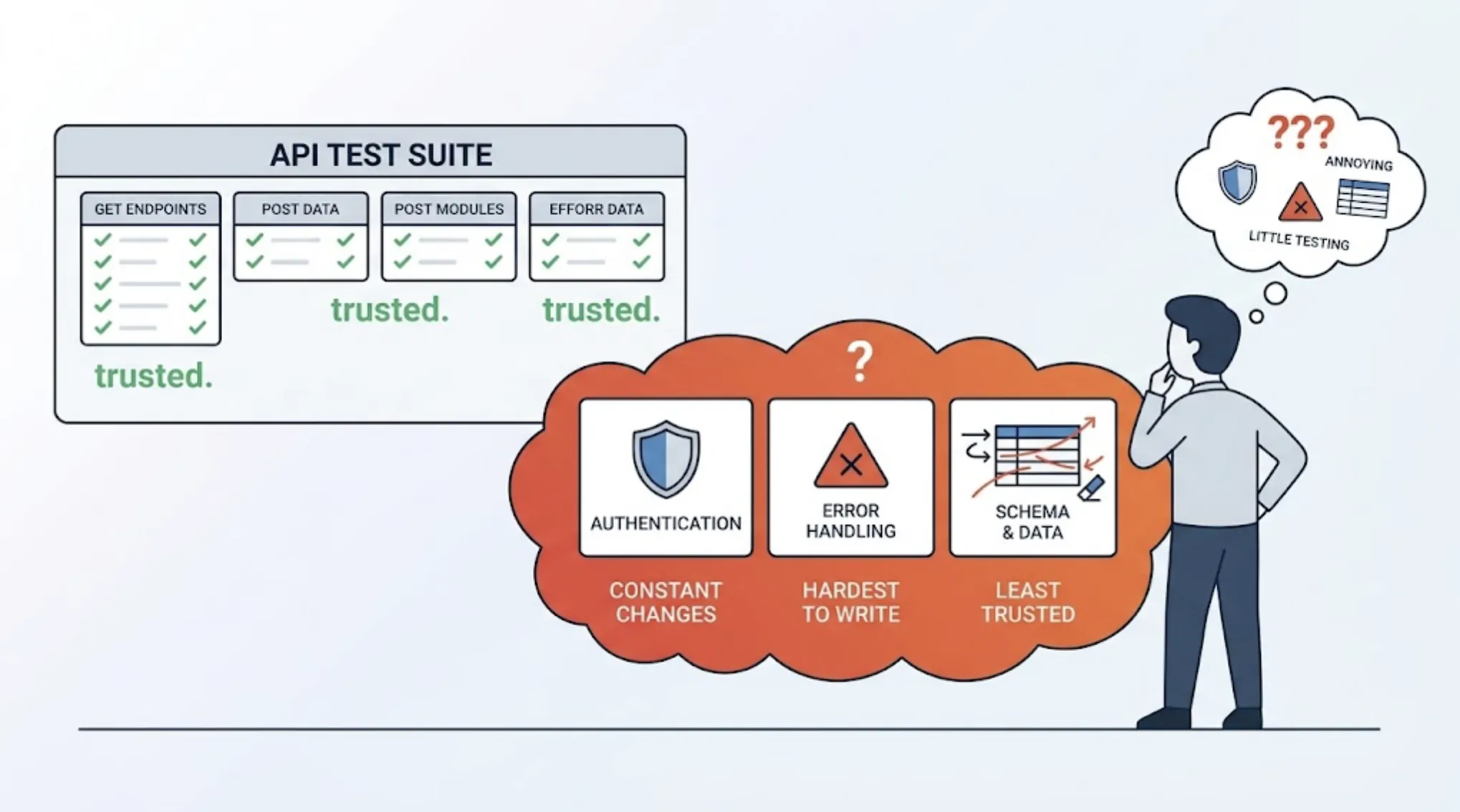
Flows where the stakes justify precision still deserve hand-authored coverage. A payment flow handling real money benefits from a test that specifies exact inputs, exact expected charges, and exact failure handling. A compliance-critical export deserves assertions that document the required format explicitly. An authentication sequence at the core of your security model is worth the authoring time.
These are flows where the test doubles as executable documentation and where deterministic precision matters more than breadth. The investment formula still works there because the value per test is high and the flows are stable enough that maintenance stays manageable.
For everything else, the surface area where the AI coding era broke the formula, autonomous coverage is the economically rational choice.
A Scenario: One Week, Two Approaches, Measured
A three-person team building a scheduling SaaS ran an informal comparison over one week of normal development, which included four Claude Code sessions.
The manual approach: one engineer allocated time to write Playwright coverage for the features shipped that week. They completed tests for two of the four sessions' changes before the week ended. The tests for session one broke twice during the week when sessions three and four refactored shared components, requiring selector updates both times. The features from sessions three and four ended the week with no coverage.
The autonomous approach: after each session, one instruction to TestSprite. The agents covered the full product surface each time, roughly ten minutes per run.
During the week, TestSprite surfaced two findings. After session two, the agents found that rescheduling an appointment correctly updated the calendar view but continued to send reminder notifications for the original time slot. The rescheduling logic updated the appointment record; the notification scheduler read from a queue that wasn't updated. After session four, they found that the newly added recurring appointment feature created the first instance correctly but silently failed to generate the recurrences when the end date crossed a month boundary.
Neither failure was in the manually authored tests, because neither flow had coverage yet. Both would have reached users. The notification bug in particular would have surfaced as confused customers receiving reminders for cancelled times.
The engineer's conclusion after the week: the manual authoring time produced coverage for half the shipped changes and required maintenance twice. The autonomous approach covered everything, every time, and found the two failures that mattered.
Conclusion
Is manually writing E2E tests still worth it in the AI coding era? For a narrow set of high-stakes, stable flows, yes. As the primary coverage strategy for a product built with AI coding tools, the economics no longer hold.
The authoring model assumed code changed at human speed, implementations stayed stable between intentional changes, and the test author knew the code intimately. AI coding broke all three assumptions. Coverage strategy has to change with them.
TestSprite is the strategy built for the new assumptions: exploration agents that generate coverage from the product itself, behavioral anchoring that survives constant implementation churn, and a pipeline that runs at the same speed as the AI writing the code.
Keep hand-authored tests for the flows that justify them. Let autonomous coverage handle the rest.
Start TestSprite alongside your existing tests today. Free plan available, no credit card required.