Is TestSprite Good for Backend API Testing and Contract Validation?
 Zeshi Du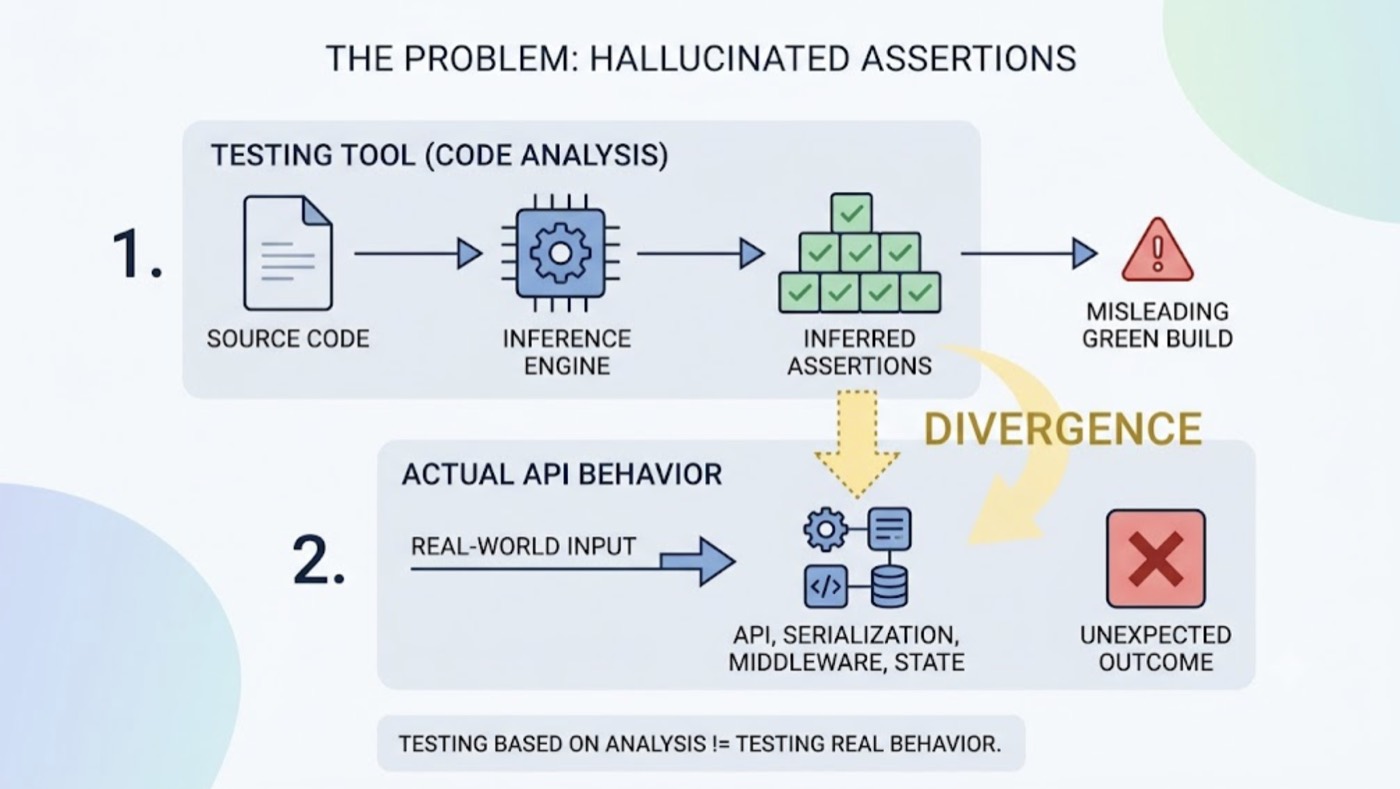
Yes. And the approach it takes to backend testing is specifically designed to avoid the failure mode that makes most backend test suites unreliable.
That failure mode is hallucinated assertions. A testing tool reads the source code, infers what the API should return based on the handler logic, and writes assertions based on that inference. The assertions don't reflect what the API actually returns under real conditions. They reflect what the code analysis predicted it would return.
The difference matters the moment the serialization layer, the middleware, or the API behavior under different input states diverges from what the code analysis predicted, which is more often than most teams expect.
TestSprite's backend testing is built on a different foundation: observe first, assert second.
The Contract Validation Problem
API contract validation has a specific goal: verify that an endpoint returns what its callers expect, and catch it immediately when that changes.
For teams using AI coding agents, this problem is especially acute. When Claude Code or Cursor refactors a backend module, the field names, response shapes, and status codes can change in ways that don't appear in code review and don't break the refactored code's internal logic. The callers of that API, including the frontend components and any downstream services, now have a contract mismatch.
The only way to catch a contract break is to call the API and observe what it returns. Comparing old code to new code in a diff doesn't reveal contract breaks. It only reveals code changes.
How TestSprite Approaches Backend API Testing
TestSprite takes the approach a developer would use when manually testing a new API: call the endpoint, read the response, and write the assertion based on what actually came back.
Before generating any backend test plan, TestSprite's agents call each endpoint and observe the real response: actual status codes, actual field names, actual response shapes. Every assertion is grounded in what the API returned, not in what the code analysis predicted it would return.
Other verification tools read your code and guess. TestSprite opens your app and uses it.
For backend APIs, using it means calling it. The agent sends real requests. It reads real responses. The resulting assertions reflect the API's actual contract, not a prediction derived from the handler source code.
This eliminates hallucinated assertions at the source. A test that asserts userId does so because the API returned userId, not because the handler variable is named userId. A test that asserts a 201 status on resource creation does so because that's what the endpoint returned, not because the code says it should.
Multi-Step Contract Validation: CRUD Lifecycle Tests
Contract validation isn't only about individual endpoints. It's about whether endpoints work together correctly across a sequence of calls.
A create endpoint returns a resource with an ID. The read endpoint for that resource expects that ID in the URL. The update endpoint expects the ID and a specific request body format. The delete endpoint expects the ID and needs to confirm the resource no longer exists afterward.
Each endpoint's contract depends on the ones before it in the sequence. An ID format that changes between a create and a read breaks the contract even if both endpoints individually return the right status codes.
TestSprite captures values from real API responses and passes them automatically to downstream steps. When the create endpoint returns { "projectId": "proj_a4f2" }, the value proj_a4f2 is captured and used in the read, update, and delete calls that follow. The full CRUD lifecycle runs end to end on the first attempt without the engineer manually wiring the data flow.
When a Claude Code session changes the ID format from proj_a4f2 to project-a4f2, the next test run catches the mismatch: the downstream steps expected one format and received another. That's a concrete, actionable contract break, not a vague assertion failure.
Dynamic Variables Across Integration Tests
Real API integration tests require data from one call to flow into the next. This is where code-derived test suites consistently fall short.
A code-analysis approach can guess at what an ID might look like, but it can't know what ID the real API will generate on a real call. Tests that use guessed or static IDs fail on the first run because the resource they're referencing doesn't exist in the real system.
TestSprite captures these values from real responses automatically. Session tokens, resource IDs, cursor values for pagination, webhook callback references: any value that needs to flow from one step to the next is captured from the actual response and passed forward without the engineer specifying it.
Multi-step integration tests that cover the full user-facing API surface work end to end on the first attempt. Teams that have spent time debugging test infrastructure issues caused by static test data find this distinction significant.
A Scenario: Contract Break After a Backend Refactor
A fintech team builds a REST API for their SaaS platform using Claude Code. The API handles user accounts, transactions, and balance management. A Claude Code session refactors the transaction endpoint response structure to add a new metadata field and flatten several nested fields that were causing serialization issues.
The refactor makes sense internally. The code review approves it. No one notices that the change also renamed transactionIdto txId as part of the flattening.
TestSprite runs its backend regression suite after the refactor.
The observation-first approach calls the transaction creation endpoint and records the real response. The response now contains txId. The baseline from the previous run contained transactionId. The deviation surfaces as a concrete finding: this endpoint previously returned a field named transactionId, now returns txId, and these downstream steps were passing the old field name.
The failure description is specific. Which endpoint. Which field changed. What the previous observed value was. What the current observed value is. Which downstream steps are affected.
The frontend team is using the transaction endpoint through a wrapper that accesses transaction.transactionId. That access now fails silently, returning undefined instead of throwing an error, because JavaScript property access on a missing key returns undefined. Users creating transactions would see a blank transaction ID in their history.
The contract break is caught before the refactor ships. The engineering team updates the field name in the contract-aware places or adds a backward-compatible alias before the next deployment.
Resource Cleanup After Every Run
Backend tests that create real resources create real state. A CRUD lifecycle test that creates a user, creates a project, adds transactions, and then reads and updates them leaves all that state in the system if nothing cleans it up.
TestSprite sweeps the resources its tests created after every run, in dependency order. The project gets deleted before the user gets deleted. The transactions are removed before the project is removed. The test environment is in a known clean state for the next run.
Teams that have dealt with accumulated test data polluting their staging environments find this particularly valuable. The isolation is built in.
Conclusion
TestSprite is good for backend API testing and contract validation. Its observation-first approach eliminates hallucinated assertions by calling the API and reading what it actually returns before writing a single assertion. Its dynamic variable capture makes CRUD lifecycle and integration tests work end to end on the first attempt. Its contract deviation detection catches the field renames, status code changes, and response shape modifications that slip through code review unnoticed.
For teams where AI coding agents are regularly modifying backend modules, TestSprite provides the contract validation layer that confirms the refactored API still honors the contract its callers depend on.
Start backend API testing and contract validation with TestSprite today.