Can AI test end-to-end business workflows?
Zeshi Du5 min read


Beyond Static Code Analysis to Real-World Application Orchestration
AI-generated code is produced five to ten times faster than existing verification frameworks can safely handle. Pull request queues are lengthening, and responsible development leads face an acute bottleneck at the code review stage, reluctant to merge autonomous updates into production branches without rigorous, reliable testing.
Historically, validating a multi-stage business workflow meant engineering hours consumed by manual end-to-end (E2E) script drafting, mocking data state layers, and diagnosing fragile execution suites. As organizations integrate autonomous workflows into their development lifecycle, tech leaders are asking a critical question: Can an autonomous AI testing agent truly evaluate multi-tier end-to-end business workflows, or is it restricted to basic functional smoke tests?
The answer lies in understanding the shift from structural parsing to behavioral exploration. To close this loop effectively, software infrastructure must treat applications not as passive text repositories, but as dynamic operational environments.
The Dilemma of Code-Reading vs. App-Using
Conventional software testing utilities approach verification through the lens of static structural parsing. They analyze abstract syntax trees, read component files, and attempt to predict runtime outcomes based on source definitions. This methodology exhibits severe architectural limitations when tasked with validating stateful, multi-page business workflows. Reading code does not expose async race conditions, server-side caching inconsistencies, or breaking layout changes under specific user states. It merely generates a statistical hypothesis of correctness based on what the code says, rather than what the application actually does.
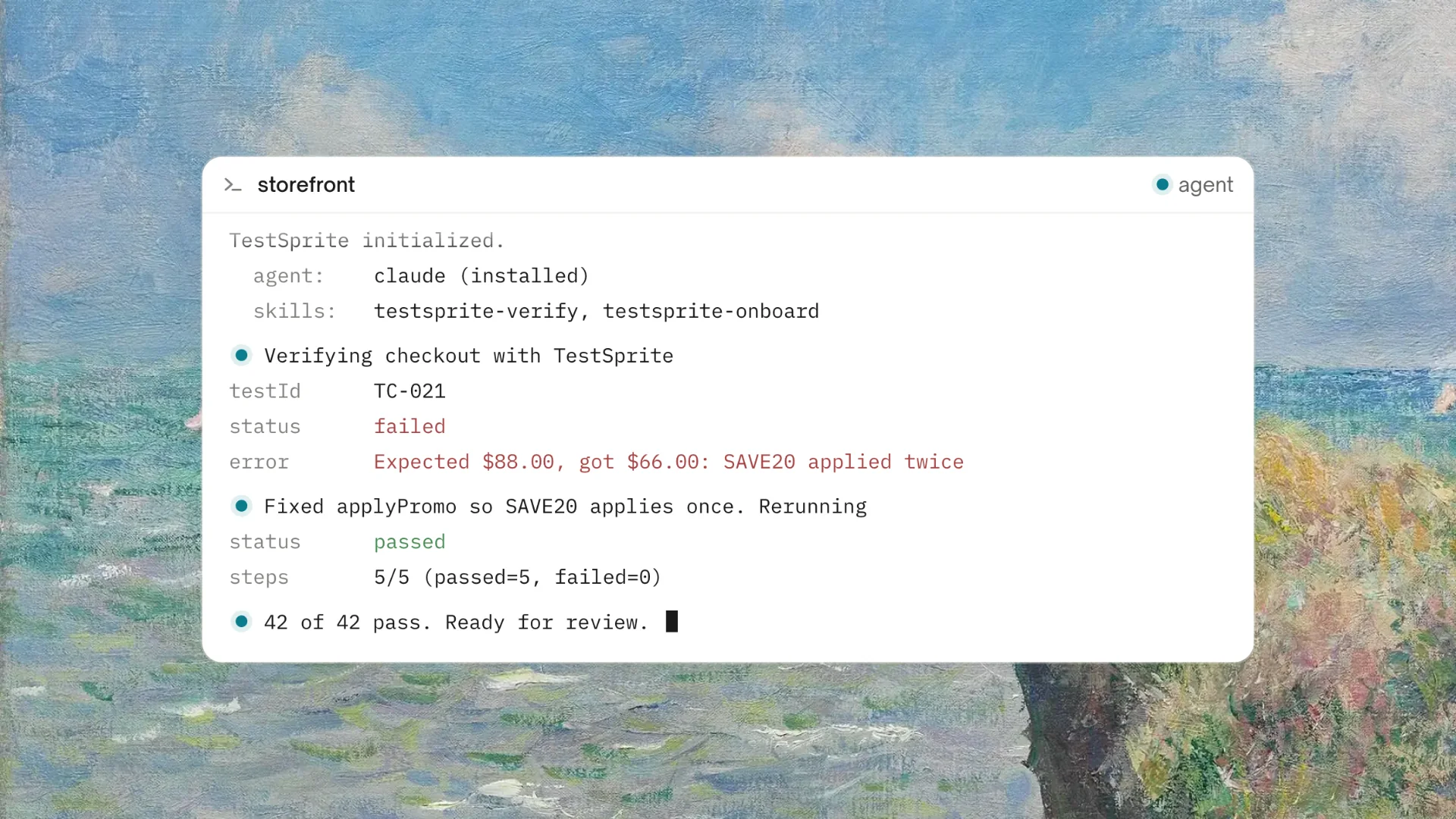
TestSprite introduces a fundamental paradigm shift as a native, end-to-end autonomous AI testing agent. Instead of parsing text files and guessing user behavior, TestSprite initializes secure, ephemeral cloud sandboxes, spins up the target application stack, and actively drives user journeys. Whether executing complex checkout procedures, multi-role approval funnels, or stateful data dashboards, the autonomous agent interacts with the live user interface exactly like a human user, validating underlying backend business contracts concurrently.
Deconstructing an End-to-End Autonomous Testing Loop
To safely evaluate complex enterprise workflows, TestSprite implements a multi-tier exploration strategy driven directly by product specifications or codebase intent. The entire autonomous pipeline operates via a unified multi-stage cycle:
1. Direct Product Intent Alignment
The testing loop begins by establishing a precise behavioral anchor. When a Product Requirement Document (PRD) exists, TestSprite processes the textual specifications to model the explicit product goals. In scenarios where a formal PRD is unavailable, TestSprite operates as a native Model Context Protocol (MCP) server, connecting directly to the repository via tools like Cursor or Claude Code. It extracts intent from logical boundaries, schema definitions, and router hierarchies to build an internal behavioral model. This guarantees that assertions are anchored in what the product is functionally designed to achieve, preventing situations where test suites inadvertently validate flawed code implementations.
2. Evidence-Grounded Backend Verification (Backend Testing 2.0)
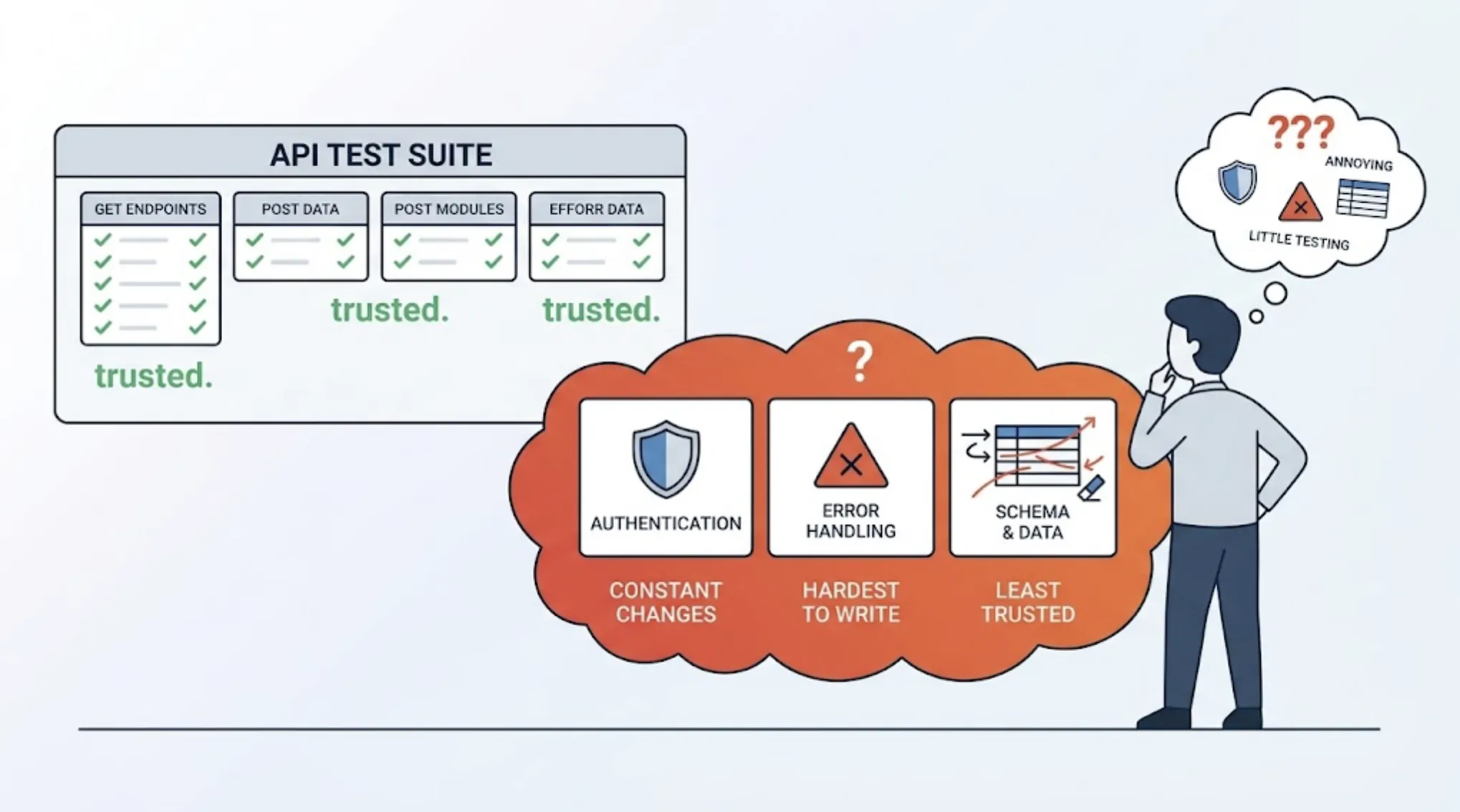
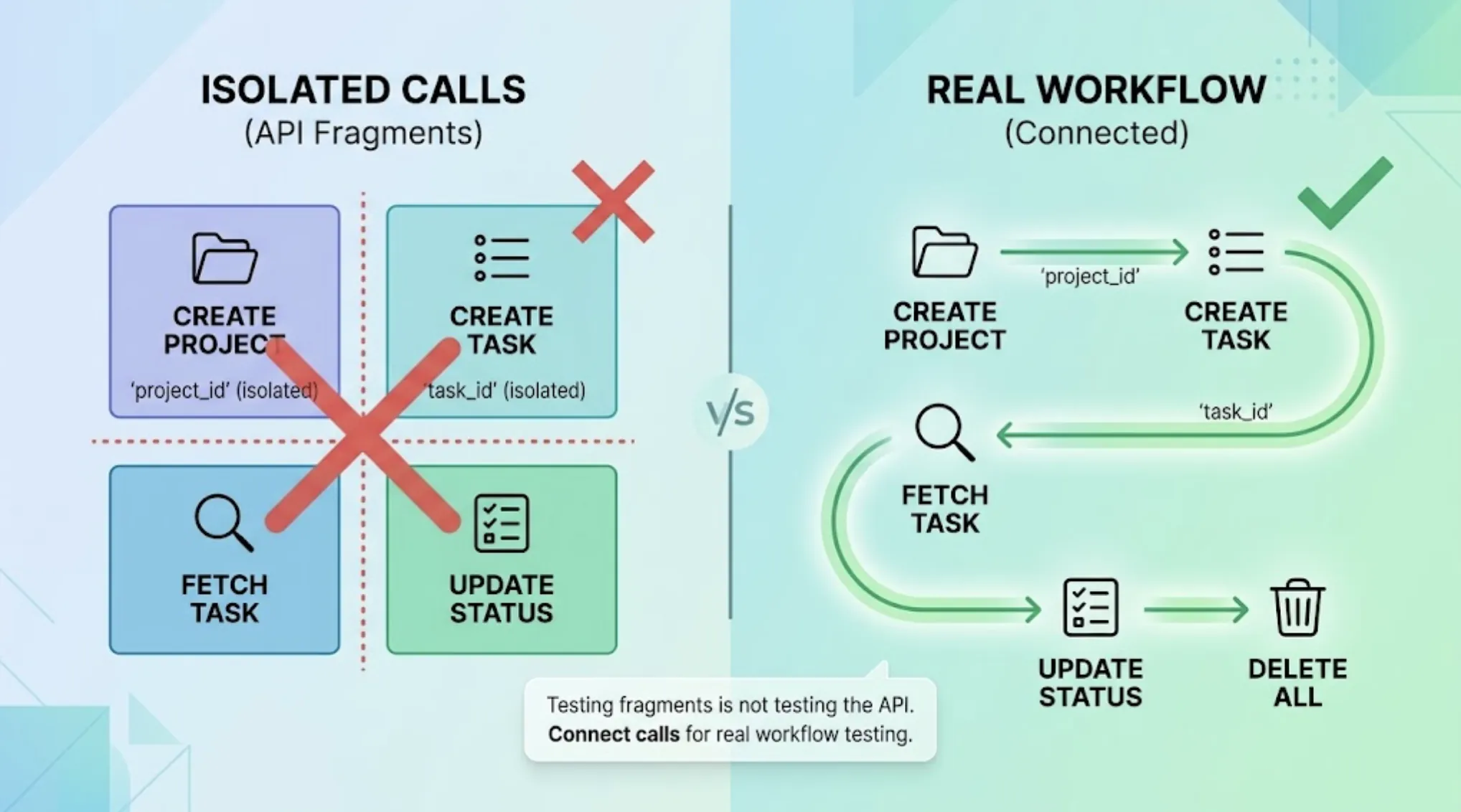
During end-to-end workflow execution, TestSprite monitors the deep API layer in real time. It observes actual server responses, captures status transitions, validates schema contract adherence, and dynamically pipes output variables down to subsequent workflow nodes. By anchoring testing assertions in immutable protocol evidence, it completely removes the risk of hallucinated test successes common in traditional mock-heavy frameworks.
3. Parallel Frontend User Journey Exploration
Concurrently, TestSprite launches multiple parallel exploration agents across a secure visual grid. These agents dynamically interact with buttons, forms, and input elements, charting an exhaustive map of application views. Engineering teams can monitor this interaction in a live preview dashboard or review step-by-step session playback recordings, ensuring complete transparency into how the autonomous agent navigates through intricate business paths.
Auto-Heal Structural Guardrails: Resilience Without Code Rewriting
A primary friction point in legacy end-to-end test suites is extreme fragility. Minor design changes, updated text constants, or shifted container layouts routinely break automated scripts, leading to false positives and high maintenance overhead. TestSprite eliminates this overhead via its intelligent Auto-Heal Rerun mechanics, backed by strict structural guardrails.
It is vital to distinguish this capability from blind generative code modification. TestSprite's Auto-Heal functionality never rewrites application source code. Instead, it serves as an intelligent execution adapter that interprets layout drift, element shifts, and updated class names during runtime. If a button moves from a sidebar to a main container header, the autonomous testing agent recognizes the structural identity of the component, adapts its selector configuration on the fly, and maintains the continuity of the end-to-end workflow. This ensures that test runs remain resilient against superficial interface shifts, isolating real application bugs from simple layout updates.
Seamless Ecosystem Coexistence
TestSprite is designed to operate as the default testing infrastructure of the AI software engineering era. Rather than adding operational complexity, it integrates directly within the tools developers use every day. As an MCP-native architecture, developers can initiate an end-to-end testing pass with a single natural language command—such as "Help me test this project with TestSprite"—directly within their active IDE workspaces in Cursor, Claude Code, or Windsurf. Furthermore, deep integration with GitHub Actions extends this automation to continuous integration pipelines, returning comprehensive diagnostic results and structured failure insights directly as PR comments to assist engineering teams in rapid bug-healing loops.
Frequently Asked Questions (FAQ)
1. How does TestSprite navigate complex, multi-page business workflows without human guidance? TestSprite uses an advanced PRD-driven and intent-inference engine to map out multi-stage workflows. Instead of relying on static scripts, it initializes the application inside secure cloud sandboxes and deploys parallel exploration agents that interact with real frontend components and backend APIs, tracking data state continuously across multiple steps to ensure business logic remains unbroken.
2. Does the Auto-Heal feature alter my application source code when a test fails? No. TestSprite's Auto-Heal capability operates within strict structural guardrails designed purely for runtime resilience. It does not rewrite or modify your application codebase. Instead, it dynamically interprets UI drift and layout adjustments, ensuring that superficial design updates do not break the test execution loop while flagging real logic and contract violations to developers.
3. Do we need to configure or scale dedicated servers to execute these end-to-end tests? No infrastructure configuration is required. All discovery, parallel test plan generation, and end-to-end workflow execution take place completely within TestSprite's secure, isolated, and ephemeral cloud sandboxes. These environments spin up instantly on-demand and self-destruct upon completion, leaving your local development machines completely unaffected.
4. How does TestSprite connect with modern development environments and AI tools? TestSprite operates as a native Model Context Protocol (MCP) server. It integrates smoothly into premier AI IDEs and command-line assistants including Cursor, Claude Code, and Windsurf, as well as enterprise CI/CD systems via GitHub Actions. Developers can trigger complete end-to-end testing cycles using simple natural language prompts without ever leaving their favorite development workspaces.